
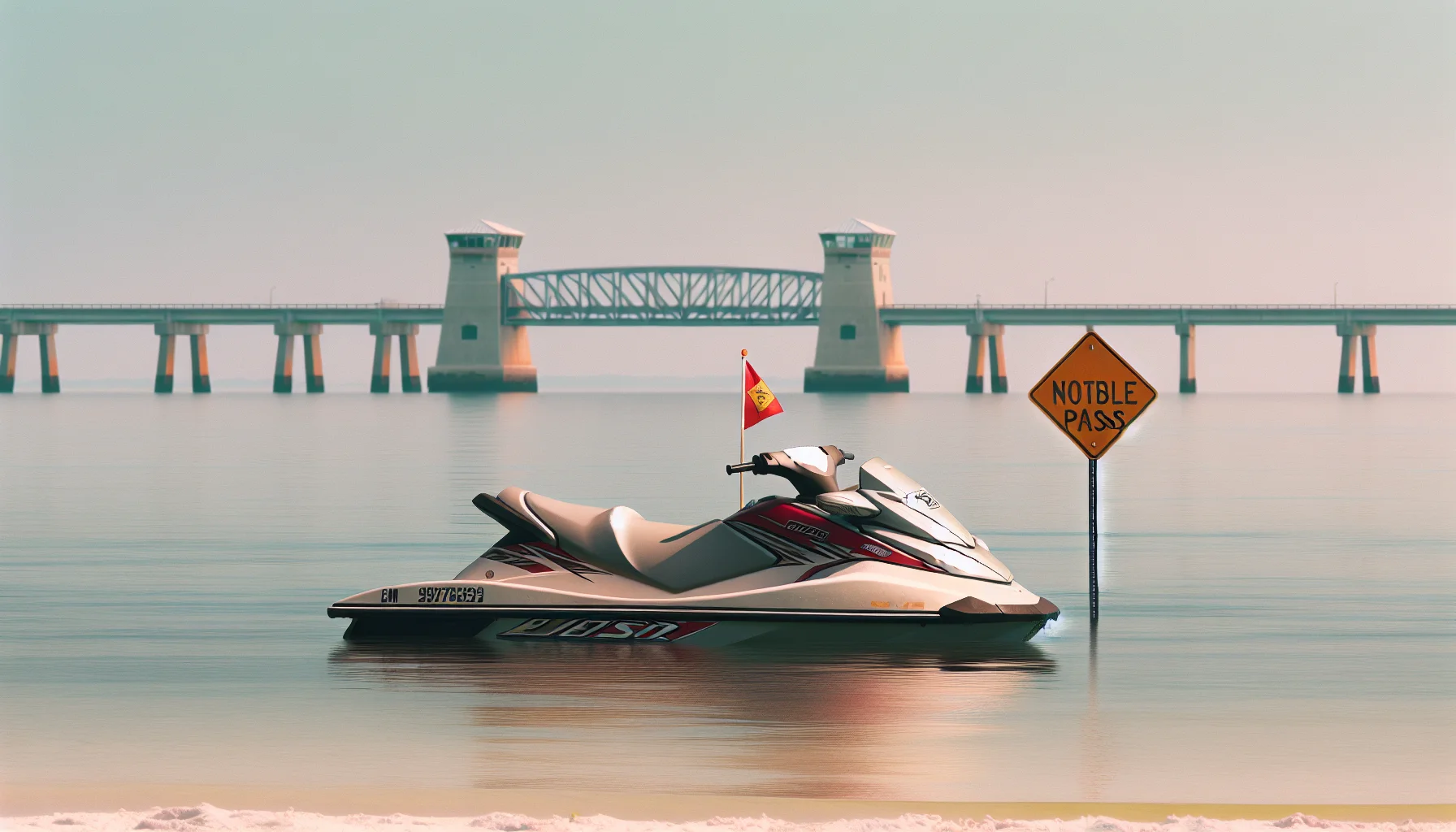
A dead engine off Madeira Beach is not the same as a dead engine in a parking lot. The Gulf keeps moving, the tide keeps pulling you toward Johns Pass, and the boat traffic on a July Saturday does not slow down for a drifting personal watercraft. This guide walks you through exactly what to do when your jet ski quits on the water near Madeira Beach, in the order the situation actually demands: protect the people first, diagnose second, signal for help third, and get towed home. You will also learn the Florida rules that apply while you wait, and the maintenance habits that keep most breakdowns from happening in the first place.
Every rider should treat breakdown response as a core skill, not an afterthought. In Florida, anyone born on or after January 1, 1988 must carry a Boating Safety Education Card to legally operate a vessel of 10 horsepower or more, and that same coursework covers the distress and communication procedures you are about to read. If you have not certified yet, our online Florida boating safety course teaches these emergency fundamentals before you ever need them.
Why Madeira Beach Waters Demand a Breakdown Plan
Madeira Beach sits on a barrier island between the open Gulf of Mexico and the sheltered Intracoastal Waterway, split by Johns Pass, one of the busiest and swiftest inlets on Florida's west coast. That geography creates three very different failure environments within a few minutes' ride of each other, and a stalled watercraft behaves differently in each.
In the open Gulf, wind and swell push a powerless PWC steadily offshore while cell coverage thins out. Inside Johns Pass, tidal current can run several knots during a strong change, sweeping you toward bridge pilings and a wall of returning charter boats. On the Intracoastal, you are protected from waves but hemmed into narrow channels shared with larger vessels that cannot stop quickly.
The single most important habit in all three is this: stay with your watercraft. A floating hull is far easier for a rescuer to spot than a swimmer's head, it keeps you out of the water and out of the current, and it gives you a platform to rest on. Swimming for shore against a Gulf current is how a manageable breakdown becomes a fatality. Your PWC is your life raft until help arrives.
The First 60 Seconds: Secure Yourself and Your Riders
When the engine dies, resist the urge to immediately start troubleshooting. The first minute belongs to safety, not diagnostics.
Confirm everyone is wearing a life jacket
Florida law requires a properly fitted, U.S. Coast Guard-approved personal flotation device for every person aboard a PWC, and it must actually be worn, not stowed. This is the moment it earns its keep. Confirm each rider's PFD is zipped and snug, and get a headcount out loud. If you regularly ride with kids, remember that children under six must wear a PFD any time they are aboard a vessel under 26 feet that is underway, and a jet ski always qualifies. For a full breakdown of the rules, see our guide to Florida life jacket requirements.
Check that the engine cut-off lanyard is attached
That coiled cord clipped to your wrist or PFD is the engine cut-off switch, and Florida requires PWC operators to have it attached while operating. When you fell off or the engine quit, it may have pulled free, which is often the reason the machine will not restart. Confirm it is clipped in before you assume the worst.
Read the water around you
Look up before you look down. Are you drifting toward the Johns Pass channel, a jetty, or a shoal? Is there boat traffic bearing down? Is weather building to the west? Your immediate hazard dictates your next move. If you are set to drift into a channel or onto rocks, dropping an anchor or paddling to the edge takes priority over any engine check.
Diagnose Before You Drift: Quick PWC Troubleshooting
Once your riders are secure and you understand your surroundings, spend a few focused minutes on the most common, most fixable failures. Do this only if you are in calm enough water or safely anchored.
The engine will not start
- Cut-off lanyard: Reattach it firmly. This is the number one false alarm.
- Fuel: Check the gauge. Running out of gas is embarrassingly common on longer runs, especially against current, which burns fuel faster than riders expect.
- Ingested debris: Seagrass, plastic, or rope wrapped in the intake or around the impeller will bog or stall the drive. If you can safely reach the pump, clear what you can by hand.
- Battery: A weak crank or no crank points to a loose or corroded terminal, or a dying battery.
It starts but stalls or runs weak
Recurring stalls often trace back to water or ethanol-fouled fuel, an overheating engine, or an electrical fault. If your temperature warning is showing, do not keep cranking, as you can compound engine damage. Weak thrust with a healthy-sounding engine usually means a fouled intake, a damaged impeller, or cavitation from ingested air.
If two or three minutes of checks do not revive the machine, stop. Repeated failed starts drain your battery and burn the time you should be spending on signaling. Accept the tow and move to the next step.
Signaling for Help on the Gulf
Call for help early, while you still have battery, daylight, and options. Waiting until you are cold, offshore, and out of cell range is the mistake that turns breakdowns into search-and-rescue cases.
VHF Channel 16 is your best tool
A handheld, waterproof VHF radio is the most reliable way to reach help on the water, and Channel 16 is the international distress and calling frequency monitored by the Coast Guard and nearby vessels. Use Mayday only for grave, immediate danger to life. For a breakdown where no one is in immediate peril, the correct call is Pan-Pan, which signals urgency without declaring a life-threatening emergency. In either case, state your position clearly, the nature of your problem, and how many people are aboard. If you have never made a radio call, our primer on VHF radio basics and Mayday etiquette walks through the exact script.
Cell phone as backup
Cell coverage near shore is usually solid, so a phone in a dry bag is a strong backup. Dial 911 for any emergency involving injury or immediate danger, and the dispatcher can patch you to the Coast Guard. For a non-emergency tow, most riders contact a marine assistance provider such as Sea Tow or TowBoatUS. If you carry a membership, save the number before you launch, not from a drifting jet ski.
Visual and sound signals
If your radio and phone both fail, fall back to visual and sound signaling: an orange distress flag, a signal mirror aimed at passing boats, a whistle or air horn, and slow, repeated up-and-down arm motions, the recognized visual distress signal. These matter most in the open Gulf, where a passing charter or fishing boat may be your fastest rescue.
Location-Specific Hazards Around Madeira Beach
Where you break down changes what you should do next.
Johns Pass
Johns Pass funnels the entire tidal exchange between the Gulf and Boca Ciega Bay through a narrow inlet, so current can run hard during a strong tide and traffic is relentless on weekends. If you stall here, signal distress immediately and work toward the edge of the channel and out of the traffic lane. Dropping anchor can stop a dangerous drift toward the bridge or jetty rocks while you wait. Because timing the pass is central to safe riding here, it is worth learning the local pattern in advance with our guide to reading Madeira Beach tides.
The Open Gulf
Offshore, swell and wind push you steadily out to sea and cell service weakens. Conserve energy, stay on the hull, ration water, protect yourself from the sun, and signal continuously to any boat you see. This is where a VHF radio and staying with your PWC matter most.
The Intracoastal Waterway
Inside the ICW you are shielded from waves but confined to marked channels shared with larger, less maneuverable boats. Move to the channel edge, anchor in a safe spot outside the traffic lane, and flag down help. The upside: marinas, ramps, and other boaters are close, so tows here are usually shorter and faster.
Getting Towed: What to Expect
Once you have accepted that you need a tow, a little preparation makes the pickup faster and safer.
When you call
Give your best position first, ideally GPS coordinates from your phone, then a description of your watercraft (make and color), the number of people aboard, the nature of the breakdown, and current sea conditions. Precise location is the single biggest factor in a quick response.
During the tow
Let the tow operator run the approach. Take the line they pass, secure it to the bow eye or tow point as directed, keep hands and feet clear of the line under load, and stay seated and low during the tow. Do not try to steer aggressively or stand. A calm, cooperative rider makes the whole operation safer for everyone.
Membership pays off
Marine assistance memberships from providers like Sea Tow and TowBoatUS typically cover towing within their service area, and an unplanned tow off the Gulf can cost far more than a season of membership. If you ride regularly out of Madeira Beach, a membership is cheap insurance. Just confirm what your plan covers before you rely on it, because coverage limits, distances, and after-hours terms vary.
Weather Emergencies and Afternoon Storms
Florida's Gulf coast produces near-daily thunderstorms through the summer, and they build fast in the afternoon. A storm on the horizon is a mechanical emergency waiting to happen and a lightning hazard in its own right.
If a storm is closing in, head for the nearest safe harbor early rather than trying to outrun it, and get off the water before it arrives. Lightning is the real killer here: on an open PWC you are exposed, so the only safe response is to be off the water when it strikes. If you are caught out, get to shore, get low, and stay away from the highest object around you. Because Tampa Bay area storms deserve their own respect, review our detailed guide to thunderstorm safety on the water before your next summer ride.
Timing also matters. PWCs may not be operated in Florida from a half-hour after sunset to a half-hour before sunrise, so plan your ride to be docked well before dark. A breakdown at dusk that pushes you past legal hours compounds the danger with cold, poor visibility, and higher collision risk.
Prevent the Breakdown: Maintenance and Pre-Ride Checks
Most on-water failures are preventable, and the fixes are cheap compared to a tow.
Before every launch
- Start the ride with a full tank, and plan fuel around current, which increases consumption.
- Test-start the engine at the dock and confirm the cut-off lanyard functions.
- Inspect and clear the intake grate of grass and debris.
- Verify your PFDs, whistle, and signaling gear are aboard and accessible.
- Check the marine forecast, and tell someone ashore your route and expected return time. That simple float plan is what triggers a search if you do not come back.
Seasonal and routine care
Fuel problems, often traced to ethanol and water contamination, are among the most common causes of PWC breakdowns, so use fresh fuel, add a marine stabilizer for storage, and replace filters on schedule. Flush the cooling system after every saltwater ride to prevent overheating, keep battery terminals clean and tight, and service the machine annually. A watercraft that is flushed, fueled clean, and inspected simply strands its rider far less often.
Understanding the machine and the law together makes you a safer operator. If you are still learning the rules that govern where, when, and how fast you can ride, our overview of Florida jet ski and PWC laws covers age requirements, operating hours, and the safety rules every rider must know.
Gear That Turns a Crisis Into an Inconvenience
The difference between a scary afternoon and a routine tow is often what you clipped aboard before launch. Carry, at minimum:
- Communication: a waterproof handheld VHF radio and a cell phone in a dry bag.
- Signaling: an orange distress flag, a signal mirror, and a loud whistle or compact air horn.
- Anchoring: a small anchor with adequate line and a float, so you can stop a dangerous drift. Anchoring near Madeira Beach is a skill worth practicing; our guide to legal beaching and anchoring nearby covers the fundamentals.
- Basic tools and water: a multi-tool, zip ties, a spare spark plug if your machine uses them, plus drinking water and sun protection for the wait.
None of this takes much space, and all of it fits in a jet ski storage well. Assembling this kit once and keeping it aboard is the highest-return safety investment a rider can make.
Know When You Must Report the Incident
If your breakdown involves more than an inconvenient tow, Florida has reporting duties you need to know. A boating accident must be reported to the FWC or another law enforcement agency when it results in a death, a person's disappearance under circumstances suggesting death or injury, an injury requiring medical treatment beyond first aid, or property damage at or above the reporting threshold set in state law. If a collision, grounding, or capsize accompanies your mechanical failure, document the time, location, conditions, and any damage with photos, and make the required report promptly. When in doubt, call the FWC and ask.
Ride Prepared, Not Scared
Breakdowns off Madeira Beach are common enough that every serious rider should expect one eventually, but they are almost never dangerous when handled correctly. Secure your riders first, diagnose the easy fixes, signal for help while you still have battery and daylight, and stay with your watercraft until the tow arrives. Pair that response plan with clean fuel, a flushed cooling system, and a small kit of communication and signaling gear, and you have turned the worst-case scenario into a manageable one.
The knowledge behind all of this, from distress signaling to Florida's operating rules, is exactly what the state-approved boater education course teaches. It is fully online, the final exam is just 25 questions with an 80% passing score, and you get unlimited retakes until you pass. Certify once, carry the card for life, and ride Madeira Beach with confidence.