What You Will Learn About Night Boating in North Miami
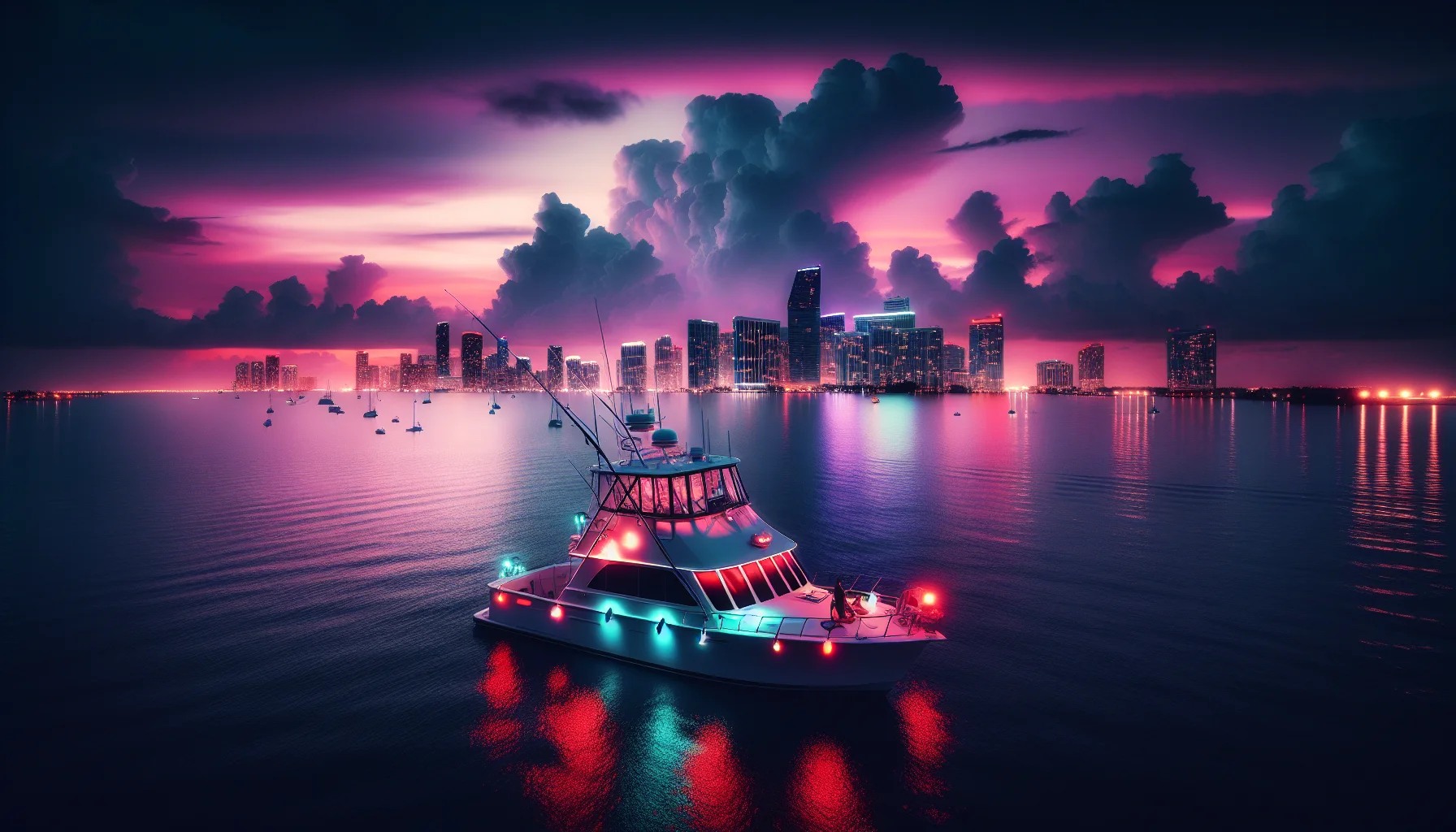
Cross Biscayne Bay after sunset and you enter a completely different waterway. The channels you followed by daylight dissolve into a black horizon dotted with confusing lights: dock lights, car headlights on the causeways, anchored boats, commercial ships transiting Government Cut, and other recreational vessels closing at speed. In that environment, your navigation lights are not a formality. They are the single most important tool that keeps another operator from running into you, and the pattern of lights on the boat ahead is the only way you will know whether it is coming, going, or crossing your path.
This guide explains exactly what you need to know to run North Miami waters legally and safely after dark. You will learn when Florida and U.S. Coast Guard rules require lights, the specific light configuration your vessel must display, how to interpret the lights on other boats to avoid a collision, why personal watercraft cannot legally run at night at all, and the practical steps for installing, maintaining, and operating your lighting system. Everything here reflects the standards taught in the state-standards online Florida boating safety course that most operators are legally required to complete.
Heads up: Anyone born on or after January 1, 1988 must carry a Florida Boating Safety Education Card to operate a vessel of 10 horsepower or more. Navigation lights and the rules of the road are core exam topics, so studying them does double duty: it keeps you safe and it gets you certified.
When Florida Law Requires Navigation Lights
The rule is simple and absolute: navigation lights must be displayed from sunset to sunrise, and during any period of restricted visibility such as fog, heavy rain, or haze. There is no grace period, no "just running back to the dock" exception, and no discretion to leave them off because the moon is bright or the marina is close.
In practice, sunset in the North Miami area falls near 8:00 PM in mid-summer and closer to 5:30 PM in the depths of winter, so the window in which you are legally required to be lit shifts dramatically with the season. Two habits prevent most violations. First, check the actual sunset time for the day before you leave the dock rather than trusting a rough guess. Second, switch your lights on a few minutes early and leave them on until you are tied up. A boat that anchors at dusk and forgets to re-energize its all-round light after dark is one of the most common and most dangerous mistakes on the bay, because it becomes invisible to traffic while sitting directly in a fairway.
Restricted visibility deserves special attention in South Florida. A summer squall can drop visibility to near zero in minutes. When that happens, lights become mandatory regardless of the hour, and you should also slow to a safe speed and be ready to sound fog signals. If you want a deeper refresher on the collision-avoidance framework that governs all of this, our guide to boat navigation rules and right-of-way walks through the give-way and stand-on responsibilities that lighting is designed to support.
Navigation Light Requirements by Vessel Type
Florida adopts the U.S. Coast Guard Navigation Rules, so the configuration your boat must show depends primarily on its length and whether it is under power or under sail. Biscayne Bay is inland waters, so the Inland Rules apply.
Power-Driven Vessels Under 39.4 Feet (12 Meters)
This category covers the overwhelming majority of North Miami recreational boats. Underway at night you must display:
- Sidelights: a red light on the port (left) side and a green light on the starboard (right) side. Each shows through an arc of 112.5 degrees, from dead ahead to 22.5 degrees behind the beam, and on a boat this size must be visible for at least one nautical mile.
- A sternlight: a white light showing 135 degrees across the back of the boat, visible for at least two miles.
- A masthead light: a white light showing 225 degrees across the front, visible for at least two miles.
Small boats are allowed a simplified option: instead of separate masthead and stern lights, you may combine them into a single all-round white light that shows 360 degrees and is visible for two miles, carried above the sidelights. That is why so many center consoles and bay boats run a red-green bicolor light at the bow and a white all-round light on a pole at the stern. Either configuration is legal as long as the arcs and visibility distances are met and no part of the boat blocks a light.
Larger Power-Driven Vessels (39.4 to 65 Feet)
Once a vessel reaches 12 meters, the shortcuts disappear. It must carry a proper masthead light forward, separate red and green sidelights, and a sternlight, all mounted at the heights the rules specify. Vessels of 50 meters and longer add a second, higher masthead light aft. If you charter or captain a larger dinner-cruise boat returning across the bay, expect stricter mounting and visibility standards.
Sailing Vessels
A sailboat operating under sail alone shows red and green sidelights plus a sternlight; smaller sailboats may combine all three into a single tricolor light at the top of the mast. The critical rule that trips people up: the moment you start the engine, even with the sails still up, you are a power-driven vessel and must show the lights required of a powerboat, including a masthead light. Failing to switch on that masthead light while motor-sailing is a genuine safety hazard because it tells other traffic you have more maneuverability than you actually do.
At Anchor
When you drop the hook after dark anywhere other than a designated special anchorage, you must display an all-round white light where it can best be seen. On busy stretches of Biscayne Bay this is not optional bureaucracy: an unlit anchored boat in a fairway is a classic setup for a high-speed nighttime collision.
How to Read Other Vessels' Lights After Dark
Displaying your own lights is only half the skill. The other half is decoding what you see so you can predict where another vessel is heading and who has the right of way. Memorize these patterns before you ever run at night.
- Red and green together, with a white light above or behind: a power-driven vessel coming more or less straight toward you. Both of you should alter course to starboard and pass port-to-port.
- A single green light: you are looking at the starboard side of a boat crossing left to right. In a crossing situation, the vessel showing you green is generally the stand-on vessel, so you are the give-way vessel and must keep clear.
- A single red light: you are seeing the port side of a boat crossing right to left. You are typically the stand-on vessel, but stay ready to act.
- A single white light only: most often the sternlight of a vessel ahead moving away from you, or an anchored boat. Either way, you are likely overtaking, which makes you the give-way vessel required to keep clear until well past.
The classic memory aid still works: if you see red, "stop" and give way; if you see green, you may have the right to go, but never assume the other operator sees you or knows the rules. At night, judging distance and closing speed is far harder than in daylight, so make your course changes early, large, and obvious. For the full stand-on and give-way framework, revisit our boat navigation rules and right-of-way breakdown, and pair it with the Florida channel markers and navigation aids guide so lit buoys and range markers make sense in the dark.
Night Navigation Challenges Unique to North Miami
Biscayne Bay layers several hazards on top of the normal difficulty of night boating, and knowing them ahead of time is what separates a calm run home from a frightening one.
Background light clutter. The Miami skyline, causeway traffic, waterfront condos, and marina lighting create a wall of shore lights that can bury a boat's navigation lights or make a stationary dock light look like a moving vessel. Train yourself to look for the specific red-green-white patterns of navigation lights rather than reacting to every glow on the horizon.
Commercial traffic and Government Cut. Large ships and tugs transit the area on their own schedule and cannot stop or turn quickly. A vessel showing multiple white masthead lights in a vertical line, or towing lights, is big, restricted, and always gets a wide berth. Never try to cross ahead of a ship near the cut.
Shallows and poorly marked water. Much of the bay is skinny water, and channel edges that are obvious by day vanish at night. This is where a GPS chartplotter earns its keep, but treat it as a supplement to a posted lookout, not a replacement for your eyes.
Crowded weekend corridors. Areas near the sandbars, Marine Stadium, and the causeways see heavy recreational traffic well after dark on weekends and holidays. Expect unlit paddlecraft, anchored rafts, and operators who have been in the sun and possibly drinking all day. Florida's BUI limit is a 0.08 blood-alcohol level (0.02 if you are under 21), and alcohol is a factor in a large share of nighttime incidents, so give every other boat extra room. If you are heading out from the local ramps and marinas, our North Miami jet ski rentals guide covers the launch points and traffic patterns you will be working around.
Installing and Maintaining Your Navigation Lights
A light that is legally required but not actually working is worse than useless, because you believe you are visible when you are not. Most nighttime lighting violations trace back to maintenance, not ignorance of the law.
Verify the arcs and mounting. Sidelights must be positioned so the red only shows to port and the green only to starboard, with no overlap ahead. The all-round or stern white light must be high enough and clear enough that a T-top, bimini, cooler, or crowd of passengers does not block it from any angle. Walk a full circle around your boat at the dock after dark and confirm you see the correct color from every direction.
Keep lenses clean and choose good bulbs. Salt spray, oxidation, and a fogged lens can cut a light's effective range dramatically. Upgrading to quality LED fixtures improves brightness and draws far less power, which matters on a long night run. Whatever you use, the light must still meet its required visibility distance.
Carry backups and test before every departure. A simple pre-departure light check takes thirty seconds and prevents the most common failure. Keep spare bulbs or a spare all-round pole light aboard, plus a powerful handheld spotlight and a waterproof flashlight. If a nav light fails while you are underway, a backup all-round light can keep you legal and visible until you reach the dock.
Personal Watercraft and Night Operation
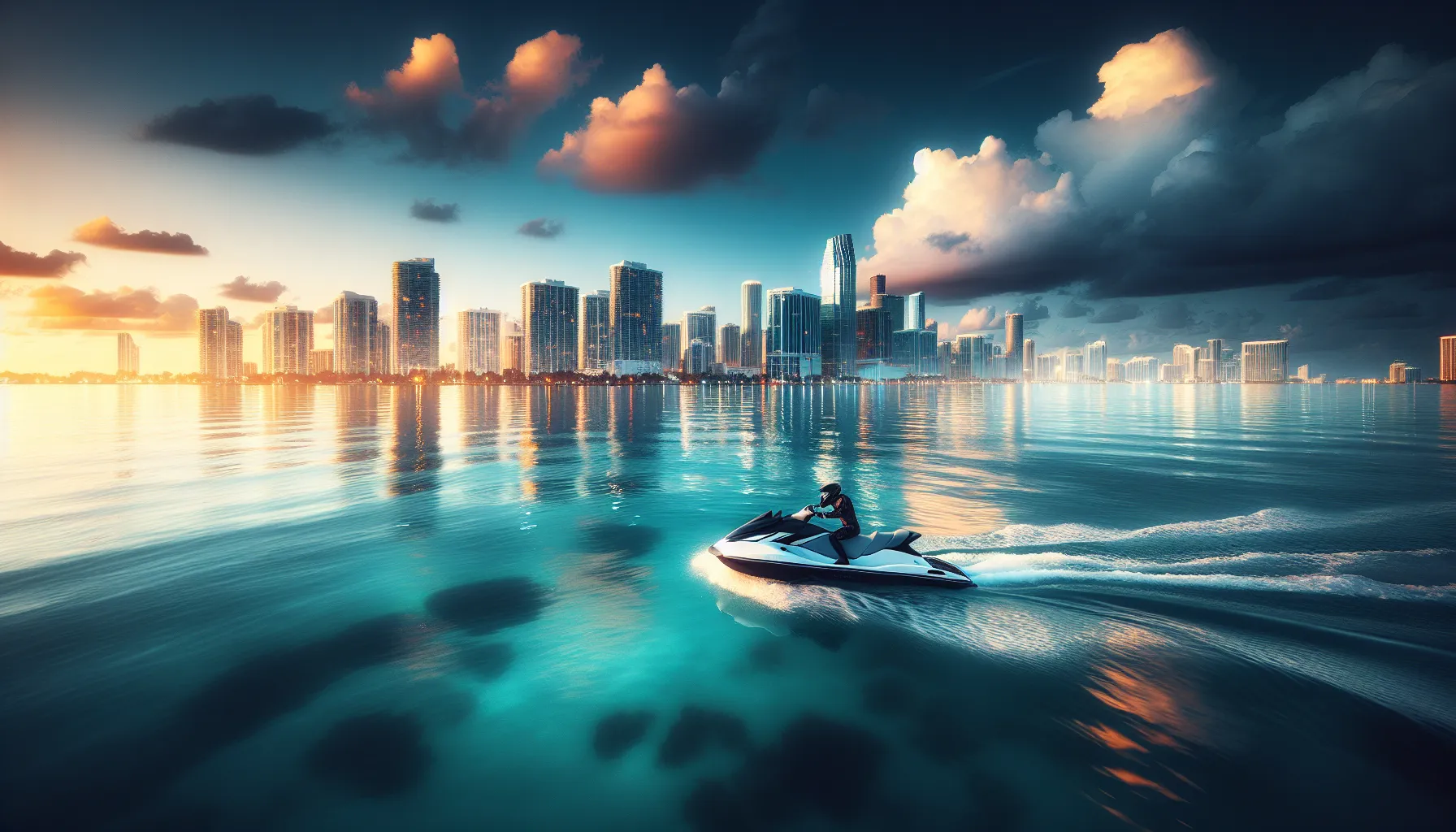
This is the single most important point for the many riders launching jet skis in North Miami: Florida law prohibits operating a personal watercraft from a half-hour after sunset to a half-hour before sunrise. It does not matter whether you have rigged navigation lights. PWCs are simply not permitted to run at night, and the FWC enforces this strictly around Miami's crowded waters.
That prohibition dovetails with the other core PWC rules every rider must know: the minimum age to operate a PWC in Florida is 14, the engine cut-off lanyard must be attached to the operator whenever the craft is designed for it, and the same navigation-light logic applies during the legal dawn and dusk operating window. If you plan to ride around sunrise or sunset, you are still responsible for being lit and seen. For the complete rundown, read our guide to Florida jet ski and PWC laws, age requirements, and operating hours, and if you ride the North Miami PWC corridors, brush up on Florida's 100-foot rule for PWC operators, which governs how close you can run to other boats, docks, and people.
Safe Operating Techniques After Dark
Correct lights are the foundation, but conservative seamanship is what actually gets you home. Adopt these habits every time you leave the dock at night.
Slow down. Reduced visibility means reduced safe speed. At night you cannot see debris, unlit objects, or the true distance of oncoming traffic in time to react at daytime speeds. Choose a speed that lets you stop within the distance you can see and identify a hazard.
Post a dedicated lookout and protect night vision. Assign someone to watch and listen with no other job. Keep white cabin and phone lights off or dimmed to red so your eyes stay dark-adapted, and never sweep a spotlight across another operator's eyes.
Know your route and monitor VHF. Familiarity is a huge safety margin after dark, so run routes you already know by day before you attempt them at night. Keep a VHF radio on and monitor Channel 16 so you can hail traffic or call for help. If you have never worked a marine radio, the VHF radio basics and Mayday etiquette guide is a fast, practical primer.
File a float plan and watch the weather. Tell someone ashore where you are going and when you expect to return. Check the forecast before departure and keep an eye on building storms, which move fast in South Florida and can turn a clear night into zero-visibility conditions in minutes.
Emergencies: Light Failure and Collisions
Even a well-maintained boat can lose a light or find itself in a close-quarters situation. Have a plan.
If a navigation light fails underway, immediately slow to minimum steerage, switch on your backup all-round white light or hold up a bright flashlight so you remain visible, and make for the nearest safe dock or anchorage. Increase your use of sound signals and radio traffic in the area to announce your position.
If you are involved in a collision, Florida law requires you to stop, render aid, and exchange information. You must report a boating accident to the FWC, Coast Guard, or local law enforcement if it involves a death, a person who disappears, an injury requiring more than basic first aid, or property damage of roughly $2,000 or more. At night, document the lighting status of every vessel involved as soon as it is safe, because whether a boat was properly lit is almost always the central question in the investigation.
Every one of these procedures, from the required light configurations to accident reporting thresholds, is exactly what the FWC-approved course drills into you. Studying it is the difference between reacting with confidence and freezing when the sun is down and something goes wrong.
Get Certified and Ride North Miami With Confidence
Night navigation in North Miami rewards preparation and punishes assumptions. The law is not complicated once you understand it: be lit from sunset to sunrise and in poor visibility, show the correct configuration for your vessel, keep your PWC off the water at night entirely, read the lights of other boats to avoid collisions, and operate slowly and conservatively with a good lookout. Maintain your lights, carry backups, and never head out on a route at night that you have not first learned by day.
The most reliable way to lock all of this in and satisfy Florida's legal requirement at the same time is to complete your boater education. The course covers navigation lights, the rules of the road, sound signals, restricted visibility, and emergency procedures, then finishes with a 25-question exam. You need 80 percent to pass, you get unlimited retakes, and you can print your temporary certificate the moment you pass.
Start the state-standards online course - $12.99
Get certified, rig your lights right, and make sure everyone aboard gets home safely when the sun goes down over Biscayne Bay.