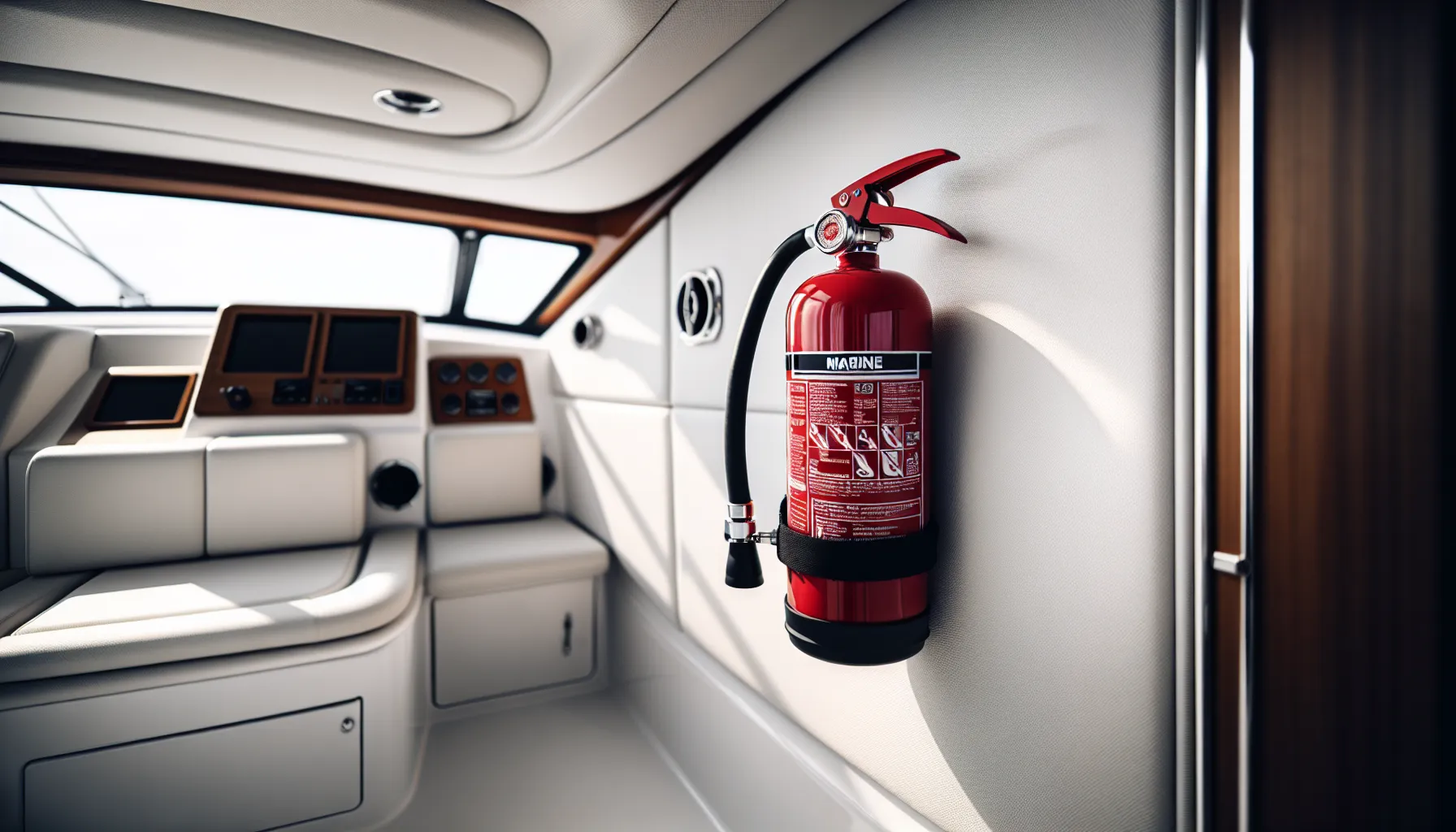

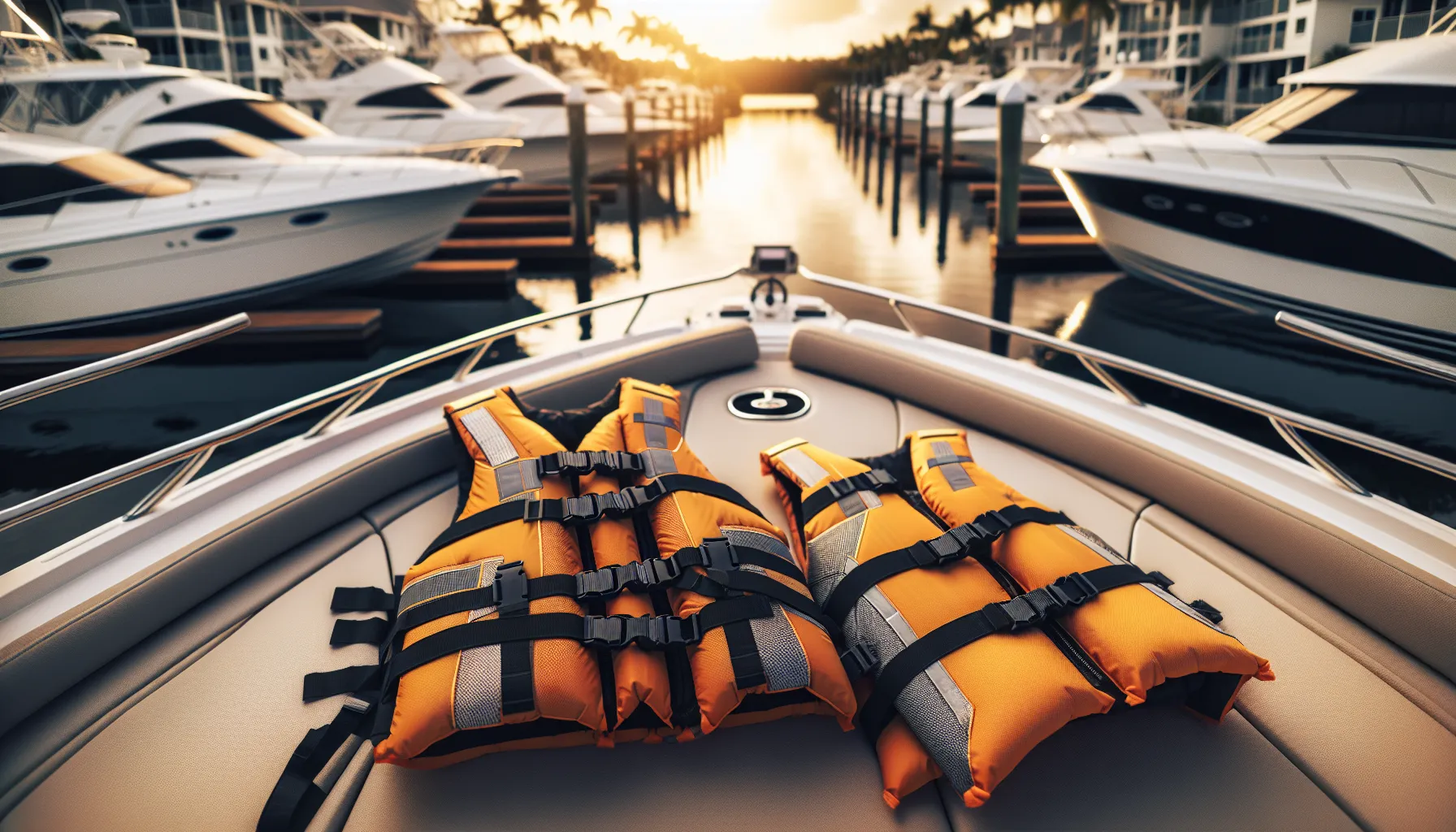
Every year, Florida Fish and Wildlife Conservation Commission (FWC) officers write citations for one of the simplest violations on the water: not carrying the right life jackets. It is also one of the most consequential. In Florida boating fatalities, the overwhelming majority of drowning victims were not wearing a personal flotation device (PFD). This guide walks you through exactly what Florida law requires, how many PFDs you need, which types count, the child-wear rule, the special rules for personal watercraft, and how to keep your life jackets legal and serviceable. By the end you will know precisely what an FWC officer looks for at a safety stop, and how to make sure you pass it every time.
What Florida Law Actually Requires
Florida follows federal U.S. Coast Guard carriage rules, and the foundation is simple: every recreational vessel must carry one wearable, Coast Guard-approved life jacket for each person on board. That includes kayaks, canoes, paddleboards, jet skis, and everything up to large cruisers. If you have five people aboard, you need five wearable PFDs that actually fit those five people.
Two conditions turn a life jacket from "present" into "legal":
- Coast Guard approval. The PFD must carry a legible U.S. Coast Guard approval label. A cheap "swim aid" or a pool floatie does not count, no matter how buoyant it feels.
- Serviceable condition and readily accessible. The jacket must be free of rips, rot, and broken hardware, and it must be somewhere you can grab it fast, not sealed in the original plastic wrap at the bottom of a locker.
The one extra device for larger boats
Boats 16 feet and longer (canoes and kayaks are exempt regardless of length) must also carry one Type IV throwable device in addition to the wearable PFD for each person. We cover throwables in detail below, but flag it now because it is the single most-missed item at safety stops.
Understanding these carriage rules is a core part of the Florida boating safety course that satisfies the state's education law. Speaking of which, if you were born on or after January 1, 1988, you must carry a Boating Safety Education ID Card to operate any vessel powered by 10 horsepower or more in Florida. You can read the full breakdown in our Florida boating license requirements guide.
The Five Coast Guard PFD Types
The Coast Guard organizes wearable and throwable devices into five types. You do not need one of each, but you do need the right type for where and how you boat. (The Coast Guard has also rolled out a newer performance-label system, but the Roman-numeral types below remain in wide use and remain fully legal.)
Type I: Offshore Life Jacket
The highest-buoyancy wearable, designed to turn most unconscious wearers face-up in rough or remote water where rescue may be slow. It is bulky, which is exactly why offshore anglers and open-Gulf boaters accept the trade-off. If you run far from shore out of a pass like the ones near Pensacola or Destin, Type I is the safest choice.
Type II: Near-Shore Buoyancy Vest
A lower-cost, less bulky vest for calm, inland waters where quick rescue is likely. It will turn some unconscious wearers face-up, but not as reliably as a Type I. Fine for protected bays, rivers, and lakes.
Type III: Flotation Aid
The most popular recreational PFD because it is the most comfortable for all-day wear. Fishing vests, paddling vests, and ski vests are almost all Type III. The catch: a Type III will not automatically turn an unconscious person face-up, so the wearer has to be conscious enough to keep their head back. For most protected-water boating with good rescue odds, it is the practical everyday choice.
Type IV: Throwable Device
Not worn. This is the ring buoy, horseshoe buoy, or buoyant cushion you throw to someone in the water. Boats 16 feet and over must carry one, and it must be immediately reachable.
Type V: Special-Use Device
Approved only for the specific activity printed on the label, such as kayak vests, deck suits, work vests, and many inflatables. A Type V counts toward your carriage requirement only when used as labeled and, if the label says "approved only when worn," it must actually be worn to be legal.
Florida's Child Life Jacket Law
This is the rule FWC enforces most aggressively, and the one that saves the most lives.
Every child age 6 and under must wear a U.S. Coast Guard-approved life jacket at all times on a vessel under 26 feet in length while that vessel is underway. "Underway" means not anchored, not moored, and not aground. On boats under 26 feet, the moment you leave the dock, the PFD goes on the child and stays on.
A few practical points parents miss:
- The requirement is about the child's age and the boat's length, not the water conditions. Flat, calm, ten feet from the dock still counts.
- The life jacket must be sized for the child. An adult PFD on a small child can slip off over the head in the water and is not legal or safe.
- On vessels 26 feet and longer, the mandatory-wear rule for small children does not apply the same way, but responsible operators keep young kids in PFDs regardless.
For anyone towing kids on tubes or teaching a teen to ride, the wear rules get even stricter on personal watercraft and towed sports, which we cover next and in our dedicated Florida jet ski and PWC laws guide.
When Everyone Must Wear a Life Jacket
Carrying a PFD is enough for most adults on most boats. But Florida law names several situations where every person must actually be wearing an approved wearable life jacket, no exceptions:
- Personal watercraft (PWC / jet ski). Every operator and every passenger must wear a PFD. The minimum age to operate a PWC in Florida is 14, and PWCs may not be operated from a half-hour after sunset to a half-hour before sunrise. The engine cut-off lanyard must also be attached to the operator, their PFD, or their wrist.
- Water skiing, wakeboarding, tubing, and other towed sports. Anyone being towed, and anyone riding on an aquaplaning device, must wear a PFD.
- Children 6 and under on vessels under 26 feet while underway, as covered above.
Beyond the letter of the law, seasoned Florida boaters wear their PFDs any time conditions turn: rough chop, cold-water months, running solo, offshore, or after dark. Cold water and panic sap the strength you need to don a jacket after you are already in trouble, which is why the smartest move is to wear it before you need it. Alcohol makes that worse, and it is illegal: Florida's boating under the influence (BUI) threshold is 0.08 BAC for adults and 0.02 for operators under 21. Learn how those stops work in our Florida BUI laws guide.
Getting the Right Fit and Size
A Coast Guard label makes a PFD legal. Correct fit makes it work. Life jackets are sized by chest measurement and body weight, not by clothing size, and children's PFDs are approved for specific weight ranges printed on the label.
Fitting an adult PFD
- Loosen all straps, put it on, then tighten from the bottom up.
- Have someone pull up on the shoulders. If the jacket slides up toward your ears, it is too loose or too big.
- You should be able to breathe and move freely, with no gap that would let the jacket ride up over your face in the water.
Fitting a child PFD
Match the child to the weight range on the label, not their age. Then run the lift test: fasten every strap and buckle, and gently lift the child by the shoulders of the jacket. If the PFD rides up over the chin or ears, it is too big; size down. Many child and infant PFDs add a padded head-support collar and a grab strap for exactly this reason.
Whatever the size, a life jacket only protects the person wearing it, so keep a range of sizes aboard that matches everyone who typically rides with you, including that one friend who always shows up unannounced.
Inflatable Life Jackets
Inflatable PFDs are light, cool in the Florida heat, and comfortable enough that people actually keep them on, which is their biggest safety advantage. But they come with conditions:
- Adults only. Inflatables are generally approved for people 16 and older and are not for small children.
- Not on PWCs or towed sports. Inflatable PFDs are prohibited for personal watercraft use, water skiing, and high-impact towed activities. For those you need an inherently buoyant Type I, II, III, or approved V.
- They must be armed and serviced. An inflatable only counts as serviceable if the CO2 cartridge is charged and not discharged, the inflation mechanism is functional, the bladder holds air, and it is within any inspection window on the label. Some models are legal only when worn, per the label.
If you choose an inflatable for calm-water cruising or fishing, inspect the arming mechanism at the start of every season and after any accidental inflation.
Throwable Devices: The Type IV Requirement
Every boat 16 feet and longer (again, canoes and kayaks excepted) must carry at least one Type IV throwable device: a ring buoy, a horseshoe buoy, or an approved buoyant cushion. The rule most people break is not ownership, it is accessibility.
To be legal and useful, the throwable must be:
- Immediately available in the cockpit or helm area, not buried in a locker or under gear.
- In serviceable condition, with any attached line intact and the flotation undamaged.
- Coast Guard-approved, with a legible label.
A buoyant cushion used year-round as a seat cushion slowly gets crushed and waterlogged, which quietly turns your legal throwable into a non-compliant one. In a real overboard situation, aim the throw slightly past and upwind of the person so it drifts to them, keep them in sight, and bring the boat around rather than jumping in yourself.
Keeping Your PFDs Serviceable
"Serviceable condition" is a legal standard, not a suggestion. An FWC officer can cite you for a torn or rotten life jacket the same as for having none at all. Run this quick inspection before every season and periodically through it:
- Fabric: no rips, tears, punctures, or heavy sun-rot. Sun-brittle fabric that flakes when you rub it has failed.
- Hardware: every buckle snaps and holds, every strap adjusts, zippers run.
- Flotation: foam is firm, not compressed flat or waterlogged. A jacket that feels heavy and dense has absorbed water.
- Label: the Coast Guard approval label is present and readable.
- Inflatables: cartridge charged, mechanism armed, bladder holds air, within any service date.
Care habits that extend PFD life in Florida's harsh sun and salt:
- Rinse with fresh water after every saltwater trip and let jackets dry completely before storage to prevent mold.
- Store in a ventilated space out of direct sun; UV is the number one killer of foam and fabric.
- Never sit or kneel on foam PFDs, and keep them away from engines, fuel, and exhaust heat.
When a jacket fails any check, retire it. Damaged flotation cannot be repaired reliably, and a compromised PFD gives false confidence exactly when you can least afford it.
How FWC Enforces PFD Rules on the Water
FWC officers, Coast Guard crews, and local marine units run routine safety inspections across Florida waters, and they can stop any vessel to check equipment. At a typical stop they will ask to see:
- One wearable, approved, correctly sized PFD per person aboard.
- A throwable Type IV if your boat is 16 feet or longer.
- Children 6 and under actually wearing their PFDs on vessels under 26 feet.
- Everyone on a PWC or being towed wearing an approved wearable.
- Serviceable condition across the board.
Missing, unapproved, or unserviceable life jackets are non-criminal boating infractions, but they carry real fines and, more importantly, an officer can terminate your voyage on the spot for an unsafe condition, ending your day on the water. If an accident occurs, PFD compliance becomes part of the record. Remember that Florida requires you to report a boating accident that involves a death, a disappearance, an injury needing more than first aid, or property damage of about $2,000 or more.
The reliable way to never fail a stop is to build a pre-departure habit: count heads, match a fitted PFD to each one, confirm the throwable is reachable, and put PFDs on the kids and the PWC riders before you leave the dock. It takes ninety seconds and it is the same routine taught in every accredited course.
Learn It Once, Boat Legally for Life
Life jacket rules are the most frequently checked and most life-saving requirements in Florida boating, but they are only one chapter of what safe, legal operation demands. The state's NASBLA-approved, FWC-recognized boater education course walks you through PFD carriage and wear rules, navigation and right-of-way, BUI law, and the emergency procedures that turn a bad moment into a survivable one. The final exam is 25 questions, you need 80% to pass, and retakes are unlimited, so there is no reason to put it off.
Start the state-standards online course - $12.99
Pass the exam and you can print a temporary Boating Safety Education ID Card immediately, with your permanent, lifetime card mailed to you afterward. Get certified once, keep your PFDs serviceable, and every FWC safety stop becomes a formality instead of a fine.