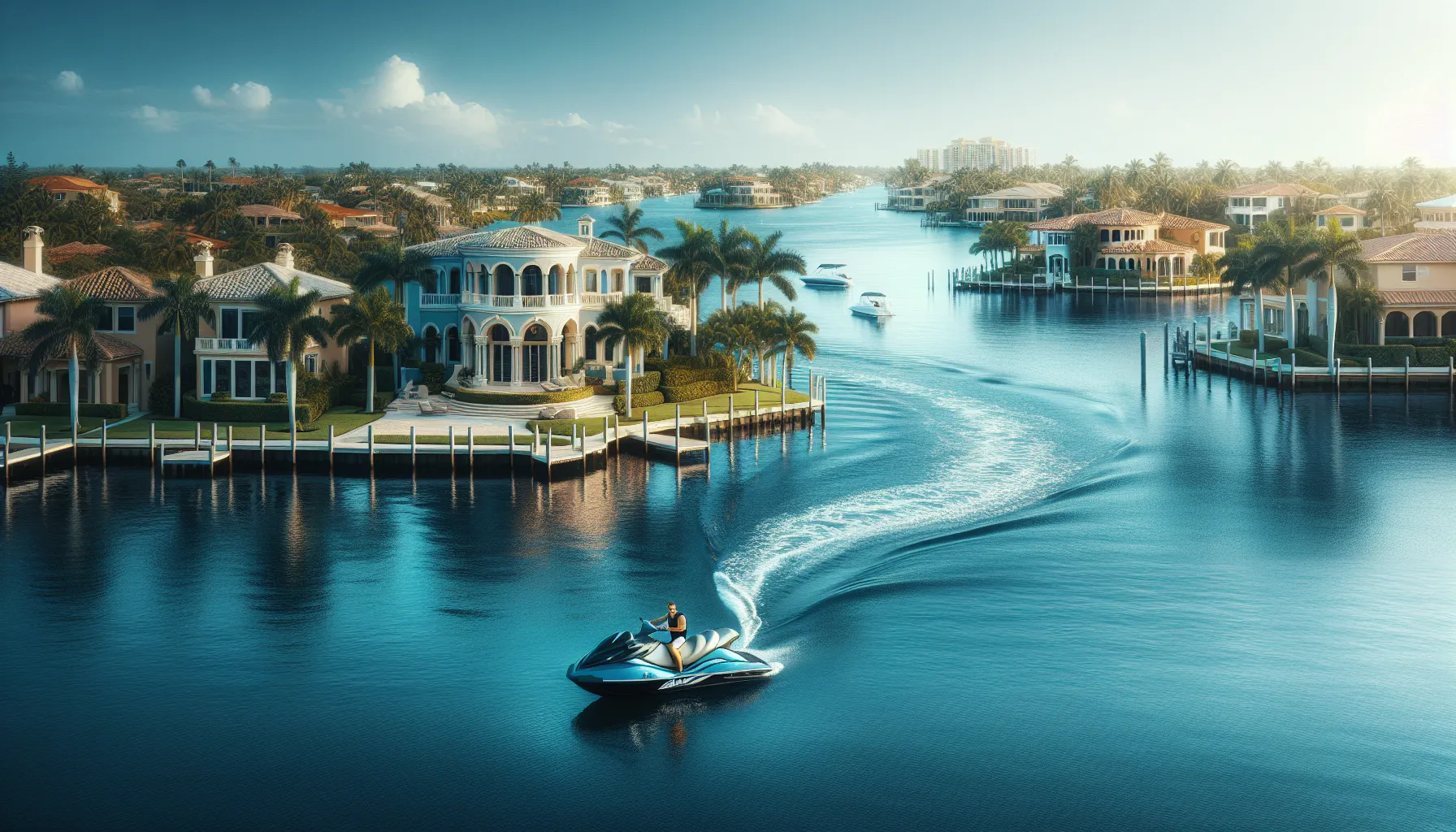

Palm Beach is one of the most photographed stretches of water in Florida, and also one of the most demanding to boat in. Rental jet skis idle past nine-figure mega-yachts, the Intracoastal fills up like a parade route on weekends, and a single careless wake can turn a relaxed afternoon into a very expensive conversation. This guide walks you through the etiquette that separates confident, welcome visitors from obvious tourists, and pairs every social "rule" with the actual Florida law behind it. By the end you will know how to manage your wake, pass a mega-yacht safely, share a sandbar, work a marina, and stay on the right side of both the harbormaster and the Florida Fish and Wildlife Conservation Commission (FWC).
What Palm Beach Boating Etiquette Really Means
Etiquette on Palm Beach waters is not about tuxedos and secret handshakes. It is about competence, courtesy, and self-awareness in a crowded, high-value environment. When a $40 million yacht, a tournament sportfisher, a paddleboarder, and a rental pontoon are all sharing the same 200 yards of Intracoastal Waterway, small mistakes compound quickly.
The good news is that almost all of it comes down to three habits: control your wake, communicate your intentions early, and give every other vessel more room than you think you need. Do those three things consistently and you will look like a local even on your first day.
The reason etiquette matters so much here is proximity. Palm Beach has narrow, no-wake canals lined with private docks and seawalls, a busy inlet, and popular anchorages that fill to capacity. There is very little margin for error. Treating other boaters, waterfront property, and wildlife with deliberate care is not snobbery, it is the price of admission for boating in a place this tight and this busy.
Legal Requirements Come First
Before you worry about the unwritten rules, get the written ones right. In Florida, anyone born on or after January 1, 1988 must complete an approved boating safety education course and carry a Boating Safety Education ID Card to legally operate a vessel of 10 horsepower or more. The card is not a "license" in the driver's-license sense, it never expires, and it is honored statewide, including on Palm Beach's waters.
If you are renting, personal watercraft (jet ski) operators must be at least 14 years old, and Florida requires the engine cut-off switch lanyard to be attached to the operator, their clothing, or their PFD whenever the vessel is underway. PWCs may not be operated from a half-hour after sunset to a half-hour before sunrise, so those golden-hour rides need to wrap up before the light goes.
A few more non-negotiables that apply everywhere in Florida, Palm Beach included:
- Children under 6 must wear a Coast Guard-approved life jacket at all times when a vessel under 26 feet is underway.
- Boating under the influence (BUI) is illegal at 0.08 percent blood alcohol concentration, and just 0.02 percent for operators under 21.
- You must report a boating accident to the FWC or local law enforcement if it involves a death, a disappearance, an injury requiring more than basic first aid, or property damage of roughly $2,000 or more.
If you are unclear on any of this, take an hour and get certified before your trip. The Florida boating safety course is state-standards online, fully online, and covers exactly the rules Palm Beach officers enforce. For a deeper walkthrough of who needs a card and how the requirement works, see our Florida boating license requirements guide.
Wake Management: The Cardinal Rule
If there is one thing that instantly marks a visitor in Palm Beach, it is a sloppy wake. The canals, the marina fairways, and the stretches near private docks are almost all posted as Idle Speed or Slow Speed / Minimum Wake zones, and they are actively enforced.
Understanding the two most common designations keeps you legal and courteous:
- Idle Speed / No Wake: The vessel must be operated at the minimum speed that still allows you to maintain steerage and headway. In practice, that is dead slow, barely moving.
- Slow Speed / Minimum Wake: The vessel must be fully off plane and settled into the water, producing minimal wake. You are not allowed to plow along at a "medium" speed that throws a large wave.
Beyond the posted zones, remember that in Florida you are legally responsible for your wake and any damage it causes. A wake that rocks a docked yacht into a piling, floods a kayak, or accelerates seawall erosion can leave you liable. When you pass docked boats, seawalls, anchored vessels, or anyone in the water, throttle back early and let your boat settle before you reach them, not as you pass.
Two practical tips locals live by: transition speeds gradually so you never throw a sudden "step" wake, and give yourself extra room on weekend mornings when the waterway is packed and everyone's patience is thinner. For a full breakdown of how these zones work elsewhere on Florida's Gulf Coast, our Tampa Bay no-wake zone guide explains the speed categories in more detail.
Sharing Water With Mega-Yachts
Palm Beach and neighboring Riviera Beach host some of the largest private yachts in the country, and a small boat interacting with a 150-foot vessel is a genuine safety situation, not just an etiquette one. Large yachts have deep drafts, limited maneuverability, big blind spots, and a professional crew who are watching everything around them.
Follow these principles whenever you are near a mega-yacht:
- Give it room and give it the channel. A deep-draft vessel is often restricted to the marked channel and cannot easily move over. Assume it has the right of way in tight water and stay out of its path.
- Never cut across the bow or linger alongside. Cross well astern where the captain can see you, and do not pace a moving yacht for photos.
- Stay clear of a yacht that is docking or maneuvering. Bow and stern thrusters, spring lines, and tenders are all in motion. Hold your position well back until it is settled.
- Watch your wake at their dock. Passing a docked mega-yacht at anything above idle is the fastest way to earn a call to your rental company.
The mechanics of overtaking a large vessel safely, choosing a side, signaling, and timing your pass, are worth studying before you go. Our neighbors up the coast wrote the book on it: read passing mega yachts safely for the wake and right-of-way specifics that apply just as well in Palm Beach.
Intracoastal Waterway and Bridge Etiquette
The Intracoastal Waterway (ICW) through Palm Beach is the main artery, and on a nice weekend it behaves like a slow parade. Predictability is everything. Hold a steady, consistent speed, keep generous spacing front and back, and signal your intentions clearly rather than darting between boats.
When overtaking a slower vessel, do it deliberately: the slower boat should ease to the side of the channel, you pass with minimum wake, and both of you acknowledge the courtesy. Aggressive "pushing" of a slower boat or a high-speed pass that soaks their cockpit is exactly the behavior locals notice.
Palm Beach's bascule bridges, including Flagler Memorial, Royal Park, and Southern Boulevard, have their own rhythm:
- Know the opening schedule. Many ICW bridges open only on a set schedule (for example, on the hour and half-hour) rather than on demand. Plan your approach so you are not gunning it to catch an opening or milling around blocking traffic.
- Hail the bridge tender on VHF Channel 09 (the standard bridge-to-vessel channel in Florida) or sound the proper signal, then be patient and courteous. Keep radio traffic brief and professional.
- Queue in order and hold station. Do not crowd the boat ahead, and give sailboats and larger vessels, which maneuver poorly at slow speed, room to hold their line.
For a closer look at how these fast-moving urban waterways operate and where renters get into trouble, our Fort Lauderdale Intracoastal boating rules covers the same ICW system just to the south. And if you are heading offshore through the inlet, the Lake Worth Inlet crossing guide explains timing and tides for one of the busiest passes in the area.
Anchoring and Sandbar Manners
Palm Beach's anchorages and sandbars, Peanut Island, the Lake Worth sandbar, and the flats around Singer Island, are where good etiquette is most visible because everyone is packed together for hours.
Anchoring courtesy
When you drop the hook, arrive slowly and read the room. Anchor at the same scope and swing as the boats already there so everyone rotates together with wind and tide. Give existing boats plenty of room; the general rule is that the boat that anchored first has the "rights" to their swing circle, and later arrivals fit in around them. Never anchor in a marked channel or where you would block navigation, and avoid dropping directly in front of a waterfront home's dock or a private beach club.
Sandbar etiquette
On a busy sandbar, keep music at a level that stays on your own boat, pack out every piece of trash, and control your kids and pets around neighboring vessels. When you leave, idle out slowly until you are well clear before getting on plane, a sandbar full of anchored boats and people in the water is no place for a wake.
The same courtesy applies to rafting up. Only raft when you are invited, bring your own fenders, match up carefully so you do not damage the neighboring hull, and do not overstay your welcome. Palm Beach's neighbors have this dialed in; the Cape Coral dock and marina courtesy guide covers rafting and tie-up manners in depth.
Marina, Dock, and Radio Courtesy
Marinas are where etiquette gets formal, and where a little preparation makes you look seasoned.
Before you arrive: Call ahead on the phone or hail the dockmaster on VHF to confirm your slip or fuel-dock space and ask which side to tie up. Never assume space is open. Have your fenders down and dock lines rigged before you enter the fairway.
As you approach: Come in slow, watch for the dockhand's signals, and let them help with lines. A calm, controlled approach at idle beats a fast, showy one every time. Tipping dockhands and fuel-dock attendants for good service is customary and appreciated.
At the fuel dock: Be efficient. Fuel, pay, and move off so the next boat can get in, rather than parking there to reorganize your cooler.
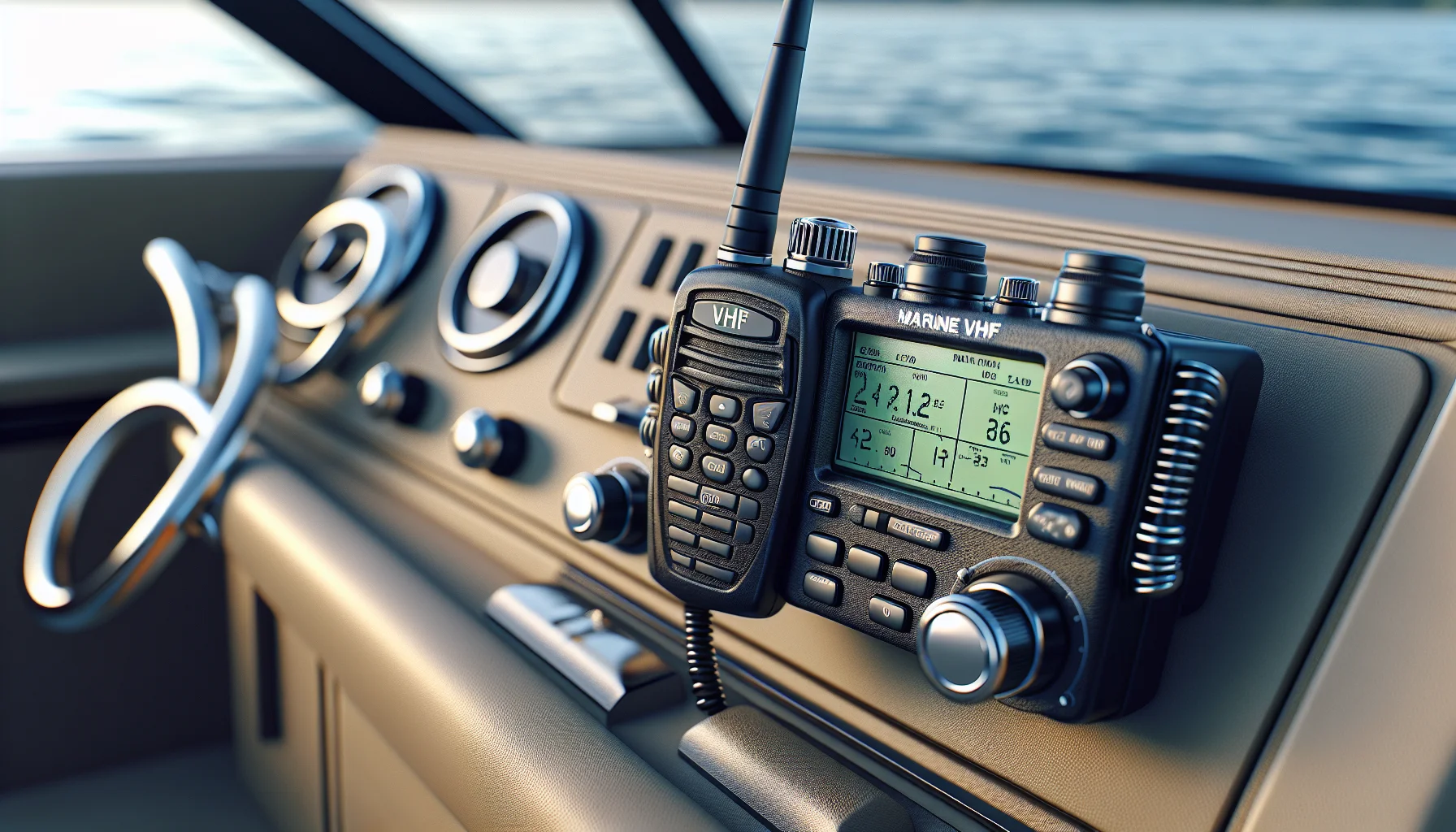
On the radio, keep it professional. VHF Channel 16 is for hailing and emergencies only, not chit-chat. Once you have made contact, switch to a working channel to continue. Keep transmissions short, avoid profanity, and never make a false distress call. If you are new to marine radio, our Palm Beach VHF radio basics guide walks through Channel 16, working channels, and how to make a proper Mayday call.
Right-of-way courtesy underpins all of this: knowing who is the stand-on vessel and who must give way prevents most close calls in a crowded harbor. If you are rusty, review our boat navigation rules and right-of-way guide before your trip.
Protecting Wildlife and the Waterway
Palm Beach sits in the heart of Florida manatee country, and the FWC enforces manatee protection zones aggressively, especially in the warmer, shallow waters where these animals feed and rest. In posted manatee zones you must obey the marked speed, which is often Idle Speed or Slow Speed depending on the season and location.
Practical wildlife etiquette:
- Slow down and post a lookout in shallow, grassy areas and near mangroves where manatees surface. Watch for the telltale "footprint" swirl on the surface.
- Never pursue, feed, or touch manatees, dolphins, or sea turtles. It stresses the animals and, for protected species, it is illegal.
- Keep the water clean. Discharging any sewage in these waters is prohibited; use marina pump-out stations. Pack out every bit of trash, and never toss anything overboard.
Being the boater who idles down for a manatee while a tourist blasts past is exactly the reputation you want. For tips on recognizing these zones and spotting the animals, see our guide on how to spot manatees while jet skiing and the statewide Florida manatee zones and speed regulations.
Tourist Mistakes to Avoid
Even well-meaning visitors give themselves away with a handful of avoidable errors. Watch out for these:
- Throwing a wake in a no-wake zone. The single most common, and most enforceable, mistake. When in doubt, slow down.
- Crowding or pacing large yachts for a photo. Give them room, cross astern, and keep moving.
- Anchoring badly: too close to other boats, in a channel, or with a different scope than everyone around you, so your boat swings into theirs.
- Blasting music at the sandbar. Sound carries far over water. Keep it on your own boat.
- Getting on plane too soon when leaving an anchorage, soaking the boats and swimmers you just left behind.
- Treating VHF 16 as a chat line. Hail, then switch to a working channel.
- Skipping the legal basics, boarding without the required education card, an unattached engine cut-off lanyard, or too few life jackets aboard.
Notice that almost every "etiquette" mistake is also either a safety issue or a legal one. That overlap is the whole point: in Palm Beach, courteous boating and lawful boating are the same thing.
Conclusion
Palm Beach rewards boaters who show up prepared, patient, and considerate. Manage your wake, give big vessels and other boats room, communicate early, respect the anchorages and the wildlife, and handle marinas and the radio with a little professionalism. Do that and you will find these famously exclusive waters surprisingly welcoming, no yacht club membership required.
Start with the foundation that everything else is built on: the legal knowledge every Florida operator needs. The state-standards online course takes just a few hours, ends with a 25-question exam (you need 80 percent to pass, with unlimited free retakes), and prints your temporary certificate the moment you pass.
Start the state-standards online course - $12.99
Get certified, review the local rules, and go enjoy one of the best boating destinations in America the right way.