
Pensacola gives new jet ski riders two completely different worlds within a few hundred yards of each other: the sheltered, forgiving waters of Pensacola Bay and the powerful, unpredictable Gulf of Mexico. Between them sits Pensacola Pass, a narrow inlet that funnels tide, current, and boat traffic into one of the most demanding stretches of water on the entire Panhandle. Reading this guide, you'll learn exactly where a beginner should build confidence, why the pass and the open Gulf punish inexperience, and how to progress from calm-bay novice to a rider who can genuinely handle rough water safely.
Every decision below comes back to one principle Florida Fish and Wildlife Conservation Commission (FWC) officers repeat after nearly every offshore rescue: match the water to your skill, not your ambition. Let's break down each environment so you can make that call before you ever touch the throttle.
Why Location Choice Matters More Than Machine
A modern personal watercraft (PWC) will do 50-plus miles per hour straight out of a rental slip, and it doesn't care whether the person twisting the throttle has ten hours or ten minutes of experience. That's what makes location the single most important safety decision a beginner makes in Pensacola. The machine won't protect you; the water you choose will.
Pensacola's geography stacks the deck in a beginner's favor if you know where to look. Behind the barrier islands of Perdido Key and Santa Rosa Island lies a huge system of protected bays, sounds, and bayous where waves rarely build and the shoreline is always close. Step through the pass, and you trade all of that protection for open ocean.
Under Florida law, anyone born on or after January 1, 1988 must carry a Boating Safety Education Card to operate a vessel of 10 horsepower or more, and that absolutely includes every rental jet ski on Pensacola's waters. The card exists because most PWC incidents come down to operator decisions, not mechanical failure. You can earn yours through an state-standards online Florida boating safety course before you ever load the trailer, which means your first ride starts with the rules already in your head instead of a laminated card you skimmed at the rental desk.
Understanding Pensacola Pass
Pensacola Pass is the roughly mile-wide inlet where Pensacola Bay drains into the Gulf, threaded between Fort Pickens on Santa Rosa Island and the eastern tip of Perdido Key. It is a beautiful, historic waterway — and it is not a beginner's playground.
What Makes the Pass So Demanding
Three forces collide in the pass, often at the same time:
- Tidal current. Every incoming and outgoing tide squeezes an enormous volume of water through a narrow gap. The current accelerates during tide changes and can push a PWC off its line faster than a new rider expects, especially near the deeper center of the channel.
- Opposing wind and swell. When an outgoing tide meets an onshore wind or incoming Gulf swell, the two forces stand the water up into short, steep, confused chop — the "washing machine" locals warn about. This is genuinely difficult water to control at speed.
- Traffic. The pass is the main artery for charter fishing boats, sailboats, shrimpers, and recreational cruisers heading offshore. Their wakes stack on top of the natural chop, and large vessels have limited ability to stop or turn.
Why Beginners Get Caught Out
The classic beginner mistake is drifting toward the pass on a calm morning, not realizing the tide is about to turn. Slack water looks inviting; twenty minutes later an outgoing current is running hard and a novice who tries to punch back against it can burn through fuel, tire out, and get swept toward open water. If you're new to reading current, the safest rule is simple: stay well inside the bay and treat the pass as a landmark, not a destination.
What the Open Gulf Demands
Cross through the pass and everything changes. The Gulf of Mexico has no barrier island in front of it, no nearby shoreline to run to, and no flat water to rest on. Even on a "calm" summer day, offshore swell rolls in with a rhythm that never stops.
The Physical and Skill Reality
Riding open water is a full-body effort. You're constantly absorbing swell through your legs and core, timing the throttle to climb and descend waves instead of slamming into them, and staying oriented without the shoreline references beginners rely on. Fatigue arrives fast, and a tired rider makes worse decisions in the exact environment that punishes them most.
If you fall off in the Gulf, the challenge multiplies. A modern PWC is designed to circle back when it senses the engine cut-off (kill switch) lanyard detach, but reboarding in swell, with the shore a mile or more away, is a different task than the flat-water reboard you practiced in the bay. This is why FWC and the U.S. Coast Guard consistently urge new riders to build offshore skills gradually and never alone.
When the Gulf Is Actually Appropriate
The open Gulf isn't off-limits forever — it's off-limits until you've earned it. Riders who handle the Gulf safely typically have many hours of varied bay experience, are comfortable in a genuine two-to-three-foot chop, ride with at least one buddy on a second PWC, carry offshore-grade safety gear, and go out only in settled weather with a clear forecast. If you can't check every one of those boxes honestly, the answer for today is the bay.
The Best Beginner Waters Around Pensacola Bay
Here's the good news: Pensacola's protected waters are enormous, scenic, and forgiving. You can spend an entire season building real skill without ever needing the Gulf. These are the standout beginner zones.
Big Lagoon
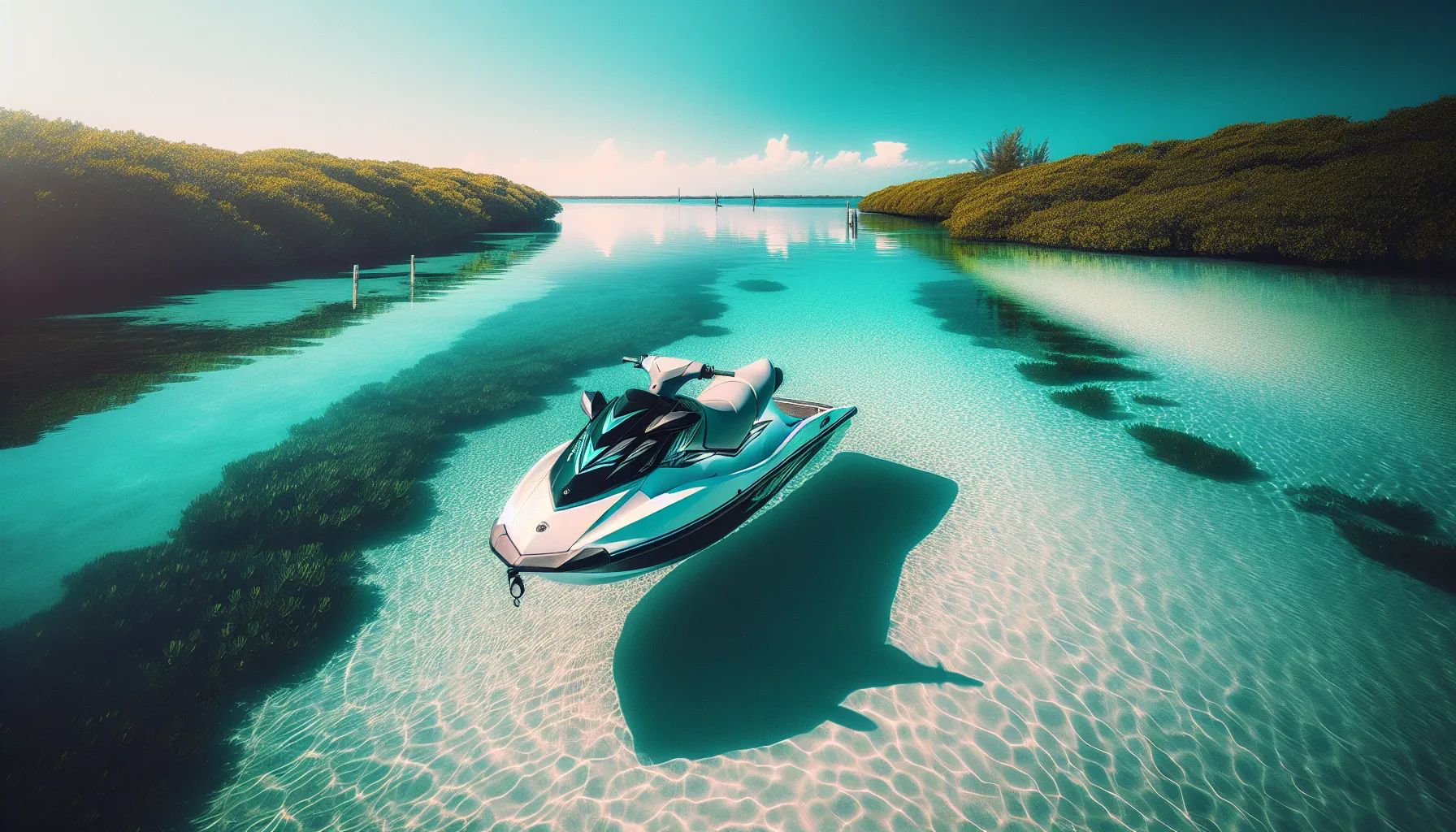
Tucked behind Perdido Key on the bay's northwest side, Big Lagoon is one of the calmest large bodies of water in the area. Big Lagoon State Park sits on its northern shore with a protected launch. Natural windbreaks keep the surface manageable even when the Gulf is rough, and the shoreline is always close — ideal for a first ride.
Santa Rosa Sound
The Sound is a long, narrow, protected ribbon of water running east behind Santa Rosa Island. Its width and light weekday traffic let a beginner start in the calmer, narrower sections and gradually extend range as confidence grows. Coves and beaches along the way give you natural rest stops and clear landmarks for basic navigation practice.
Bayou Chico and the Inner Bayous
The bayous on the north side of Pensacola Bay are about as sheltered as open water gets — often glassy, with wide turning room and little commercial traffic. They're a superb place to drill the fundamentals: smooth starts and stops, low-speed turns, and practicing an intentional dismount and reboard while the water is flat.
Escambia Bay (When You're Ready)
Once you have several hours of comfortable riding, the eastern reach of Escambia Bay offers longer runs and slightly livelier conditions — a natural next step before you ever think about the pass. Watch the weather here, since afternoon sea breezes build chop faster than in the tighter bayous.
If you're renting rather than trailering your own machine, our complete guide to Pensacola jet ski rentals breaks down where to launch, what operators require, and how to line up your safety card before you arrive.
A Progressive Skill-Building Plan
Skill comes from time on the water in the right order. Rushing straight to rough conditions is how beginners end up as rescue statistics. Use this staged plan and let your comfort — not the calendar — decide when to advance.
Stage 1: First Hours (Calm Bayou or Big Lagoon)
Focus entirely on control. Practice starting, stopping, and slow-speed maneuvering; learn how the machine planes and how it drifts when you back off the throttle; and get comfortable with the engine cut-off lanyard clipped to your PFD every single time. Stay within easy sight of your launch point and keep speeds modest. Deliberately practice falling off and climbing back on in flat water so it's a known skill, not a panic moment later.
Stage 2: Building Confidence (Santa Rosa Sound)
Now extend your range and your comfort with speed. Cross boat wakes at a controlled angle, practice holding a heading, and start reading how wind changes the surface through the day. Keep your rides to a distance you could comfortably return from if the weather shifted.
Stage 3: Varied Conditions (Open Pensacola Bay)
With solid hours behind you, work on rougher bay chop, sharing water with more traffic, and managing fuel over longer runs. This is where you develop the judgment — not just the reflexes — that offshore riding demands. Good throttle discipline over waves and a habit of checking your fuel and your exit plan matter more here than raw speed.
Stage 4: Considering the Pass or Gulf
Only after you handle Stage 3 conditions confidently should the pass or the Gulf enter the conversation, and only with a buddy, a settled forecast, full safety gear, and a plan for getting home if something breaks. There is no shame in deciding you're not there yet. The Gulf will still be there next season.
Reading Weather, Wind, and Tides Before You Launch
The single most useful habit a Pensacola beginner can build is checking conditions before every ride — not just glancing at the sky at the dock.
Time of Day
Mornings are almost always the beginner's friend on the Panhandle. Wind is typically lightest, traffic is thinner, and visibility is best. As the day heats up, the sea breeze builds and the bay's surface roughens, and in summer, afternoon thunderstorms can develop quickly. Getting your ride in early sidesteps most of that.
Wind and Waves
Learn to read a marine forecast for wind speed and direction, wave height, and any small craft advisory. As a rough rule for beginners: glassy water with light ripples is ideal, scattered small whitecaps mean it's time to stay in the most protected water, and consistent whitecaps or a small craft advisory mean stay off the water entirely. NOAA's marine forecast and popular wind apps are your friends, but local marina reports and the honest advice of rental staff often tell you the most.
Tides and Current
Because the pass is tide-driven, knowing whether the tide is coming in, going out, or at slack tells you a lot about how the water near it will behave. A rising or falling tide near the pass is not the place for a beginner. If you're learning to read tide charts, the same skill applies all over the state — our guide to reading tides and local patterns walks through the apps and charts that make it click.
Storms and Lightning
Summer in the Panhandle means fast-building storms, and a PWC is a bad place to be caught out. If you see towering clouds building or hear thunder, head in immediately — the standard guidance is to be off the water well before a storm arrives, not to wait and see. The principles in our thunderstorm safety guide apply just as much on Pensacola Bay as they do across the state.
Areas Beginners Should Avoid
A few specific spots around Pensacola consistently generate trouble for inexperienced riders. Learn them now so you can steer clear.
Pensacola Pass During a Running Tide
As covered above, the pass during any strong tidal flow — especially an outgoing tide against onshore wind — is genuinely hazardous. Save it for real experience.
The Immediate Gulf Side of the Barrier Islands
The moment you round the tip of Perdido Key or Santa Rosa Island into the open Gulf, you lose all shoreline protection and face longshore currents and unbroken swell. It's deceptively close to calm bay water but a completely different environment.
Restricted Military Waters
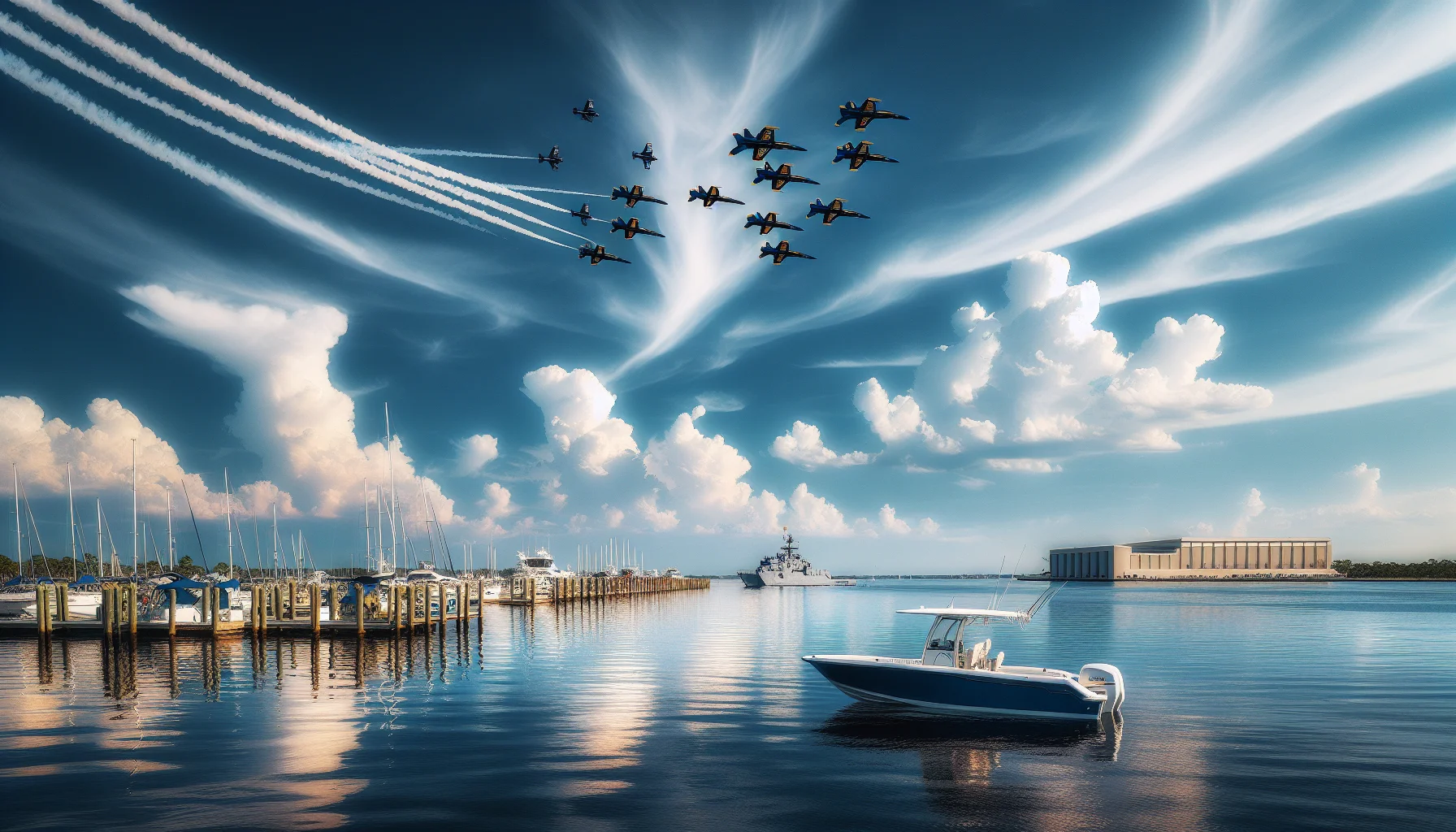
Pensacola is a Navy town, and there are restricted and security zones around Naval Air Station Pensacola and associated waters that recreational operators must not enter. These boundaries carry federal consequences and aren't always obvious from the water. Before you ride the western bay, read up on exactly where those lines are in our guide to boating near Pensacola Naval Air Station.
Shallow Grass Flats and Oyster Beds
Even inside "safe" water, unmarked shallows, seagrass beds, and oyster bars can damage a hull, foul a jet pump, and strand you. Seagrass is also protected habitat — running over shallow flats can tear it up and earn a citation. Stick to marked channels and deeper water until you know an area well.
Legal Requirements and Safety Gear for Pensacola Riders
Florida's PWC rules are strict for good reason, and knowing them keeps your ride legal and safe.
The Rules That Apply to Every Rider
- Education card. Anyone born on or after January 1, 1988 must carry the Boating Safety Education Card to operate a 10-plus-horsepower vessel.
- Minimum age. No one under 14 may operate a personal watercraft in Florida, period.
- No night operation. PWCs may not be operated from a half-hour after sunset until a half-hour before sunrise — even with lights.
- Engine cut-off lanyard. The engine cut-off switch lanyard must be attached to the operator (wrist, PFD, or clothing) whenever the PWC is underway.
- Life jackets. Every person on a PWC must wear a Coast Guard-approved life jacket, and children under 6 must wear a PFD on any vessel under 26 feet while underway. A whistle or sound-signaling device is also required.
- Sober operation. Florida's Boating Under the Influence (BUI) threshold is a 0.08 blood-alcohol level (0.02 for operators under 21). Impaired riding is the fastest way to turn a fun day into a tragedy.
For a deeper walk-through of every age, hour, and equipment rule, see our complete guide to Florida jet ski and PWC laws, and for the specifics on choosing and wearing the right PFD, read our Florida life jacket requirements guide.
Gear Checklist
For protected bay riding, wear your PFD, keep the lanyard clipped, carry a whistle, and stash a phone in a waterproof case. If you ever progress toward the pass or Gulf, that list grows to include visual distress signals, a way to call for help that works offshore, and a realistic fuel margin — because in open water, "almost enough fuel" is not enough.
Emergency Procedures on the Water
Even careful riders can face trouble. Knowing what to do ahead of time turns a scary moment into a manageable one.
If You're Caught in Current Near the Pass
Don't try to power straight against a strong current — you'll exhaust your fuel and yourself. Angle across the flow toward slacker water near the edges, keep a cool head, and if you can't make progress, call for help early rather than after you're out of options.
If You Fall Off
Stay with the machine. A floating PWC is far easier for rescuers to spot than a swimmer, and it keeps you buoyant with your PFD. Because the engine cut-off lanyard shut the engine down when you separated, reboard from the stern as you practiced in the bay, re-clip the lanyard, and restart.
If You Break Down
Signal for help with your whistle and by waving, stay visible, and use your phone or radio to call for assistance. In the bay you're usually within easy reach of other boaters; that's one more reason the bay is where beginners belong while they build skill. Channel 16 on a VHF radio is the standard hailing and distress channel if you carry one.
Every one of these responses is covered in depth in an FWC-approved course, alongside navigation rules, right-of-way, and the local knowledge that keeps you out of trouble in the first place.
Start With the Right Foundation
Pensacola rewards riders who respect the water. The bay, the sound, and the bayous offer hundreds of square miles of gorgeous, forgiving riding where a beginner can safely fall in love with the sport. The pass and the open Gulf will still be waiting when your skills — and your judgment — are ready for them. There is genuinely no rush and no shame in staying inside the barrier islands.
The best first step happens before you ever launch: get educated. Florida's exam is just 25 questions, you need 80% to pass, and you get unlimited retakes, so there's no reason to put it off. Learn the rules, understand Pensacola's conditions, and ride your first mile already knowing how to keep yourself safe.