Florida's drinking on a boat laws come down to one question: who is running the boat. The boating under the influence (BUI) law in Florida Statute 327.35 applies to a person operating a vessel. The operator commits BUI if alcohol impairs their normal faculties, or if their blood or breath alcohol level is 0.08 or higher. If the operator is under 21, a separate law, s. 327.355, makes it unlawful to operate with a breath alcohol level of 0.02 or higher.
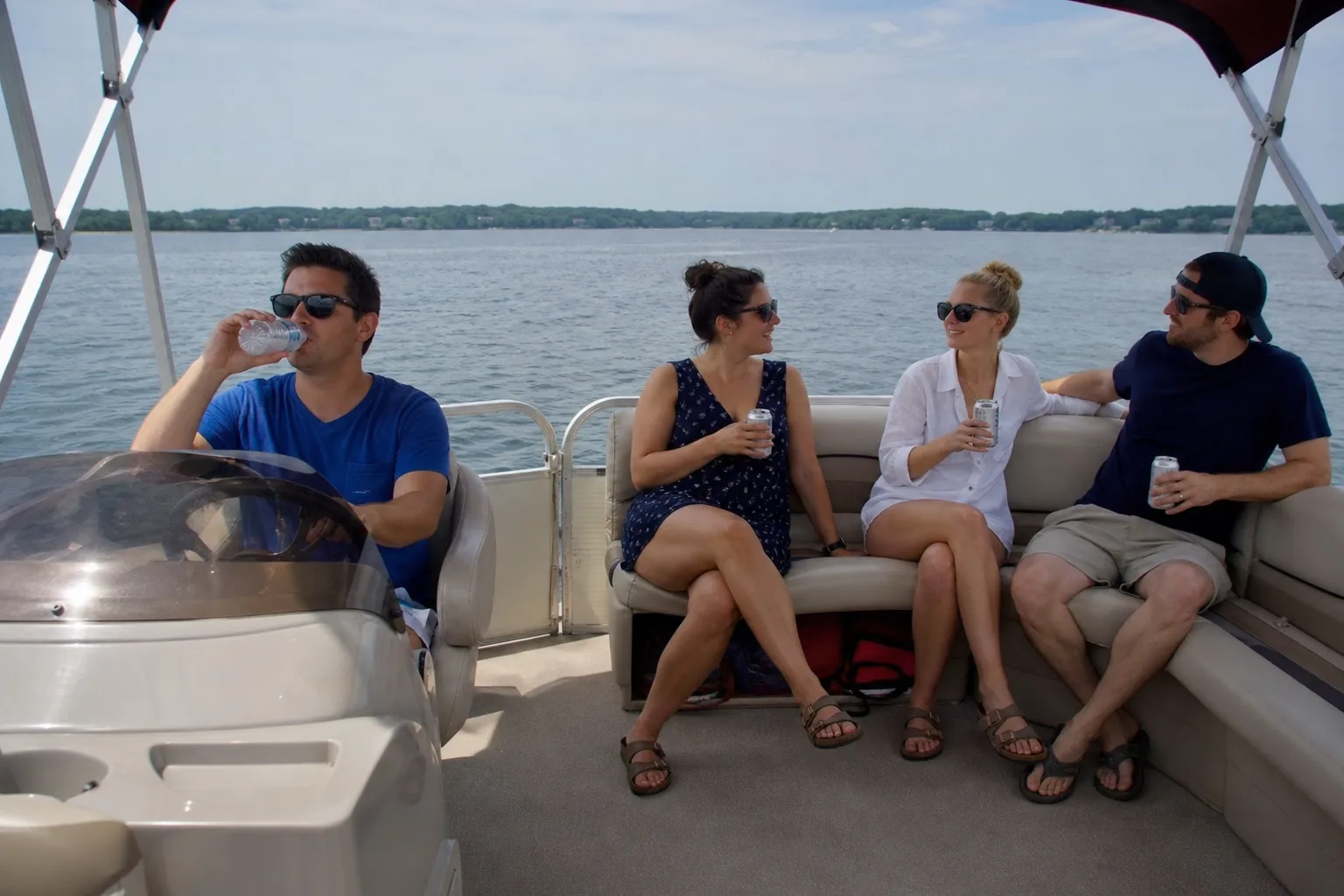
Passengers are in a different position. Section 327.35 is written about the person operating, and nothing in it makes it an offense for an adult passenger to have a drink while someone sober runs the boat. Florida's open container law, s. 316.1936, is written for vehicles on roads. So on a typical Florida boat, adults 21 and older may drink as passengers, and the person at the helm carries the legal risk.
That short answer has edges, and they catch people every weekend: what counts as "operating," the under-21 rules, the breath test you agree to by driving the boat, and the drive home with the trailer. Each one is below.
Who Counts as the Operator
The whole BUI law hangs on the word "operate," so it pays to know how Florida defines it. Under s. 327.02, to operate means to be in charge of, in command of, or in actual physical control of a vessel on Florida waters, or to exercise control over or have responsibility for the vessel's navigation or safety while it is underway. It also covers steering a vessel that is being towed by another vessel.
That definition is wider than "the person holding the wheel." In practice it means:
- The captain who hands the wheel to a friend can still be the person responsible for navigation and safety while the boat is underway.
- Swapping drivers at the sandbar does not reset anything. Whoever takes control next is the operator, and their level is the one that matters.
- Steering a disabled boat under tow is operating, even with the engine off.
The safest reading for a group: decide before you leave the dock who will run the boat for the whole day, and that person stays sober. The Legislature put the same idea into the statute itself. Subsection (10) of s. 327.35 says it is the Legislature's intent to encourage boaters to have a "designated driver" who does not drink.
The Limits That Apply to the Operator
Florida has two alcohol limits on the water, both tied to the operator's age. FWC lists both on its boating regulations page.
| Who is operating | Unlawful level | Statute |
|---|---|---|
| Operator 21 or older | 0.08 blood or breath alcohol, or any level that impairs normal faculties | s. 327.35 |
| Operator under 21 | 0.02 breath alcohol | s. 327.355 |
Two details are easy to miss.
Impairment alone is enough. The 0.08 number is one way to commit BUI. Section 327.35(1)(a) also covers an operator who is under the influence of alcohol, certain chemical substances or controlled substances to the extent that their normal faculties are impaired. An operator below 0.08 who is visibly impaired is still exposed.
Drugs count too. The same subsection names chemical substances listed in s. 877.111 and substances controlled under chapter 893, so the BUI law reaches impairment from more than beer and liquor.
For the full penalty schedule, including second and third offenses, see our guide to Florida BUI laws and penalties.
What Passengers May and May Not Do
An adult passenger who is 21 or older can have a drink aboard while a sober operator runs the boat. That is the common Florida day on the water, and the BUI statute does not reach it. A few rules still apply to people who are not at the helm.
Passengers under 21 may not have alcohol at all. Florida's underage possession law, s. 562.111, makes it unlawful for anyone under 21 to possess alcoholic beverages, with narrow employment exceptions. A boat is not an exception, and an adult who hands a teenager a beer on a sandbar creates a problem for both of them.
Skiers and tubers may not be impaired. FWC's regulations summary says no one may ski or use another aquaplaning device while impaired by alcohol or other drugs. A rider on a tube or wakeboard is subject to that rule even though they are not driving.
A passenger who takes over becomes the operator. If the designated driver gets tired and a passenger who has been drinking takes the wheel for the ride back, every limit in the table above now applies to that passenger.
Children aboard raise the stakes for the operator. Under s. 327.35(4), an operator convicted of BUI who had a passenger under 18 aboard faces the higher fine and jail ranges that also apply to a 0.15 reading.
The Breath Test You Agree To by Operating
Florida treats operating a boat as consent to testing. Under s. 327.352, a person who operates a vessel in Florida is deemed to have consented to a breath test if lawfully arrested for an offense allegedly committed while operating under the influence. The officer must tell the operator that refusing results in a civil penalty of $500.
The penalty itself is set in s. 327.35215: a person lawfully arrested for BUI who refuses a blood, breath or urine test under s. 327.352 is subject to a $500 civil penalty. Section 327.352 also says the refusal is admissible as evidence in a criminal case, and that a refusal after a prior refusal penalty or a prior license suspension for refusal is a first-degree misdemeanor.
Operators under 21 have their own version. Under s. 327.355, an officer with probable cause can detain an underage operator and request a breath test. Refusing after the officer's warning is itself a violation, carrying the same 50 hours of public service and a suspension of vessel operating privileges until the hours are done.
What a BUI Conviction Costs
The numbers in s. 327.35 show why the designated driver is worth it. For a first conviction:
- Fine: $500 to $1,000.
- Jail: up to 6 months.
- Probation and service: probation of up to 1 year, with at least 50 hours of public service or community work as a condition.
- The boat: the court must order the vessel the person operated, or one vehicle registered in their name, impounded or immobilized for 10 days.
- Substance abuse course: required, along with monthly reporting probation.
If the operator's level was 0.15 or higher, or a passenger under 18 was aboard, the first-conviction fine rises to $1,000 to $2,000 and the jail range to up to 9 months. An extra $60 fine is added to every conviction under subsection (9).
The penalties climb from there. A third conviction within 10 years of a prior one is a third-degree felony, and an impaired operator who causes a death commits BUI manslaughter, which carries a 4-year mandatory minimum prison term.
A violation of s. 327.355 by an underage operator is a noncriminal infraction. The court must still order 50 hours of public service, no vessel operation until the hours are done, and completion of a classroom or online boating safety course at their own expense. That does not stop prosecutors from also charging BUI under s. 327.35. Our breakdown of what happens after a BUI in Hollywood, Florida walks through how a stop plays out on a busy waterway.
The Drive Home With the Trailer
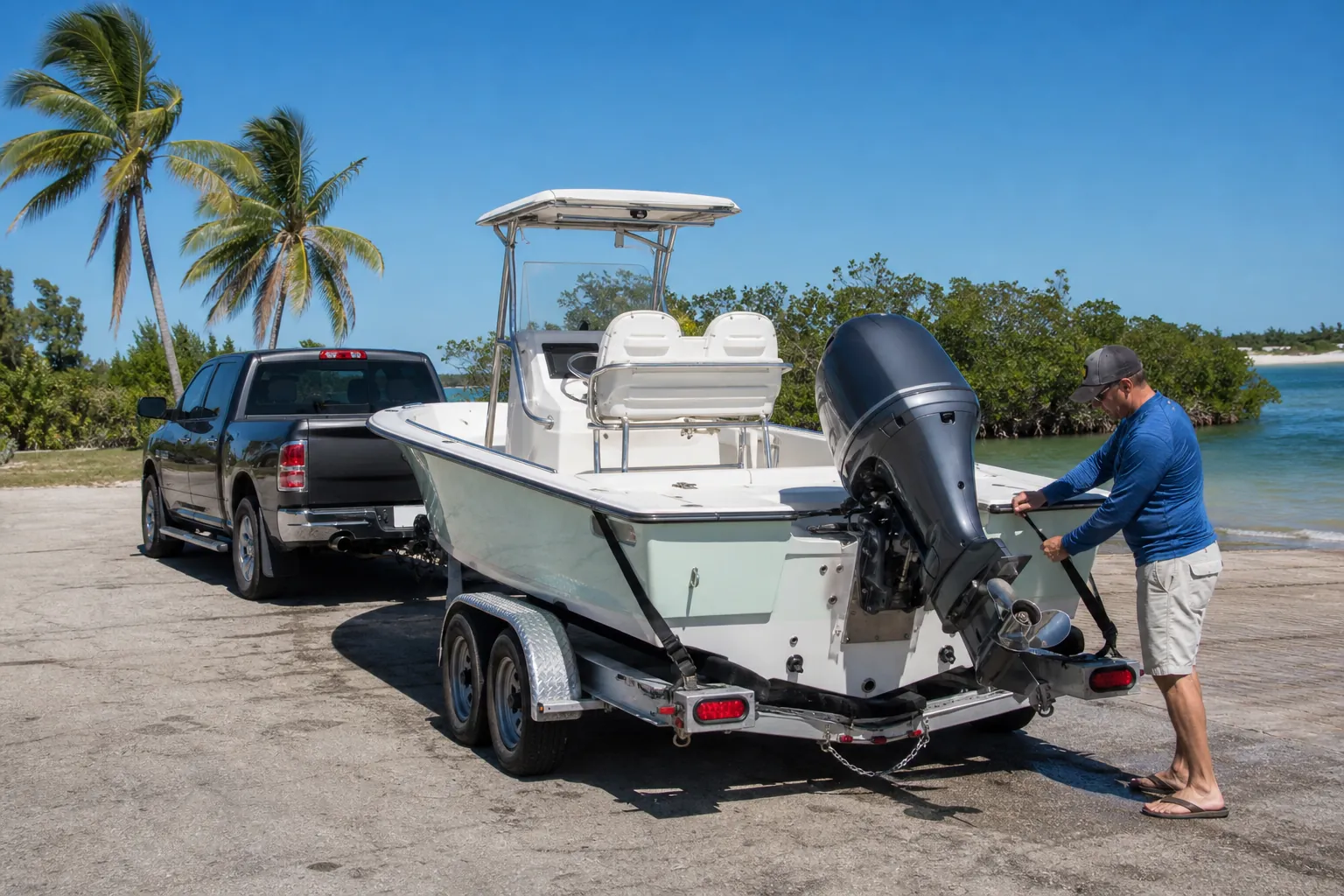
The boat ramp is where the legal ground changes. Once the boat is on the trailer and the truck is on the road, the vehicle laws apply. Florida's open container law, s. 316.1936, makes it unlawful to possess an open container of alcohol or drink while operating a vehicle, or while a passenger in a vehicle being operated, in the state.
That catches groups who leave half-finished drinks in the cooler or the truck cab. Before you pull out of the ramp lot:
- Empty or seal anything that was opened during the day.
- Put the cooler in the truck bed or the boat, away from the cab.
- Make sure the person driving the truck is the same sober person who ran the boat, or someone who has not been drinking.
Towing adds its own equipment rules for lights, brakes and registration. Our Florida boat trailer laws guide covers them.
A Simple Plan for a Day With Drinks Aboard
Groups that plan ahead rarely have trouble. A workable routine:
- Pick the operator at the dock. One person runs the boat all day, including the ride back, and does not drink. If that person was born on or after January 1, 1988 and the motor is 10 horsepower or more, they also need their boating safety education ID card and photo ID aboard, per FWC's regulations.
- Keep alcohol away from anyone under 21. That includes teenagers on the boat with their parents.
- Keep riders sober. Anyone getting on skis, a wakeboard or a tube should not be impaired.
- Plan the swap. If the operator needs a break, the replacement should be someone who has not been drinking.
- Close up before the ramp. Open containers stay out of the truck cab.
- Check posted rules where you stop. Parks, beaches and marinas can post their own rules about alcohol on shore, so read the signs at the sandbar or dock.
An operator who knows the rules also knows what to expect at a stop. Boat Skill is preparing the Florida temporary boating certificate, the 90-day proof of boating safety education that renters call the jet ski test.
Get notified when Boat Skill enrollment opens
Sources
- Florida Statutes s. 327.35: Boating under the influence; penalties
- Florida Statutes s. 327.355: Operators under 21 who have consumed alcohol
- Florida Statutes s. 327.352: Tests and implied consent
- Florida Statutes s. 327.35215: Penalty for failure to submit to test
- Florida Statutes s. 327.02: Definitions
- Florida Statutes s. 562.111: Possession of alcohol by persons under 21
- Florida Statutes s. 316.1936: Open containers in vehicles
- FWC: Boating Regulations
Common questions
Is it legal to drink on a boat in Florida?
For adult passengers 21 and older, yes. Florida's BUI law, s. 327.35, applies to the person operating the vessel. The operator commits BUI at a blood or breath alcohol level of 0.08 or higher, or at any level that impairs their normal faculties.
Can the boat driver have one drink in Florida?
The law does not set a zero limit for operators 21 and older, but an operator commits BUI at 0.08 or at any level that impairs normal faculties. Operators under 21 are limited to below 0.02 breath alcohol under s. 327.355. The safest plan is an operator who does not drink.
Is there an open container law for boats in Florida?
Florida's open container law, s. 316.1936, is written for vehicles on roads. On the water, the BUI rules in chapter 327 apply to the operator. The open container law applies again as soon as you are driving the tow vehicle home.
What is the legal alcohol limit for operating a boat in Florida?
0.08 blood or breath alcohol for operators 21 and older under s. 327.35, and 0.02 breath alcohol for operators under 21 under s. 327.355. FWC lists both limits on its boating regulations page.
Can someone under 21 drink on a boat if their parents are aboard?
No. Florida's underage possession law, s. 562.111, makes it unlawful for anyone under 21 to possess alcoholic beverages, apart from narrow employment exceptions. Being on a boat or with a parent does not change that.
What happens if I refuse a breath test on a boat in Florida?
An operator lawfully arrested for BUI who refuses a breath, blood or urine test faces a $500 civil penalty under s. 327.35215, and the refusal can be used as evidence. A refusal after a prior refusal penalty or prior suspension for refusal is a first-degree misdemeanor under s. 327.352.
Can a passenger get a BUI in Florida?
The BUI statute applies to a person operating a vessel, and Florida defines operating to include being in charge of or in actual physical control of the boat, or responsible for its navigation or safety while underway. A passenger who takes the wheel, or steers a boat under tow, is operating.
What is the penalty for a first BUI in Florida?
Under s. 327.35, a first conviction carries a fine of $500 to $1,000, up to 6 months in jail, probation with at least 50 hours of public service, a 10-day impoundment or immobilization of the vessel or a vehicle, and a substance abuse course. A level of 0.15 or a passenger under 18 aboard raises the fine to $1,000 to $2,000 and the jail range to up to 9 months.