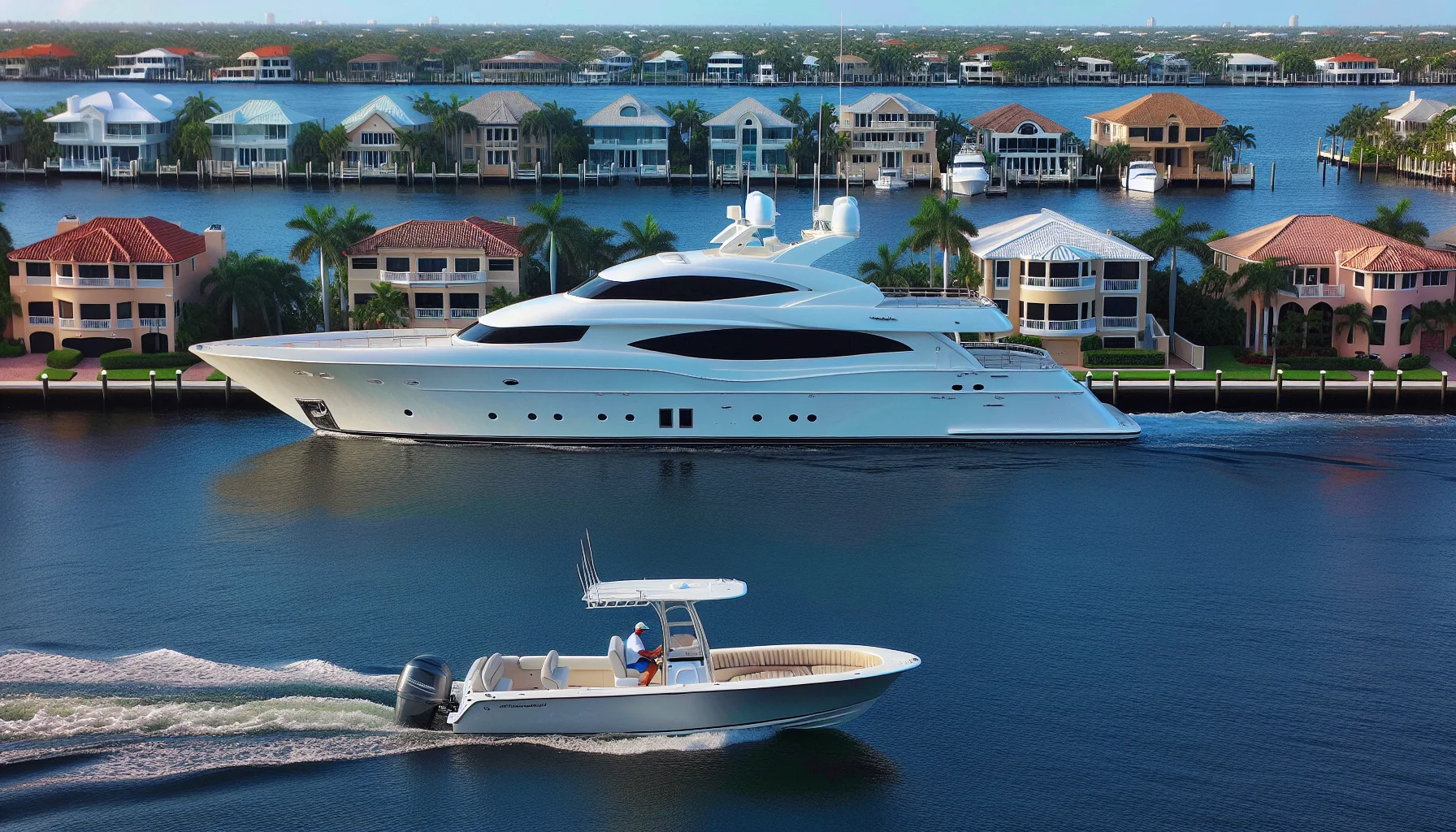
The Fort Lauderdale Intracoastal Waterway is one of the busiest and most beautiful stretches of protected water in Florida. On a single afternoon you might share the channel with a 150-foot superyacht, a dinner-cruise boat, a paddleboarder, and a first-time jet ski renter. That mix is exactly why the ICW rewards operators who know the rules and punishes those who guess. By the end of this guide you will know how to read the channel markers, where minimum-wake and idle-speed zones apply, how to protect manatees, how to work the drawbridges without frustration, and exactly what Florida law requires before you take the helm.
This is practical, accurate information built for renters and visiting boaters, not a rehash of vague "go slow and be careful" advice. Let's get you cruising the "Venice of America" with confidence.
Why The Fort Lauderdale ICW Demands Extra Skill
The Intracoastal Waterway is a protected inland channel that runs the length of Florida's east coast, and the Fort Lauderdale segment through Broward County threads past downtown, Las Olas, and Port Everglades. What makes this stretch unusually demanding is not any single hazard but the density of them stacked together.
- Traffic mix: Recreational boats, commercial tour vessels, water taxis, and megayachts all use the same channel, often at the same time.
- Narrow, walled water: Much of the ICW is bordered by seawalls and private docks, so there is little room to maneuver and nowhere for your wake to dissipate before it slaps someone's hull or dock.
- Manatees: Broward's warm, sheltered canals are prime manatee habitat, which means slow-speed zones you are legally bound to obey.
- Bridges: A series of drawbridges control the flow of traffic, and each has its own opening schedule.
The good news is that none of this is hard once you understand the system. The single biggest mistake renters make is treating the ICW like open water and running at cruising speed. Slow down, read the markers, and most of the difficulty disappears. If you want the full foundation before you launch, the fastest path is an state-standards online Florida boating safety course that covers navigation, right-of-way, and Florida-specific law in one sitting.
Reading The Waterway: Channel Markers And The ICW Route
Navigation on the ICW starts with correctly reading aids to navigation. Get this wrong and you can run aground on a shoal that is clearly marked for anyone who knows the code.
The Red-Right-Returning Rule And The ICW Twist
The federal lateral system uses the phrase "red, right, returning" - keep red markers on your right (starboard) when returning from sea toward a harbor. On the Intracoastal Waterway, "returning" is defined as traveling southbound (from New Jersey toward Texas). So heading south through Fort Lauderdale, you keep red markers to starboard and green markers to port. Heading north, reverse it.
Yellow Symbols Are Your ICW Compass
Because the ICW often overlaps with local channels that use their own red-and-green markers, ICW routes carry small yellow symbols:
- A yellow triangle means treat that marker as a red aid - keep it to starboard when southbound.
- A yellow square means treat that marker as a green aid - keep it to port when southbound.
Follow the yellow symbols and you will stay in the Intracoastal channel even where it crosses inlets and side channels. If channel markers still feel like a foreign language, our deep-dive on Florida channel markers and navigation aids breaks down every buoy, daymark, and light you will encounter.
Stay In The Channel
Outside the marked channel, water depth in the ICW can drop fast, and seagrass flats near the edges are both easy to run aground on and environmentally protected. When in doubt, stay between the markers and give yourself a comfortable margin.
Speed Zones And No-Wake Rules That Keep You Legal
Speed enforcement is where most renters get into trouble, and it is worth understanding that "speed" on the ICW is usually regulated by the wake you throw, not a posted number in miles per hour.
Know Your Speed-Zone Terms
- Idle Speed / No Wake: The slowest speed at which you can still maintain steerage - essentially a walking pace that produces no appreciable wake.
- Slow Speed / Minimum Wake: Fully off plane and settled into the water, leaving a small wake. Not idle, but nowhere near cruising.
- Resume Normal Safe Operation: You may return to a prudent cruising speed for conditions, always accounting for traffic and visibility.
These zones are marked with regulatory signs (white with orange borders and black lettering). Read them and adjust before you enter the zone, not after.
Where Slow And No-Wake Rules Commonly Apply
Even where a zone is not posted, Florida operators are responsible for the damage and danger their wake creates. Practically, you should expect and respect slow or minimum-wake operation:
- Near docks, moored and anchored vessels, and marinas
- In and around bridge approaches and narrow canals
- Near marked swim areas, boat ramps, and fuel docks
- Anywhere congestion makes fast operation unsafe
Downtown Fort Lauderdale, the Las Olas area, and the New River corridor in particular carry extensive slow-speed and idle-speed zones because of dense dock frontage and heavy foot traffic. When you approach a stretch lined with yachts and restaurants, assume you should be off plane. For a broader look at how Florida structures these areas, our Tampa Bay no-wake zone and speed-limit guide explains the same regulatory framework you will see used statewide.
Your Wake Is Your Responsibility
This is the rule that surprises renters most: if your wake damages a docked boat, throws a person off balance, or swamps a smaller vessel, you can be held responsible for it - even if you were not technically speeding. On a waterway lined with expensive boats and property, that liability is real. When you pass moored vessels or docks, ease off, let your wake flatten, and pass with room to spare.
Manatee Protection On Broward's Waterways
Fort Lauderdale sits in prime manatee country, and manatee protection zones are among the most strictly enforced rules on the water. Florida manatees are a protected species, and both federal and state law prohibit harming, harassing, or disturbing them.
How Manatee Zones Work
Manatee protection zones are marked with regulatory signs and may be year-round or seasonal, and they typically require idle speed or slow speed depending on the location and time of year. Seasonal zones commonly tighten during the cooler months when manatees gather in warm-water refuges, so a stretch that allowed normal operation in July may require idle speed in January. Always read the sign in front of you rather than relying on memory.
Practical Manatee Etiquette
- Obey posted speed zones exactly - this is the single most important thing you can do.
- Wear polarized sunglasses to spot the telltale "footprint" swirl a manatee leaves on the surface.
- Never feed, chase, touch, or pursue a manatee.
- If you see an injured or dead manatee, report it to the FWC Wildlife Alert hotline at 1-888-404-FWCC (3922).
For the full picture on how these zones are drawn and enforced across the state, read our guide to Florida manatee zones and speed regulations. It will make the signs you see in Fort Lauderdale far easier to interpret.
Working The Drawbridges Without Getting Frustrated
The ICW through Fort Lauderdale passes under a series of drawbridges, and knowing how they operate turns a stressful bottleneck into a routine part of the trip.
On-Demand Versus Scheduled Openings
Bridges over the ICW fall into two broad categories. Some open on signal (on demand) whenever a vessel requests it. Others operate on a restricted schedule, opening only at set intervals - often on the hour and half-hour - and many restricted bridges suspend openings during weekday rush-hour windows to keep road traffic moving. Fixed-height bridges tall enough to clear most recreational traffic do not open at all; you simply pass beneath.
Because schedules and restrictions change seasonally and by federal regulation, do not rely on a number you memorized. Confirm the current schedule before your trip using an updated cruising guide or chart, and watch for posted clearance boards at each bridge that show the current vertical clearance at the waterline.
How To Request And Pass A Bridge
- Monitor and hail on VHF Channel 9, the designated bridge-to-bridge channel in this area. Call the bridge by name, state your vessel name, your direction of travel, and request an opening.
- Hold your position clear of the fendering and out of the channel while you wait, keeping steerage against current and wind - the current under a bridge can be surprisingly strong.
- Maintain your order of arrival. Do not jockey ahead of boats that were waiting before you.
- Proceed at slow speed once the span is fully open and the tender signals or acknowledges you, staying to the right so opposing traffic can pass.
- Never try to squeeze under a closing bridge or crowd the vessel ahead.
A little VHF fluency goes a long way here. If working the radio makes you nervous, our primer on VHF radio basics and proper etiquette covers hailing procedure, channel discipline, and emergency calls.
Right-Of-Way And Passing In Tight Water
The ICW is narrow, so collision-avoidance rules matter even more than they do offshore. The Navigation Rules define who is the "give-way" vessel (the one that must act) and who is the "stand-on" vessel (the one that holds course and speed), but on a crowded waterway the smartest posture is defensive.
The Core Situations
- Meeting head-on: Both power-driven vessels alter course to starboard and pass port-to-port, like cars keeping right.
- Crossing: The vessel that has the other on its starboard side generally gives way.
- Overtaking: The boat coming from behind is always the give-way vessel and must keep clear of the vessel being passed, regardless of vessel type.
Special Consideration For Large And Restricted Vessels
Fort Lauderdale's channel carries commercial ships, tugs, and large yachts that are limited in their ability to maneuver or constrained by their draft. Even when a rule might technically favor you, a small boat or personal watercraft should give these vessels a wide berth - they cannot stop or turn quickly, and their blind spots are enormous. Passing a megayacht in tight water deserves its own careful approach, which we cover in passing mega yachts safely in Fort Lauderdale.
If you want to internalize the full give-way and stand-on framework, our complete guide to boat navigation rules and right-of-way is the best place to start.
Overtaking Etiquette
When you do overtake, do it at minimum wake, pass with clear communication (a quick VHF call or sound signal), give the slower boat plenty of room, and do not cut back in front until you are well clear. Blasting past a smaller boat and dropping a wake on it is both rude and a liability.
Anchoring, Mooring, And Clean-Water Rules
Fort Lauderdale is a place people want to stop and enjoy, and there are legitimate spots to do it - along with rules that keep anchoring from blocking navigation or fouling the water.
Anchor Where It Is Legal And Safe
Never anchor in the marked channel, in a turning basin, under or immediately beside a bridge, or anywhere you would obstruct traffic. Designated anchorages and managed mooring fields exist in the area and are the safest, most hassle-free option, especially overnight. If you do anchor overnight, you are required to display a proper all-round white anchor light so other vessels can see you.
No-Discharge And Clean Marina Rules
South Florida's waters are sensitive, and discharging untreated sewage is prohibited. Use pump-out stations, which are available at marinas throughout the area, and never discharge waste in the confined waters of the ICW. Keep trash aboard, avoid spilling fuel when you top off, and be mindful that oil sheens and litter are both environmentally harmful and subject to penalties.
Good marina manners round this out: fenders out, lines ready, slow approach, and patience at the fuel dock. Our guide to safe fueling procedures at the marina covers how to gas up without creating a fire or spill hazard - a genuine risk in an enclosed marina basin.
Safety Equipment And Operating Rules You Must Follow
Beyond navigation, Florida law sets baseline safety requirements that apply everywhere on the ICW.
Life Jackets
You must carry a properly sized, Coast Guard-approved life jacket for every person aboard. In Florida, children under six years old must wear a life jacket at all times while a vessel under 26 feet is underway. Anyone being towed - on a tube, wakeboard, or waterski - must wear one as well. See our full breakdown of Florida life jacket and PFD requirements for the specifics on approved types and fit.
Engine Cut-Off Switches, Sober Operation, And PWC Hours
- Engine cut-off lanyard: If your boat is equipped with an engine cut-off switch, the operator must have the lanyard attached (to wrist, life jacket, or clothing) while operating on plane. On a personal watercraft, the cut-off must always be attached.
- Boating under the influence: Operating with a blood-alcohol level of 0.08 or higher is illegal (0.02 for operators under 21), and BUI carries serious penalties. Read our full explainer on Florida BUI laws before you mix any drinking with driving a boat.
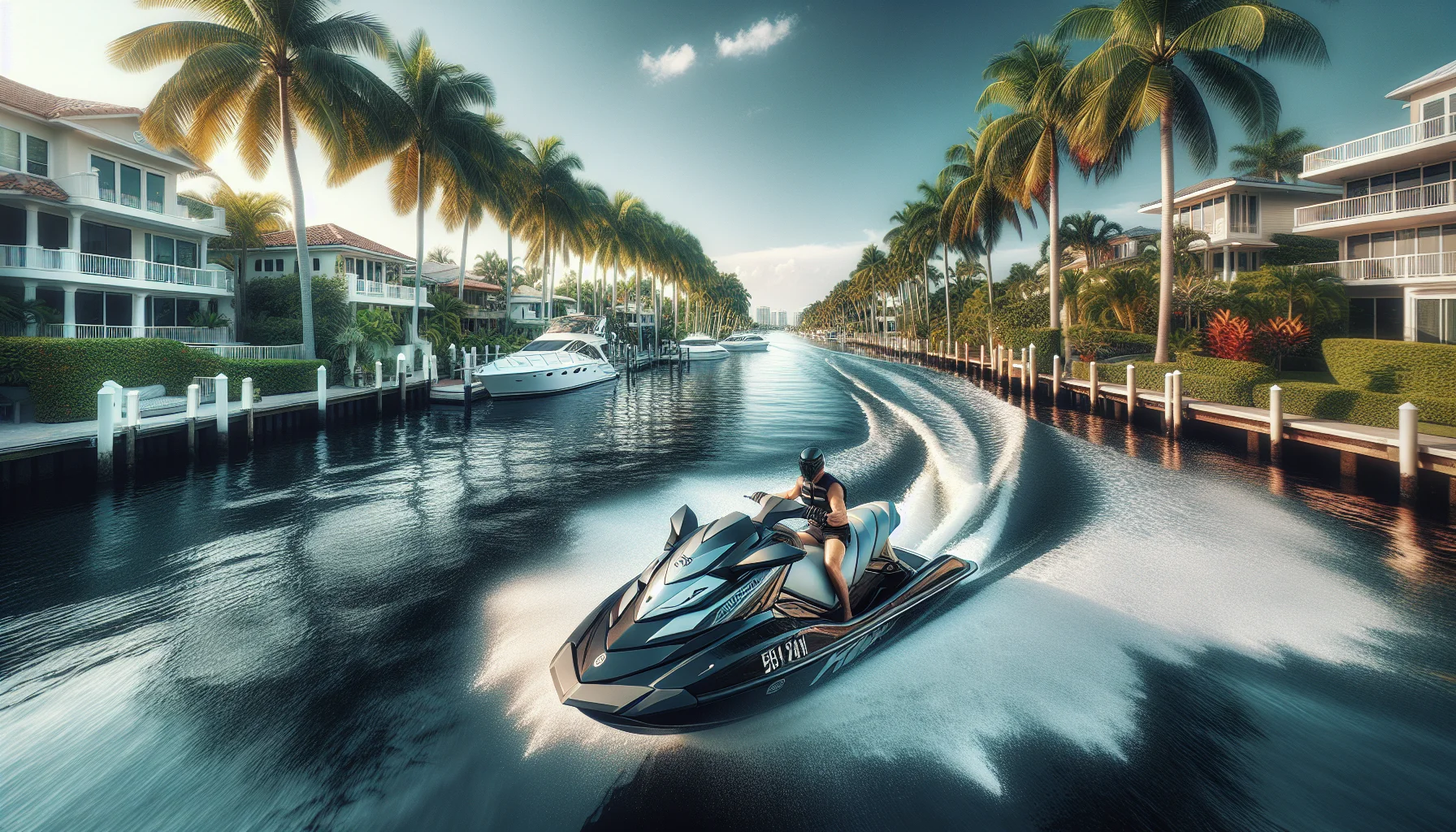
- Personal watercraft rules: You must be at least 14 years old to operate a PWC in Florida, and PWCs may not be operated from a half-hour after sunset to a half-hour before sunrise, regardless of lighting. For the complete rundown, see our guide to Florida jet ski and PWC laws.
Reporting An Accident
Florida law requires you to report a boating accident to the authorities if it involves a death, a person who disappears, an injury requiring more than basic first aid, or property damage that reaches the state's reporting threshold. Stay on scene, render aid, and report - leaving is a serious offense.
Who Needs A Florida Boater Education Card
Here is the requirement that catches the most visitors off guard. Under Florida law, anyone born on or after January 1, 1988 must complete an approved boating safety education course and carry a Boating Safety Education ID Card to operate a vessel powered by 10 horsepower or more. This applies to residents and out-of-state visitors alike, and it applies to rentals - so renting a boat or jet ski for the day does not exempt you.
The card is not a driver's-license-style test at a government office. You complete an FWC-approved course, pass the exam, and carry the card (along with a photo ID) whenever you operate.
What The Course Covers And How The Exam Works
A quality online course walks you through exactly the material this guide touches on and much more: navigation rules and channel markers, right-of-way, required safety equipment, Florida-specific laws, environmental protection, and emergency procedures. The final exam is 25 questions, you need 80% to pass, and you get unlimited retakes if you do not pass the first time. Most people finish comfortably in a single sitting and can print a temporary certificate right away.
If you plan to boat the ICW - or anywhere in Florida - this is the single best preparation you can do. It is the difference between guessing at that yellow triangle and knowing exactly what it means.
Start the state-standards online course - $12.99
Putting It All Together On The Water
The Fort Lauderdale Intracoastal is not a place to be intimidated by, but it is a place to respect. Almost every problem renters run into traces back to the same root cause: going too fast for the conditions. Slow down, read the markers and regulatory signs, watch for manatees, work the bridges patiently on VHF Channel 9, and treat every wake as your responsibility, and you will find the ICW to be one of the most enjoyable cruising grounds in the country.
Keep these essentials in mind every time you head out:
- Follow the yellow triangles and squares to stay in the ICW channel.
- When in doubt about speed, come off plane - your wake is your liability.
- Manatee zones are non-negotiable; obey the posted signs exactly.
- Give large and commercial vessels a wide berth and pass at minimum wake.
- Carry the right safety gear, and carry your boater education card if you were born on or after January 1, 1988.
Before your first trip, make sure you are legal and prepared. Get certified with an state-standards online Florida boating safety course, learn the rules that keep you and everyone around you safe, and then go enjoy the "Venice of America" the right way.