Jet Ski Rentals in Fort Lauderdale: What This Guide Covers
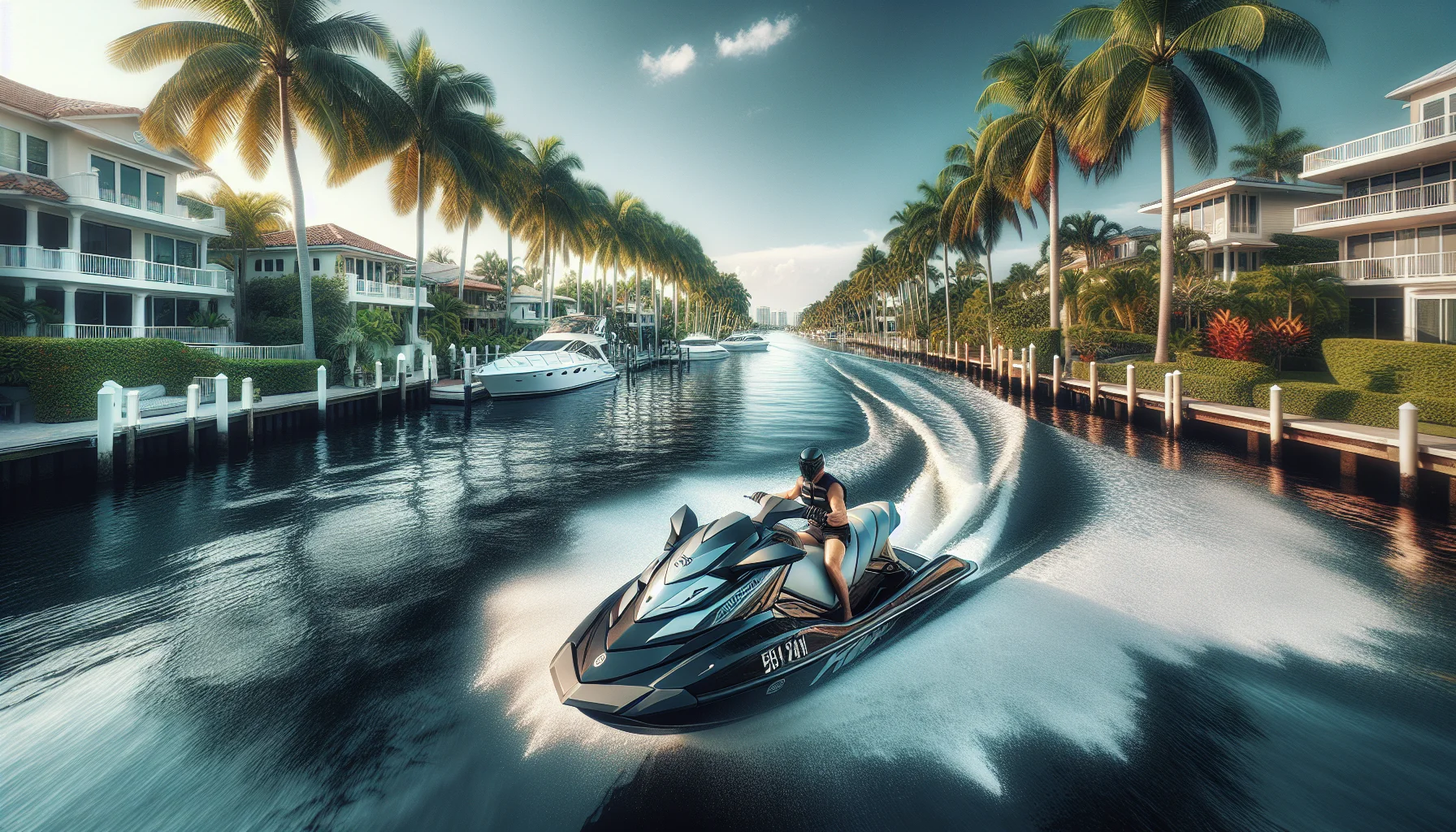
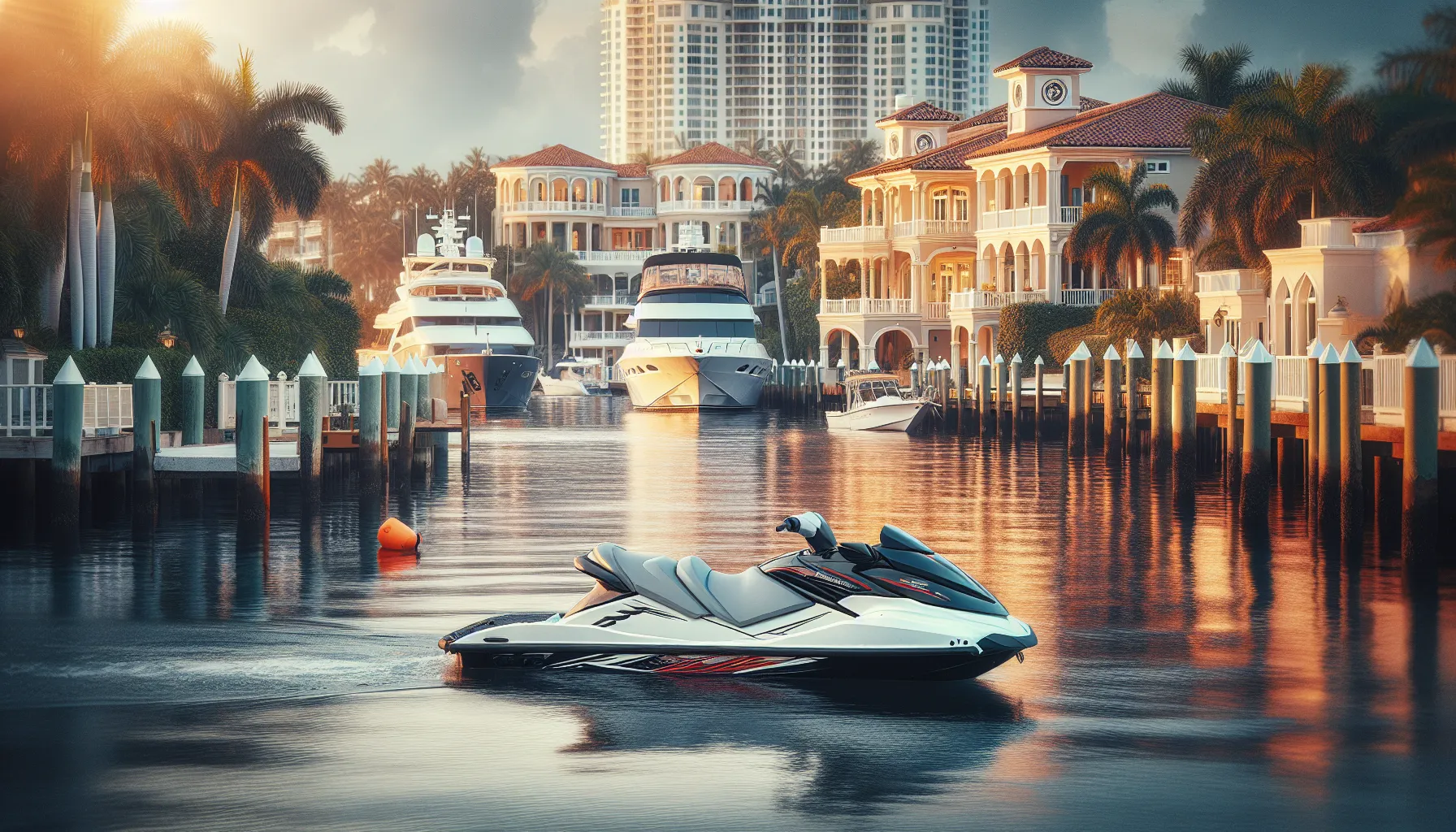
Nicknamed the "Venice of America" for its 165-plus miles of canals and waterways, Fort Lauderdale is one of the best places in Southeast Florida to ride a personal watercraft (PWC). The Intracoastal Waterway threads straight through the city, protected inlets open onto the Atlantic, and rental operators line the New River and the beach. It is a spectacular playground — and one that comes with real rules and real traffic.
This guide walks you through everything a first-time renter or returning rider should know before hitting the throttle: where the best riding water is, what a rental actually costs, the Florida laws that govern who can ride and when, the education-card requirement that trips up so many visitors, and the local navigation habits that keep you clear of mega-yachts and manatees alike. By the end you will know exactly what to book, what to bring, and how to stay legal and safe on Fort Lauderdale water.
If you were born on or after January 1, 1988, one item belongs at the top of your list before anything else: a Florida Boating Safety Education ID Card. You can earn it online in an afternoon through our Florida boating safety course, and we will explain exactly why it matters below.
Where to Ride: Fort Lauderdale's Best Jet Ski Waters
Fort Lauderdale gives riders an unusual mix of protected inland water and open ocean, all within a few minutes of one another. Where you ride should match your experience level and the conditions that day.
The Intracoastal Waterway (ICW)
The ICW is the backbone of local riding — calm, scenic, and lined with waterfront estates and yachts. It is the friendliest water for newer riders, but it is also the busiest, shared with water taxis, charter boats, and vessels far larger than any PWC. Follow the yellow ICW markers, hold a steady line, and stay well right of oncoming traffic. Because so much of the ICW passes residential canals and docks, long stretches are posted idle-speed or no-wake.
Port Everglades and the Inlet
Port Everglades is a working commercial port with cruise ships, cargo vessels, and strong inlet currents. It is fascinating to see but is best left to experienced riders, and you must give large vessels an enormous berth — they cannot stop or turn for you. Never linger in a shipping channel.
The Atlantic Beachfront
Ocean riding off Fort Lauderdale Beach delivers swells, wind chop, and open horizon. It rewards confident riders and punishes casual ones. Watch for divers-down flags near reef and dive sites: in Florida you must slow to idle within roughly 300 feet of a displayed flag in open water and about 100 feet in rivers, inlets, and channels.
The New River and Downtown
The New River winds past historic downtown with tree-lined banks and lower traffic, but it carries frequent no-wake zones and tight turns. It is a great scenic detour at idle speed, not a spot to open up the throttle.
Heading south toward Dania Beach is a popular ride, and if you are planning that trip our companion guide on route planning from Dania Beach to Fort Lauderdale maps out the crossings and hazards.
What Jet Ski Rentals Cost in Fort Lauderdale
Rental pricing in Fort Lauderdale varies widely by operator, season, and craft, so treat the figures below as ballpark market ranges rather than fixed quotes. Always confirm the total — including fuel, taxes, and any security deposit — with the operator before you book.
| Duration | Typical Range |
|---|---|
| 30 minutes | $75 - $100 |
| 1 hour | $125 - $175 |
| 2 hours | $200 - $300 |
| Half day (4 hrs) | $350 - $500 |
| Full day (8 hrs) | $500 - $800 |
A few things drive the number up or down:
- Season. Spring break and summer weekends command peak prices; winter weekdays are the cheapest.
- Guided vs. freestyle. Guided tours bundle in a captain and instruction, so the per-hour cost runs higher than an unguided rental.
- Deposit and fuel. Many operators hold a refundable security deposit and charge for fuel used. Ask up front.
- Age policy. State law sets the operating age, but most rental companies set their own minimum age to rent and require a credit card and valid ID.
Florida Jet Ski Laws Every Rider Must Follow
A PWC is legally a Class A vessel in Florida, and the same rules apply whether you own the ski or rent it for an hour. These are the ones that matter most in Fort Lauderdale.
Age and Education
- You must be at least 14 years old to operate a PWC in Florida — there is no "with an adult aboard" exception to that minimum age.
- Anyone born on or after January 1, 1988 must carry a Florida Boating Safety Education ID Card, along with photo identification, to operate a vessel of 10 horsepower or more. Every modern jet ski clears that threshold.
For the full breakdown of ages, supervision rules, and rental-specific requirements, see our detailed guide to Florida jet ski and PWC laws.
Operating Hours
A PWC may not be operated from a half-hour after sunset to a half-hour before sunrise — even where larger boats legally can. Plan your ride to be off the water before dusk.
Required Equipment
- A U.S. Coast Guard-approved life jacket must be worn — not just carried — by every person on a PWC.
- The engine cut-off lanyard (kill switch) must be attached to the operator, a wrist, or a life jacket whenever the craft is underway.
- You must have a sound-producing device such as a whistle aboard.
Not sure which PFD counts? Our Florida life jacket requirements guide explains the approved types and who must wear them.
Operation Rules
- No wake-jumping within 100 feet of another vessel, and no weaving through congested traffic.
- Obey all no-wake and idle-speed zones, which are common throughout the ICW and canals.
- Slow to idle inside posted manatee protection zones — Fort Lauderdale waters are seasonal manatee habitat.
Boating Under the Influence
Operating a PWC while impaired is BUI, and it carries the same legal weight as drunk driving. The threshold is 0.08% BAC for operators 21 and older, and 0.02% for anyone under 21.
Do You Need a License to Rent in Fort Lauderdale?
This is the single most common point of confusion for visitors, so let us be precise.
Florida does not issue a traditional "boating license." Instead, qualifying operators must carry a Boating Safety Education ID Card, which never expires. If you were born on or after January 1, 1988, you need that card to legally operate any rented jet ski in Fort Lauderdale — and yes, the rule applies to out-of-state visitors and tourists, not just Florida residents.
The card is earned by completing an approved boating safety course and passing the exam. Our course is:
- Approved by the Florida Fish and Wildlife Conservation Commission (FWC) and follows NASBLA national standards.
- Fully online and self-paced, so you can finish before you ever arrive in Florida.
- Capped by a 25-question final exam requiring 80% to pass — with unlimited retakes if you need them.
Once you pass, you can print a temporary certificate immediately, which is enough to satisfy the requirement while the official FWC card (issued for state-approved courses) is processed. For a deeper walkthrough of eligibility, exemptions, and how the card works, read our complete Florida boating license requirements guide.
Reading the Intracoastal: Navigation and No-Wake Zones
The ICW uses its own marker system layered on top of standard channel buoys, and getting it wrong is the fastest way to end up in the wrong lane in front of a 100-foot yacht.
ICW Yellow Markers
Along the entire Intracoastal Waterway, small yellow symbols on the aids tell you which side to favor as you travel south (the "downstream" convention runs from New Jersey toward the Gulf):
- Yellow triangle — treat it as you would a red marker; keep it on your right (starboard) heading south.
- Yellow square — treat it as green; keep it on your left (port) heading south.
When in doubt, the yellow symbols take priority for ICW navigation. If channel markers feel like a foreign language, our primer on Florida channel markers and navigation aids breaks the whole system down.
No-Wake and Idle Zones
Fort Lauderdale posts idle-speed and no-wake zones at nearly every canal mouth, bridge, and residential stretch. "No wake" means slow enough that your craft settles level and throws no meaningful wave — not merely a little slower. Marine patrol enforces these zones actively, and a careless wake that damages a docked boat or throws a paddler becomes your liability.
Giving Big Vessels Room
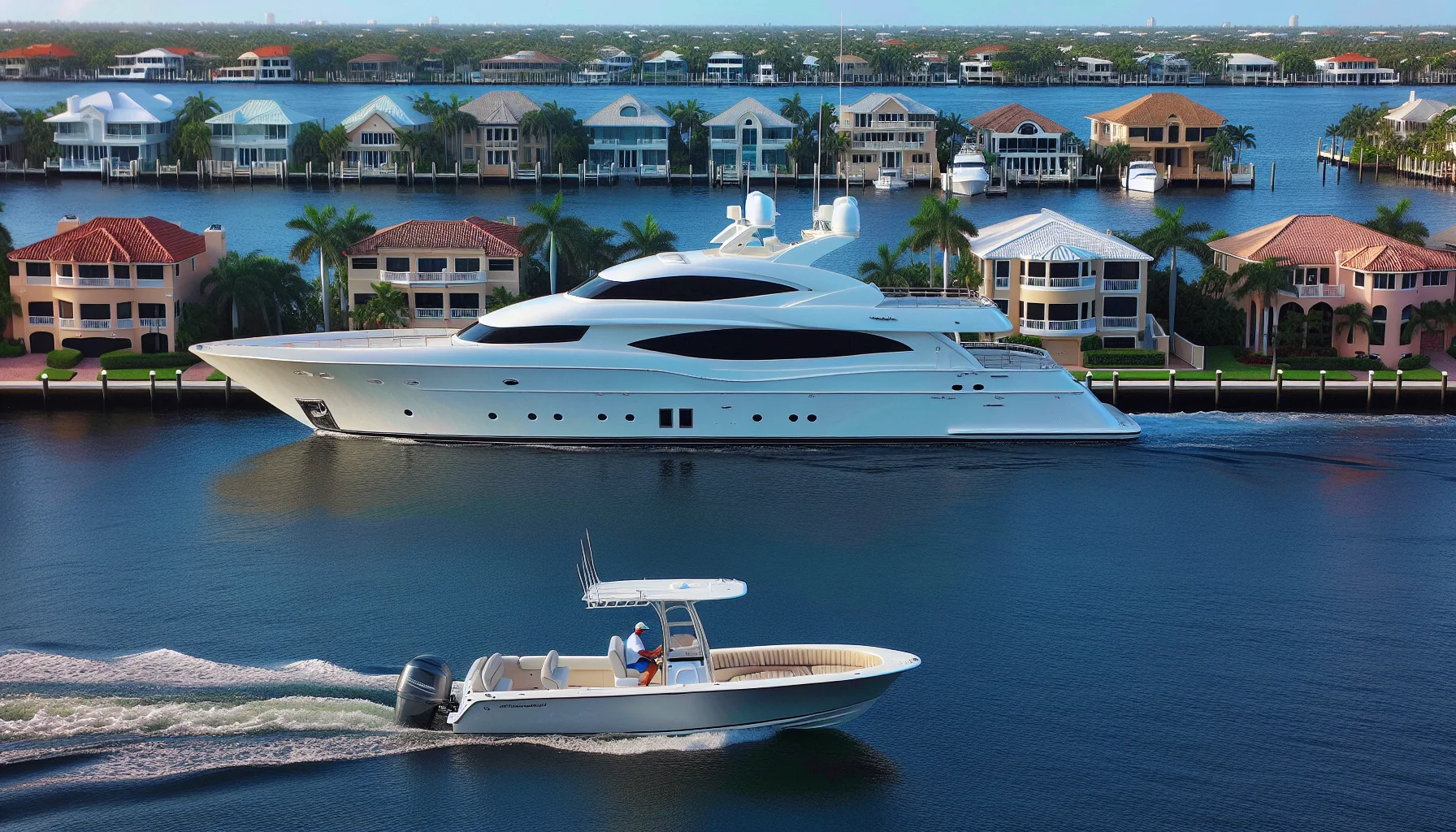
Mega-yachts, water taxis, and charter boats share the same water and have limited maneuverability. Never cut across a large vessel's bow, and cross wakes at a controlled angle. Our guide to passing mega-yachts safely in Fort Lauderdale covers the wake and right-of-way habits that keep everyone clear. For the complete local rulebook, the Fort Lauderdale Intracoastal Waterway boating rules guide is essential reading before your first ride.
Guided Tours vs. Freestyle Rentals: Which Is Right for You?
Two very different experiences hide under the word "rental."
Guided Jet Ski Tours
Best for first-timers, visitors who want the highlights, and anyone without local navigation experience.
- A licensed captain leads the route and handles the tricky water.
- You get a hands-on safety briefing and on-water instruction.
- Tours often route past wildlife areas and landmark waterfront.
- Typical length is one to two hours.
Freestyle (Unguided) Rentals
Best for confident riders who already understand the rules of the road and want freedom.
- Explore at your own pace within the operator's designated area.
- Usually more economical per hour on longer rentals.
- Requires a valid Boating Safety Education ID Card if you were born on or after January 1, 1988.
- You are responsible for staying inside boundaries and out of restricted zones.
If you are new to the water, start guided. Once you hold your education card and know how to read the ICW markers, freestyle unlocks the whole city.
Staying Safe on Fort Lauderdale Waters
A great day on a jet ski is a boring one from a safety standpoint — nothing goes wrong because you planned for it.
- Check the marine forecast, not just the beach weather. Wind and afternoon thunderstorms build fast in Florida; if lightning is in range, get off the water immediately.
- Keep the lanyard clipped. A PWC has no brakes and needs throttle to steer. If you fall off, the kill switch stops the ski so it does not drive away — or into someone.
- Ride sober. BUI enforcement is real, and reaction time on the water matters even more than on the road.
- Reboard the correct way. Climb on from the rear, and never restart with a swimmer near the jet nozzle.
- Know the accident-report rule. Florida law requires reporting a boating accident that involves a death, a disappearance, an injury needing more than basic first aid, or property damage of about $2,000 or more.
- Watch for divers and paddlers. Give divers-down flags a wide berth and slow well down around kayaks and swimmers.
The strongest safety tool you have is knowing the rules cold before you leave the dock — which is exactly what an FWC-approved course delivers.
Best Time of Year to Ride
Fort Lauderdale is rideable year-round, but each season has a personality.
- Spring and summer (March–August): Warmest water and air, peak availability, and the highest prices. Book ahead, and start early to beat afternoon storms.
- Fall shoulder (September–November): Thinner crowds and better deals, still warm — but it overlaps hurricane season, so watch the tropics.
- Winter (December–February): Locals' favorite. Cooler water (roughly the mid-60s to low-70s °F) and the lowest prices, with plenty of calm, clear riding days. A wetsuit top or rash guard helps on breezy mornings.
Whatever the season, book your rental in advance during holidays and weekends, and always confirm the operator's weather-cancellation policy.
Get Certified Before You Ride
Fort Lauderdale delivers some of the finest jet ski riding in Florida — protected canals, open Atlantic, and world-class scenery, all in one trip. The one thing that will actually stop you at the rental counter is the education-card requirement, and it is the easiest problem to solve in advance.
Before you go, run this quick checklist:
- Confirm whether you need a Boating Safety Education ID Card (anyone born on or after January 1, 1988 does).
- Complete your state-standards course online and print your certificate.
- Book your rental early for peak weekends.
- Check the marine forecast on the morning of your ride.
- Pack a strap for your sunglasses, reef-safe sunscreen, and a waterproof phone case.
Knock out the first item today and the rest is just fun. Our course is fully online, self-paced, and built to satisfy Florida's requirement — pass the 25-question exam at 80%, with unlimited retakes, and you are legal to ride from Fort Lauderdale to the Keys.
Start the state-standards online course - $12.99
Ride smart, respect the water, and enjoy every mile of the Venice of America.