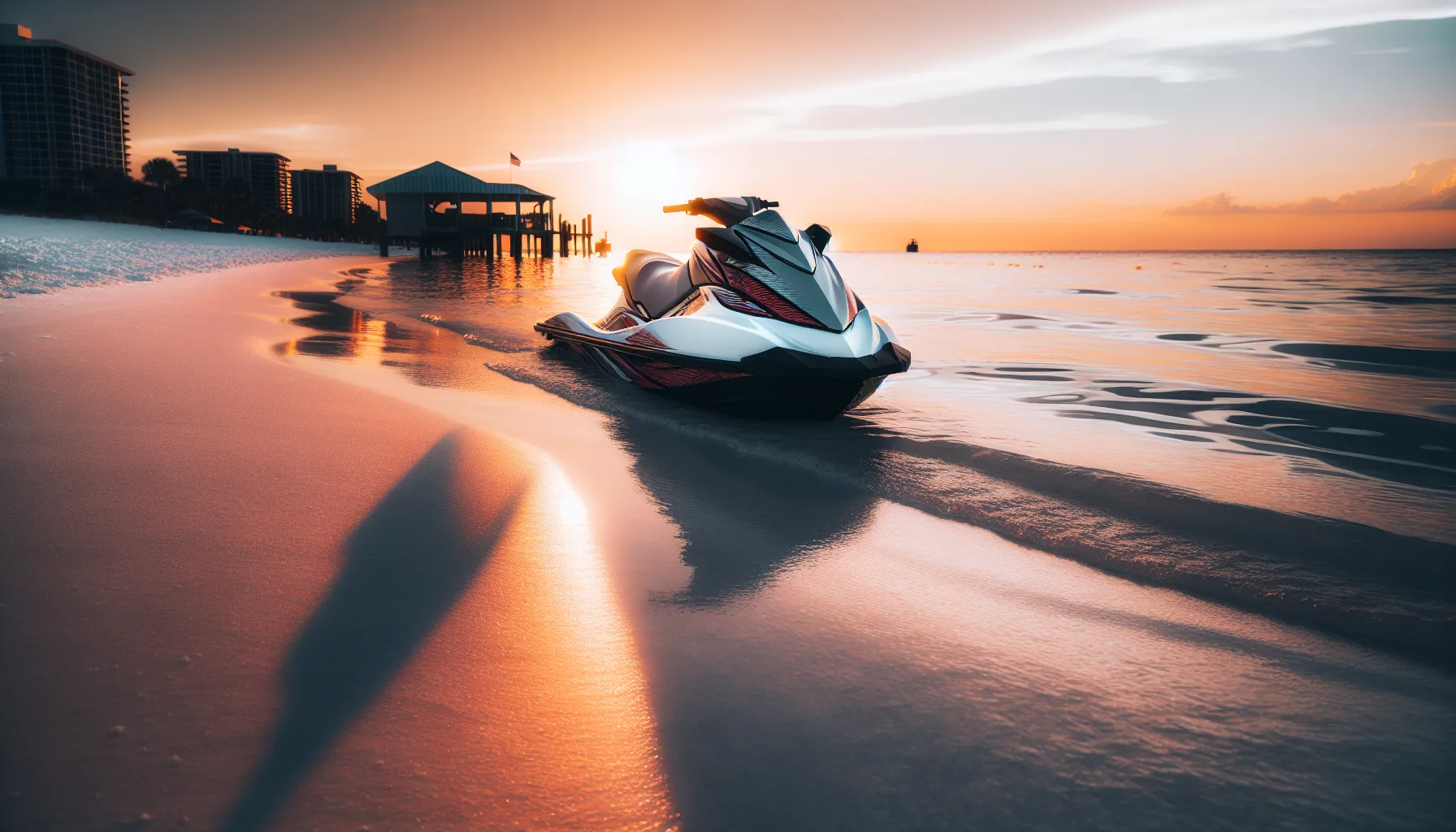
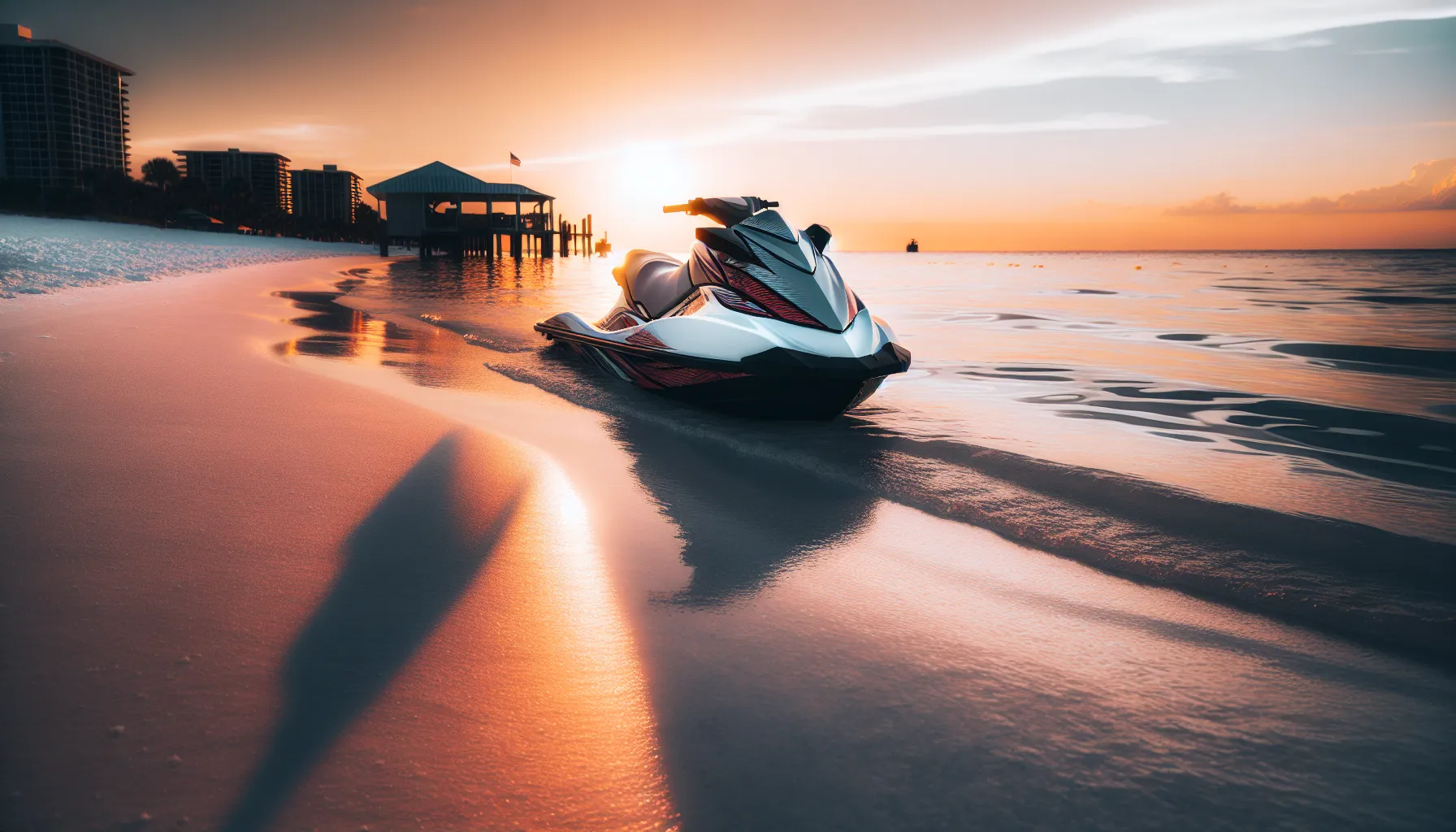
Treasure Island's soft Gulf sand looks like the perfect place to pull up your personal watercraft (PWC), stretch your legs, and grab lunch at a beachfront spot. But beaching a jet ski in Florida is not as simple as pointing the nose at shore and gunning the throttle. Between swimmer safety zones, seagrass and wildlife protections, shifting tides, and local ordinances that vary block by block, a careless landing can put people at risk, damage protected habitat, and earn you a citation.
This guide walks you through how to beach and anchor your jet ski responsibly in Treasure Island: what the law actually requires, how to approach a busy Gulf beach safely, how to set an anchor that holds, how to read the tide so you are not stranded, and how to stay clear of swimmers, divers, and protected wildlife. Master these skills and you can enjoy the beach without endangering anyone or losing your access to it.
Before you ride, get certified. Anyone born on or after January 1, 1988 must carry a Florida Boating Safety Education Card to operate a vessel of 10 horsepower or more, and that includes every jet ski on the water. You can get your Florida boating license online and cover the anchoring, right-of-way, and environmental rules this article touches on.
Is It Legal to Beach a Jet Ski in Treasure Island?
The short answer: sometimes, in some places, under specific conditions. There is no single statewide "beaching law." Instead, three layers of rules stack on top of each other, and all three apply at once.
The Three Layers of Authority
State of Florida. The Florida Fish and Wildlife Conservation Commission (FWC) sets the core boating and PWC rules: operator age and education requirements, reckless-operation standards, swimmer and diver clearances, and manatee protection zones. These apply on every waterway in the state.
Pinellas County. The county layers on manatee protection zones, seagrass protections, and speed regulations in specific waters around Treasure Island, John's Pass, and Boca Ciega Bay.
City of Treasure Island. The city controls the beach itself, including designated swimming areas, lifeguarded zones, and where motorized watercraft may or may not land. Municipal beach rules change over time and are not identical from one stretch of sand to the next.
Because the city controls beach access and updates its rules periodically, the single most important habit is to verify current designations directly with the City of Treasure Island and posted signage before you land. Do not rely on where you saw someone else beach last summer. Rules, buoy lines, and lifeguarded zones move.
The Golden Rule of Beach Landings
Wherever the specifics land, one principle never changes in Florida: stay well clear of swimmers and never land inside a marked swimming area. Guarded municipal swim zones and roped-off areas are off-limits to motorized watercraft, full stop. If people are in the water where you want to beach, that is your answer.
Know the PWC Rules Before You Point Toward Shore
Beaching is the end of a ride, and the whole ride is governed by Florida PWC law. Get these fundamentals wrong and the citation happens long before you touch sand.
Age and Education
To operate a PWC in Florida you must be at least 14 years old. There is no exception, no "supervised by an adult" workaround for under-14 riders. On top of that, anyone born on or after January 1, 1988 must carry their Florida Boating Safety Education Card and a photo ID. Rental liveries are required to verify both before they hand over the keys. For the full breakdown of age tiers, hours, and rental rules, see our guide to Florida jet ski and PWC laws and age requirements.
Daylight Operation Only
A PWC may not be operated from a half-hour after sunset to a half-hour before sunrise, even with navigation lights installed. That window matters for beach days: if you time a late-afternoon landing poorly, you can find yourself legally unable to ride home. Plan your departure so you are back at the ramp or livery well before the cutoff.
The Engine Cut-Off Lanyard
The engine cut-off switch lanyard must be attached to you (wrist or PFD) whenever you are underway. If you come off, the engine stops and the machine does not circle back into swimmers or into you. Clip it on before you leave the beach, every single time.
Reckless Operation and the Distance Rule
Florida treats weaving through congested traffic, jumping the wake of another vessel too closely, and swerving at the last moment to avoid a collision as reckless operation. Near shore, you must also respect minimum-distance and slow-speed requirements around other vessels, swimmers, and structures. Our post on Florida's 100-foot rule for PWC operators explains how those close-quarters spacing rules work in practice, and they apply just as much on a Treasure Island approach as they do anywhere else.
Approaching the Beach Safely
A clean, controlled approach is the difference between a relaxed landing and a dangerous one. Gulf-side beaches add wave action and shifting sandbars, so the approach deserves real attention.
Scout First, Commit Second
Before you turn toward shore, idle offshore and read the beach:
- Confirm the zone is open to landing. Look for swim-area buoys, lifeguard flags, and posted signs. If in doubt, keep moving and choose another spot.
- Locate every swimmer, snorkeler, and diver. Watch for a red-and-white divers-down flag on a float or nearby vessel.
- Read the wave and current. Note the direction of the shore break and any lateral current that will push you sideways as you slow down.
- Pick a landing line perpendicular to the beach, angled into the waves rather than parallel to them, so a set does not broach you sideways.
Slow Down Early and Land Under Control
Drop to idle or slow speed well before the surf line, not at the last second. Let the machine settle onto the wave rhythm and ride the back of a wave in rather than surfing the front of one. In the final few feet of shallow water, cut the engine and step off, then walk or push the PWC the rest of the way. Never drive the intake into inches of water; you will suck up sand and shell, and you risk clipping a swimmer you did not see.
Mind the Jet Intake
PWCs steer with thrust, which means the moment you cut power in shallow water you lose steering authority. Kill the engine only once you are lined up and committed, and be ready to physically guide the hull. Running the pump in very shallow water is the fastest way to damage an impeller and choke the intake with grit.
How to Anchor a Jet Ski the Right Way
If you are stepping away from the machine, or holding position just off a sandbar rather than dragging the hull onto sand, you need to anchor properly. A jet ski that breaks free becomes a hazard to swimmers and a very expensive problem for you.
Carry the Right Gear
Most PWCs have limited stowage, so a compact system matters:
- A folding or small fluke anchor sized for your machine, with the flukes designed to dig into sand.
- Enough rode (line) to achieve proper scope, plus a short chain leader to help the anchor lie down and set.
- A length of shock cord or bungee spliced into the rode to absorb surge so the anchor is not jerked out by wave action.
- A bright float or marker so nearby boaters can see your line and you can find your machine.
Set Scope Correctly
Scope is the ratio of line let out to water depth (measured from the bow, including freeboard). A good working minimum is about 7:1 in calm water and more in chop. In shallow beach conditions the numbers are small, but the ratio still matters: too little line and the pull comes up at a steep angle that lifts the anchor out instead of driving it in.
To set: position slightly offshore, lower (do not throw) the anchor, let the machine drift back with wind or current, pay out your scope, then snub the line and let the anchor dig in. Give it a gentle load to confirm it is holding before you walk away. Then check it regularly.
The Sandbar Alternative
Off Treasure Island's popular sandbars, many riders skip the beach entirely and hold on a shallow bar. A dedicated PWC sand anchor or a screw-in sand spike set above the waterline works well for short stops. Whatever you use, account for the tide turning while you are relaxing, because a spot that is knee-deep now can be waist-deep in an hour. For where those bars are, our companion guide to Treasure Island's best hidden sandbar spots is a good starting point, always cross-checked against current conditions.
Reading Treasure Island Tides Before You Beach
Tide is the variable that catches the most riders off guard. Beach at the wrong point in the cycle and you either float away or get stranded high and dry.
How the Cycle Works Here
The Gulf coast around Treasure Island generally runs on a mixed tide, with meaningful daily swings in water level. The practical consequences for beaching:
- Beaching at high tide means the water will drop out from under your machine. Come back to a jet ski sitting on dry sand, far from the water, potentially with the intake full of grit.
- Beaching at dead low tide means you may have to drag the machine across a long, shallow, seagrass-strewn flat to reach water deep enough to power up.
The Smart Play: Land on a Falling-to-Low, Leave on a Rising
The safest window is often landing as the tide is on its way down toward low and planning to leave while it is coming back up, or simply keeping your visit short and re-floating the machine before the water drops significantly. Whatever you choose, know which way the tide is moving and set a departure alarm on your phone.
Reading tide charts and local timing is a skill worth building. Our neighbor-beach guide, reading tides for Madeira Beach boating, walks through the same apps and chart-reading approach that applies right up the barrier island to Treasure Island.
Protecting Seagrass, Manatees, and Nesting Wildlife
Treasure Island's shallows and adjacent Boca Ciega Bay are living habitat. Damaging them is both an ethical failure and, in many cases, a legal violation.
Do Not Scar the Seagrass
Seagrass meadows in the shallows are nurseries for fish, crabs, and the animals that feed on them. Running a jet pump or dragging a hull through seagrass tears it up, and prop-and-hull scarring can take years to recover. The rule of thumb: if the water is so shallow you are stirring up bottom or brushing grass, shut down and push. Idle out to deeper, sandy-bottom water before you power up.
Manatee Zones Are Real and Enforced
The waters in and around Boca Ciega Bay include manatee protection zones with seasonal or year-round slow-speed and no-wake requirements. These are enforced by FWC and local marine units, and manatees are federally protected. Learn to read the posted zone signs and obey them. Our full explainer on Florida manatee zones and speed regulations covers what the different zone signs mean and how the speed limits work seasonally.
Give Nesting Wildlife Space
Treasure Island's beaches host sea turtle nesting in the warm months and shorebird nesting in spring and summer. Roped-off dunes and marked nesting areas are strictly off-limits. Land and stage your gear on open sand, keep well away from any posted nesting zones, and never let a landing push you up against the dune line.
Staying Clear of Swimmers and Divers-Down Flags
Beaches mean people in the water, and people in the water are the number-one reason careful approach discipline matters.
The Divers-Down Flag
If you see a red flag with a white diagonal stripe (or the blue-and-white alpha flag on a vessel), divers or snorkelers are in the water nearby. Florida law requires vessels to slow to idle speed within roughly 300 feet of a divers-down flag in open water and within about 100 feet in a channel. Outside those distances, make a reasonable effort to stay clear. Around Treasure Island's clear Gulf water and grass flats, snorkelers are common, so scan for flags on every approach.
Swimmers Without Flags
Not every swimmer flies a flag. Children, waders, and casual bathers are often invisible until you are close. That is exactly why you slow to idle far offshore, why you scout before committing, and why you never land inside or beside a marked swim area. When in doubt, choose a landing spot with clear, empty water in front of it.
When Beaching Isn't the Answer: Anchor-and-Swim and Day Slips
Sometimes the responsible move is to not beach at all. Two good alternatives keep you legal and low-impact.
Anchor Offshore and Swim In
If the beach in front of you is a swim zone, or the seagrass runs right up to the sand, anchor your PWC in open, deeper water beyond the swim area and swim to shore. Set the anchor properly, mark it with a bright float, and consider a personal locator or a swim buoy if you are covering any real distance. This keeps your machine out of the swimmers and out of the grass while you still enjoy the beach.
Use a Marina Day Slip
For a longer stop, a marina day slip removes all the tide and theft worries. You get a secure, legal place to leave the machine, plus restrooms and often fuel. It costs a little, but it buys certainty. If you are renting rather than riding your own machine, ask the livery what their policy is on stopping and landing. Our complete guide to jet ski rentals in Treasure Island covers who operates locally and what their on-water rules typically look like.
Your Treasure Island Beach-Day Safety Checklist
Run through this before every landing:
- Card and ID on board? Boating Safety Education Card (if born on or after Jan 1, 1988) and photo ID.
- PFD on, lanyard clipped? A properly fitted life jacket and the engine cut-off lanyard attached to you. Note that on any vessel under 26 feet underway, children under 6 must wear a PFD.
- Sober? Boating under the influence is illegal at 0.08 BAC (0.02 if you are under 21), and alcohol plus sun, heat, and waves is a fast track to trouble.
- Tide checked? Know which way it is moving and set a departure alarm.
- Beach open to landing? No swim buoys, no divers-down flags, no nesting closures in your path.
- Anchor and float aboard? Enough rode for proper scope, plus a visible marker.
- Home before dark? You must be off the water by a half-hour after sunset.
Know What to Do If Something Goes Wrong
If you are involved in an accident, Florida law requires you to stop, render aid, and report it. You must notify authorities without delay if the accident involves a death, a person who disappears, an injury requiring more than basic first aid, or property damage of about $2,000 or more. Knowing this ahead of time keeps a bad moment from becoming a legal one.
Turn Beach-Day Confidence Into a Certification
Every skill in this guide, safe approach, anchoring and scope, right-of-way, swimmer and diver clearance, manatee zones, and Florida's operating rules, is exactly what a proper boater education course teaches. The Florida boating safety course from BoatSkill is state-standards online and NASBLA-recognized, so the card you earn is accepted statewide and satisfies the legal requirement for operators born on or after January 1, 1988.
The exam is 25 questions, you need 80% to pass, and retakes are unlimited, so there is no pressure and no reason to guess your way through beach-day decisions that put people at risk.
Start the state-standards online course - $12.99
Conclusion
Beaching a jet ski in Treasure Island is a genuine pleasure, and it stays that way only when riders do it right. Verify local rules and signage before you land, keep well clear of swimmers and divers, slow down early and land under control, set a real anchor, read the tide so you are not stranded, and treat the seagrass and wildlife as the protected habitat it is. Do those things and you protect people, protect the water, and protect your own continued access to one of the best beaches on the Gulf coast.
The riders who lose beach access are the ones who cut corners. Be the one who knows the rules cold, and the sand stays open for everyone.
Get your Florida Boating Safety Education Card today - $12.99