Treasure Island sits on a barrier island between the Gulf of Mexico and the calm, protected waters of Boca Ciega Bay, which makes it one of the most beginner-friendly places to rent a jet ski on Florida's Gulf Coast. But before you throttle up, there are a few things that separate a great day on the water from a citation, a rental deposit you never see again, or a genuine emergency. This guide walks you through exactly where to ride, what Florida law requires of you, how licensing and age rules actually work, what rentals cost, and how to stay safe in Tampa Bay's busy, wildlife-rich waters.
By the end, you'll know whether you need a boating education card before you ride, how to get one, and how to plan a trip that keeps you legal and safe from launch to load-out.
Why Treasure Island Is a Great Place to Ride
Treasure Island's geography is the reason it works so well for personal watercraft (PWC). The Gulf side offers open, sandy-bottom water with typically gentle one-to-two-foot chop on calm mornings, while the bay side gives you sheltered, glassy conditions ideal for first-timers. Between them, John's Pass to the north and the Blind Pass inlet to the south connect the two bodies of water, so you can ride protected flats one minute and open Gulf the next.
That variety comes with responsibility. Boca Ciega Bay is designated manatee habitat, and Tampa Bay overall carries heavy recreational and charter traffic. The best riders here treat the area as a shared, protected ecosystem rather than an open racetrack. If you understand the rules of the road before you launch, you'll get far more out of the experience, which is exactly what a proper Florida boating safety course is designed to teach.
Best Places to Ride Jet Skis in Treasure Island
Not every stretch of water suits every rider. Match the spot to your experience level and the conditions on the day.
Boca Ciega Bay (Bay Side)
The protected water between the island and the mainland is the ideal classroom. It stays calm in most conditions, boat wakes are smaller, and there is room to practice turns, stops, and re-boarding without Gulf chop working against you. Because much of the bay is a manatee zone, expect posted slow-speed and idle-speed areas, especially in winter when manatees move into warmer water. Obey every posted sign.
The Gulf Beachfront
On a calm day, the Gulf offers long, open runs with beautiful scenery. It is more exposed, so afternoon wind and building swell can turn a smooth ride rough quickly. Newer riders should treat the Gulf as a morning activity and head back to the bay if whitecaps appear.
John's Pass (North)
John's Pass is a busy, current-swept inlet lined with charter boats, a working village, and heavy boardwalk traffic. The scenery and dining are a draw, but the pass itself is not a place to sightsee at speed. Keep alert, hold a steady line, and respect the strong tidal current. For a deeper look at reading these local water patterns, our guide to reading Madeira Beach tide charts applies directly to the same tidal system just north of you.
Shell Key Preserve and Local Sandbars
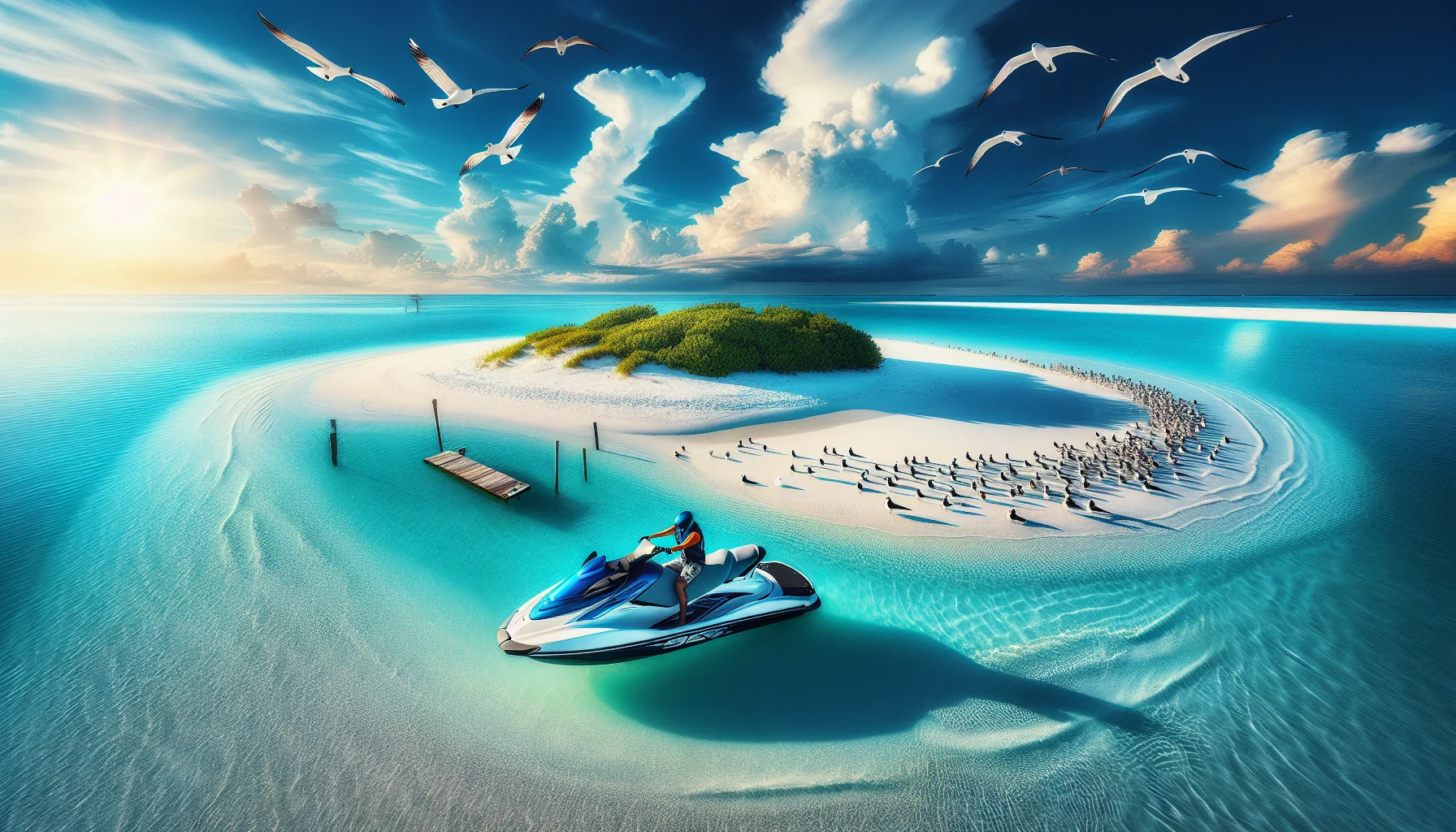
South of Treasure Island, the Shell Key area and the shallow sandbars around the bay are prime destinations for beaching and swimming. These spots are shallow and sensitive, so where and how you stop matters. If you plan to pull up on a bar or beach the ski, read our local guides on Treasure Island's best hidden sandbar spots and, critically, on where beaching your jet ski is legal and how to anchor before you go.
Sunset Beach and Blind Pass (South)
The southern tip near Blind Pass offers a quieter, more residential feel with fewer tourists. It is a pleasant, lower-traffic option, but the inlet still carries current and boat traffic, so the same alertness applies.
Florida Jet Ski Laws You Need to Know
Florida law treats a PWC as a vessel, and the same rules apply whether you own it or rent it for an hour. These are the ones that matter most in Treasure Island.
Education Card Requirement
Anyone born on or after January 1, 1988 must complete an approved boating safety course and carry a Boating Safety Education ID Card to operate a vessel of 10 horsepower or more, which includes every rental jet ski. This applies to visitors and residents alike. If you were born before that date, the card is not legally required, though the knowledge still is. You can satisfy the requirement online before your trip; see the licensing section below.
Minimum Operating Age
You must be at least 14 years old to operate a PWC in Florida. There is no adult-supervision exception that lets a younger child drive. Rental operators frequently set their own higher minimum age (often 18) to rent and sign the contract, and may require an adult on board with a younger operator.
Operating Hours
It is illegal to operate a PWC in Florida from a half-hour after sunset to a half-hour before sunrise, even where a conventional boat could legally run with proper lights. Plan to be off the water well before dusk.
Engine Cut-Off and Kill Switch
The engine cut-off lanyard must be attached to the operator (wrist or PFD) whenever the ski is underway. It is not optional, and it is the single most effective way to stop a runaway ski if you fall off.
Reckless Operation and the 100-Foot Rule
Weaving through congested traffic, jumping the wake of another vessel too closely, and swerving to spray others are all cited as reckless operation. Florida also enforces distance-based speed rules around other vessels, docks, and swimmers. If you are riding around North Miami-style congestion or any crowded inlet, the same statewide standard applies; our explainer on Florida's 100-foot rule for PWC operators breaks down exactly how much room you must give.
For the full statewide picture on age, hours, and equipment, our complete guide to Florida jet ski and PWC laws is the definitive reference.
Required Safety Equipment
Rental operators supply most of this, but you are responsible for using it correctly.
- Life jacket (PFD): Every rider must wear a properly fitted, Coast Guard-approved life jacket while operating or riding a PWC. Unlike some boats where PFDs may be stowed, on a jet ski they must be worn. Children under six must wear a PFD on any vessel under 26 feet that is underway.
- Engine cut-off lanyard: Attached to the operator at all times underway.
- Sound-producing device: A whistle or horn to signal other vessels.
- Registration: The rental company handles registration, but the ski must be currently registered and the decal displayed.
Before you sign anything, confirm the ski has a working lanyard clip and that your PFD fits snugly. A loose life jacket rides up over your face in the water and defeats its own purpose.
Boating Under the Influence
Florida enforces Boating Under the Influence (BUI) at a blood-alcohol concentration of 0.08 for operators 21 and over, and 0.02 for operators under 21. A jet ski is a vessel, so BUI applies exactly as it would to a boat, and law enforcement patrols Tampa Bay's popular sandbar areas heavily on weekends and holidays. Sun, dehydration, and engine fatigue amplify the effects of alcohol on the water far beyond what the same drink would do on land. The safe rule is simple: save the drinks for after the ski is back on the trailer. Our overview of Florida BUI laws and penalties covers what an arrest actually involves.
Sharing the Water: Traffic, Wildlife, and Weather
Boat Traffic and Right-of-Way
Tampa Bay is one of the busiest boating regions in the state, mixing charter fishing boats, sailboats, paddlers, and commercial traffic. Know who has the right of way and never assume a larger vessel can see or maneuver around you. Kayakers and paddleboarders are common in the bay and around the mangroves, and they always deserve a wide, slow berth.
Manatees and Marine Life
Boca Ciega Bay and the surrounding flats are protected manatee habitat, with posted slow-speed and idle zones that are strictly enforced, especially November through March. Dolphins and sea turtles are also common. Watch for the tell-tale swirl or "footprint" of a submerged manatee and give it wide space. If you want to ride these waters responsibly and actually enjoy the wildlife, our guide to spotting manatees while jet skiing near St. Petersburg is worth reading first.
Weather and Afternoon Storms
Central Florida's Gulf Coast generates fast-building afternoon thunderstorms almost daily in summer. Lightning is the single most dangerous weather hazard for a jet skier, and an open ski on open water is an exposed target. Check the radar before you launch, ride in the morning when storms are least likely, and head in at the first distant rumble rather than the first raindrop. Our detailed Tampa Bay thunderstorm safety guide explains exactly what to do when the sky turns.
What to Expect When You Rent
Guided Tours vs. Free Rentals
A guided tour pairs you with an operator who leads a route, handles navigation, and gives a safety briefing; it is the right choice for first-timers, visitors unfamiliar with the passes, and anyone without a boating background. A free (unescorted) rental gives you the freedom to explore at your own pace within a designated area, which suits experienced riders who already hold their education card and understand local traffic and manatee zones.
The Rental Process
Expect to show a valid photo ID, present your Boating Safety Education ID Card if you were born on or after January 1, 1988, sign a liability waiver, and put down a security deposit. The operator will brief you on the ski's controls, the boundaries of your riding area, and the return time. Ask where the manatee zones and no-wake areas are before you leave the dock; a good operator will show you on a map.
What to Bring
Bring a valid ID, your education card, reef-safe sunscreen, polarized sunglasses with a retainer strap, a waterproof phone case, water shoes, and a towel. Hydrate before and during the ride; the combination of sun, salt, and wind dehydrates faster than most people expect.
Rental Pricing: What Drives the Cost
Rates vary widely by operator, season, and whether you book a guided tour or an unescorted rental, so treat any quoted figure as a starting point and confirm directly with the vendor. In general, expect prices to climb during spring break, summer weekends, and holidays, and to soften in the cooler shoulder and winter months. Longer rentals usually cost less per hour than a single 30-minute session. Always ask what the deposit is, what the fuel policy is, and what the waiver's damage terms cover before you hand over a card.
Getting Your Florida Boating License Online
If you were born on or after January 1, 1988, the education card is not optional, and rental shops in Treasure Island will ask for it. The good news is that the requirement is easy to satisfy before you ever arrive.
The course is fully online and self-paced, and it is approved by the Florida Fish and Wildlife Conservation Commission (FWC) and follows standards set by the National Association of State Boating Law Administrators (NASBLA). It covers navigation rules and right-of-way, required safety equipment, PWC-specific regulations, manatee and environmental protection, and emergency procedures, which is exactly the knowledge that keeps you out of trouble in Boca Ciega Bay.
The final exam is 25 questions, and you need 80% to pass, with unlimited retakes included, so there is no pressure to memorize everything perfectly on the first try. Most people finish in a single sitting and can print a temporary certificate immediately, meaning you can be legal to ride before your trip even if you start the day before. For a full walkthrough of the requirement, see our Florida boating license requirements guide.
Start the state-standards online course - $12.99
Know Before You Go: Accident Reporting
Even a careful day can involve an incident. Florida law requires you to report a boating accident to authorities if it involves a death, a disappearance, an injury requiring more than basic first aid, or property damage at or above the state threshold (currently $2,000). Stop, render aid, and exchange information exactly as you would in a car accident. If you rent regularly, ask whether the operator carries insurance and what you are personally liable for; our breakdown of jet ski rental insurance coverage explains what those waivers usually do and do not include.
Your Treasure Island Ride, Done Right
Treasure Island rewards riders who respect its waters: calm bay flats for learning, open Gulf runs for the confident, and protected wildlife habitat that makes the whole area special. The riders who have the best days are the ones who launched already knowing the age and licensing rules, the manatee zones, the weather pattern, and the sober-operation law, rather than learning them from a citation.
Take care of the one requirement that could actually stop you at the rental desk. If you were born on or after January 1, 1988, get your education card handled online before you travel, and arrive ready to ride.