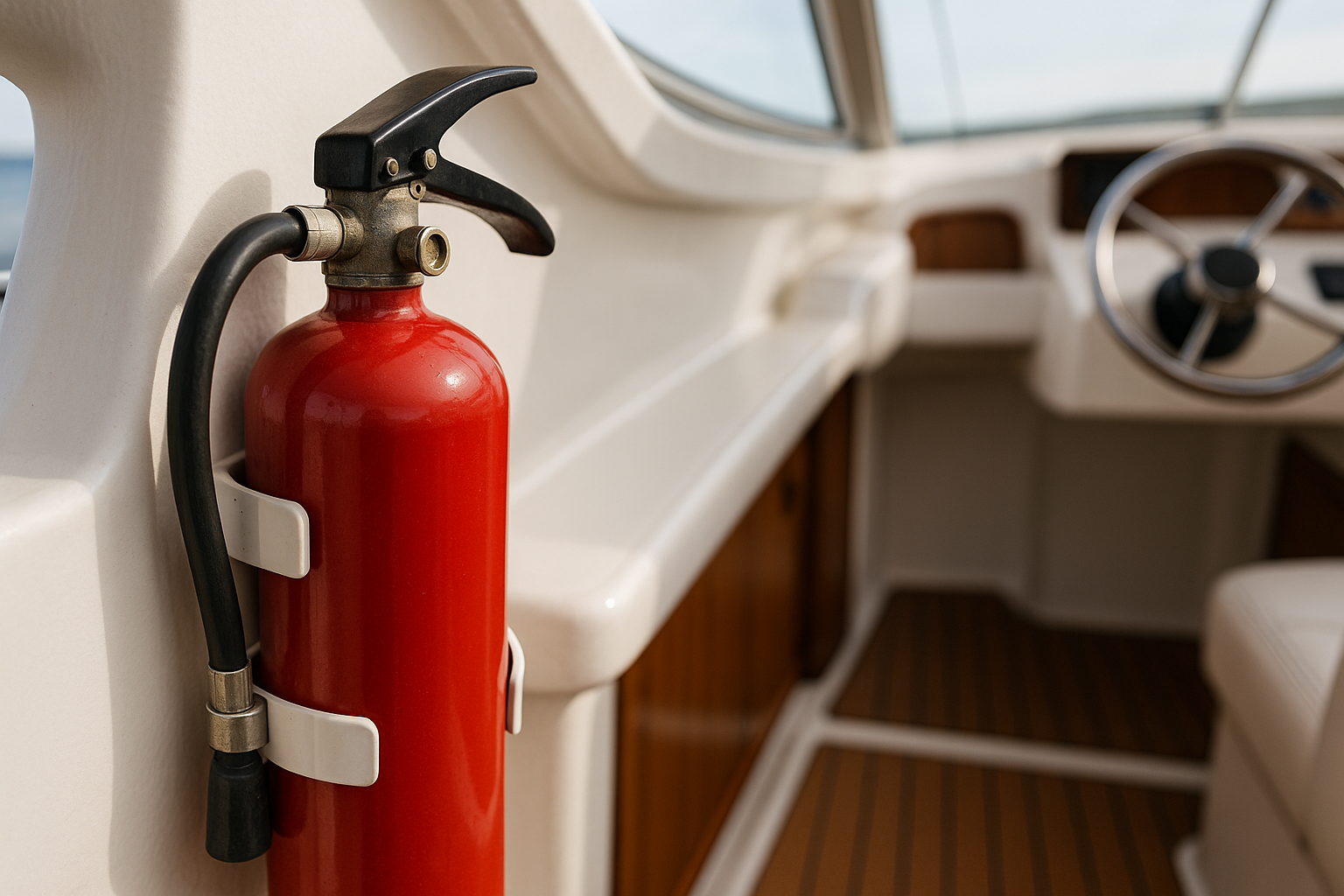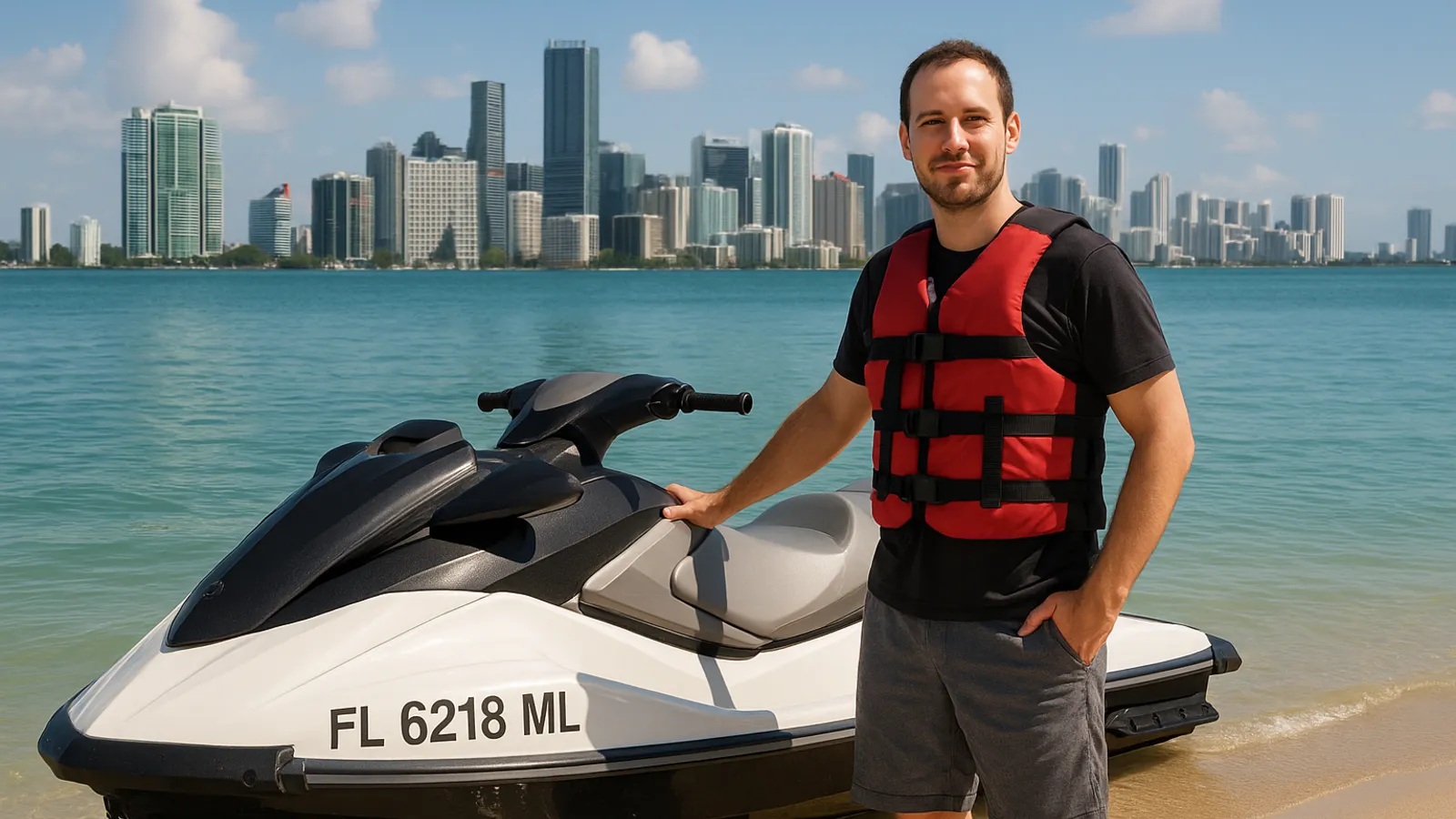

In Florida you must wear the engine cutoff lanyard on a jet ski that was built with a lanyard-type switch, and on a boat used to teach a water sport whenever a participant is in the water. Federal law adds most recreational boats under 26 feet when they are on plane.
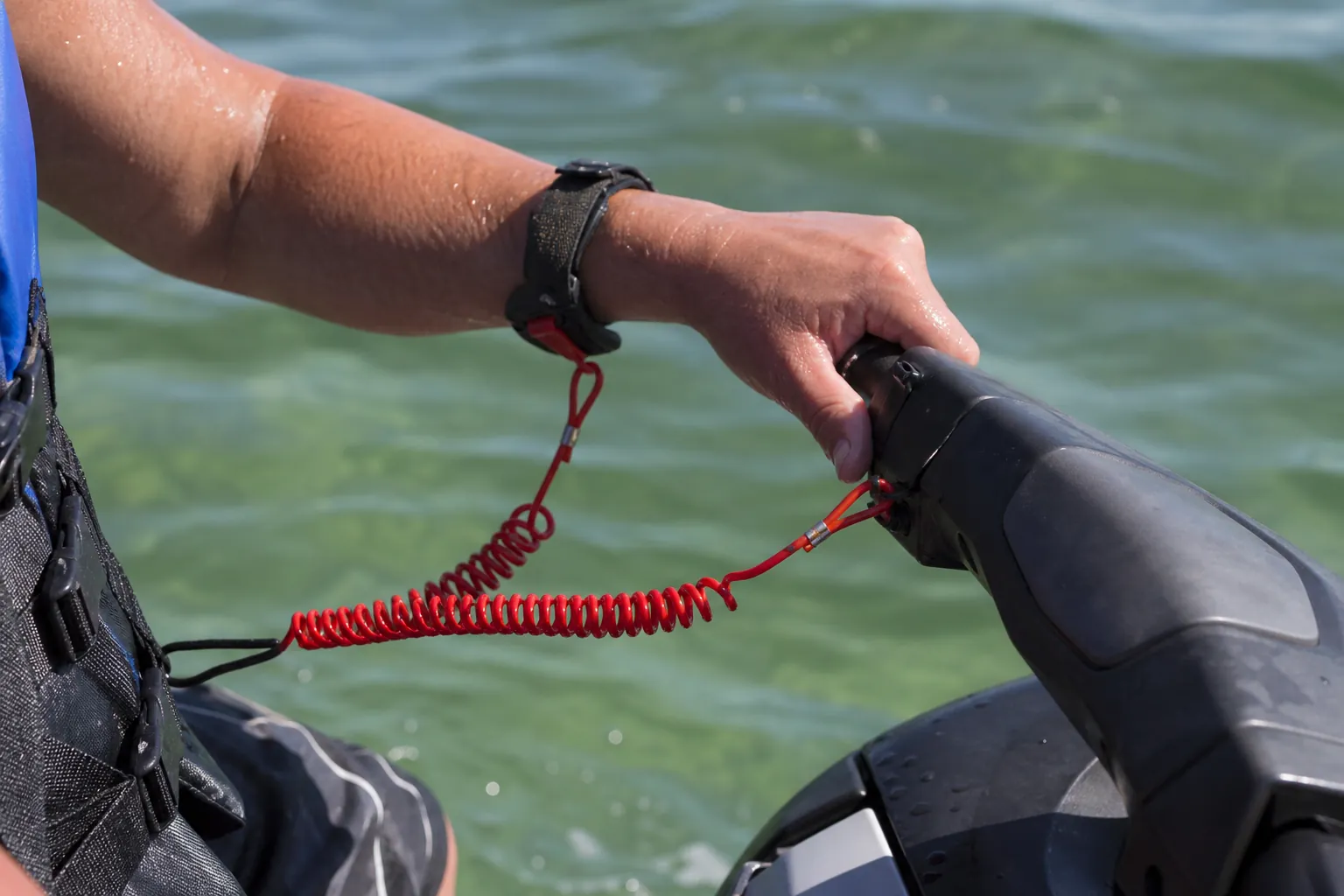
A boat safety lanyard is the cord (the "link") that connects the operator to the boat's engine cutoff switch. In Florida, the law makes you wear it in two situations:
- On a personal watercraft (jet ski) that the manufacturer fitted with a lanyard-type cutoff switch. Florida Statute 327.39(2) says the operator must attach the lanyard to his or her person, clothing or life jacket, as is appropriate for that craft.
- On a boat used to teach a water sport or activity, whenever a participant is in the water. Section 327.50(4) says the operator must use an engine cutoff switch and wear an operative link to it.
For other recreational boats, a federal law applies: 46 U.S.C. 4312 requires the operator of a covered recreational vessel (under 26 feet and capable of 115 pounds or more of static thrust) to use the cutoff switch link while operating on plane or above displacement speed. The FWC's equipment page says this federal law took effect in April 2021 and that Florida has no similar state law for state and local agencies to enforce. If your boat has a lanyard, clip in whenever you are running on plane.
What the Lanyard and Cutoff Switch Do
An engine cutoff switch (the FWC calls it an ECOS) is a switch near the helm or handlebars that stops the engine when its link is pulled away. The lanyard is that link. One end clips to the switch, the other end clips to the operator: a wrist, a belt loop or the life jacket.
The point of tying it to the operator is simple. If the operator falls overboard or is thrown from the seat, the cord pulls free and the engine stops. That keeps a boat or jet ski from running on with nobody at the controls, and it keeps the propeller or jet pump from turning near a person in the water.
Some newer boats use a wireless link worn by the operator in place of a cord. The federal law speaks of an "engine cut-off switch link," and the Hollywood towing guide covers why it matters when you pull riders behind a boat. The Florida jet ski rule, on the other hand, is written around the lanyard type switch that a manufacturer installs on a personal watercraft.
Florida's Jet Ski Lanyard Rule: s. 327.39(2)
Florida's personal watercraft statute, s. 327.39, sets the lanyard rule in one sentence: a person operating a personal watercraft equipped by the manufacturer with a lanyard type engine cutoff switch must attach the lanyard to his or her person, clothing or personal flotation device, as is appropriate for the specific vessel.
Three parts of that sentence matter:
- "Personal watercraft." Under s. 327.02, a personal watercraft is a vessel under 16 feet that uses an inboard motor powering a water jet pump as its main power and is ridden by a person sitting, standing or kneeling on it. That covers what most people call a jet ski.
- "Equipped by the manufacturer." The rule follows the factory switch. If the craft left the factory with a lanyard type cutoff switch, the lanyard goes on the operator.
- "Person, clothing or personal flotation device." You choose the attachment point that suits the craft: a wrist coil, a clip on the life jacket, or a clip on clothing. What counts is that it is attached to you while you operate.
The FWC's boating regulations page repeats the rule in its personal watercraft section, alongside the other jet ski rules from the same statute: everyone on board or being towed wears a non-inflatable wearable life jacket, no riding from a half hour after sunset to a half hour before sunrise, and no reckless maneuvers such as weaving through congested traffic or jumping another vessel's wake too close. The full list is in our Florida jet ski and PWC laws guide.
Instruction Boats: s. 327.50(4)
The second Florida rule covers boats used to teach a water sport or activity. Under s. 327.50(4), the operator of such a vessel must use an engine cutoff switch and wear an operative link to the switch when a person participating in the water sport or activity is in the water.
The FWC's equipment pages for vessels under 16 feet and vessels 16 to 26 feet list this rule in their Engine Cut-Off Switch section, right after the personal watercraft lanyard rule.
In practice this reaches the boat a ski, wakeboard or similar instructor drives while a student is in the water. The operator's link stays on through the whole lesson, including the moments when the boat is idling back to pick up a fallen rider, because that is exactly when a person is in the water near the drive.
The Federal Cutoff Switch Law
Outside those two Florida rules, the requirement that reaches the most boats is federal. 46 U.S.C. 4312 has two parts:
- Installation: a manufacturer, distributor or dealer that installs propulsion machinery and starting controls on a covered recreational vessel must equip it with an engine cutoff switch and link meeting the American Boat and Yacht Council standard A-33.
- Use: a person operating a covered recreational vessel must use the cutoff switch link while operating on plane or above displacement speed.
A covered recreational vessel is one less than 26 feet overall in length and capable of developing 115 pounds or more of static thrust. The use rule does not apply if the main helm is inside an enclosed cabin, or if the vessel has no cutoff switch and is not required to have one under the installation rule.
The FWC's equipment pages say this federal law took effect in April 2021 for navigable waters of the U.S., and that there is currently no similar state law for state and local agencies to enforce. So a Florida officer enforces the jet ski and instruction boat rules above, while the general small boat rule is a federal requirement. Either way, if your boat has a lanyard and you are running on plane, clip it on.
Which Rule Applies to Your Boat
| Situation | Do you wear the lanyard? | Where the rule comes from |
|---|---|---|
| Jet ski with a factory lanyard type cutoff switch | Yes, attached to you, your clothing or your life jacket whenever you operate | s. 327.39(2) |
| Boat used to teach a water sport, participant in the water | Yes, use the switch and wear an operative link | s. 327.50(4) |
| Recreational boat under 26 feet with 115 lb or more of static thrust, on plane or above displacement speed | Yes, under federal law | 46 U.S.C. 4312 |
| Same boat at idle or displacement speed (docking, trolling) | The federal use rule covers operation on plane or above displacement speed | 46 U.S.C. 4312 |
| Main helm inside an enclosed cabin | The federal use rule does not apply | 46 U.S.C. 4312 |
| Older boat with no switch that was not required to have one | The federal use rule does not apply | 46 U.S.C. 4312 |
Even where no rule reaches you, a lanyard on the boat is there for a reason. The habit costs a second and works the same at any speed.
What Happens If You Do Not Wear It
A violation of the jet ski lanyard rule in s. 327.39(2) is a noncriminal infraction under s. 327.73(1)(p), the same category as the other jet ski rules in subsections (1), (3) and (5) of that statute.
Under s. 327.73, a person cited for a noncriminal infraction can pay the civil penalty by mail or in person within 30 days of receiving the citation, or post bond and forfeit it by not appearing. Paying counts as admitting the infraction. A person who goes before the county court instead waives the limits on the civil penalty, and if the infraction is proven the court may impose a civil penalty of up to $500 (or a higher amount where the statute sets one).
The citation is the smaller cost. The larger one is a jet ski running on with its rider in the water, which is the reason the rule exists.
Lanyards on Rental Jet Skis and Boats
Rentals have their own layer of rules. Under s. 327.39(6)(b), the owner of a rented personal watercraft may not knowingly let it be operated by someone who has not received instruction in safe handling under FWC rules, and the renter signs a written statement saying they received it. For livery vessels in general, s. 327.54(3)(e) requires pre-rental or pre-ride instruction and a signed statement covering each component.
The FWC announced in December 2022 that its new livery rules add proper use of an engine cutoff switch to the topics covered in livery pre-rental and pre-ride instruction (FWC news release). So expect the rental staff to show you the lanyard and where it clips before you leave the dock. On a jet ski, the s. 327.39(2) lanyard rule applies to you as the operator from the moment you take the controls.
Our Florida boat rental rules guide covers the rest of what a renter should expect: the age minimum, the briefing and the paperwork.
Habits That Make the Lanyard Work
A lanyard only helps if it is attached before something goes wrong. A short routine:
- Clip in before you start the engine. Make it part of the start sequence, the same as checking the throttle is in neutral.
- Attach it to something that leaves with you. A wrist coil or a clip on your life jacket goes overboard with you. A cup holder or a grab handle does not.
- Check the length. The cord should let you steer and reach the controls without pulling loose during normal use.
- Hand it over when you hand over the helm. The new operator clips in before taking control.
- Know how to restart. Practice reattaching the clip and restarting at the dock so you can do it calmly if the engine stops on the water.
- Keep a life jacket on. On a jet ski, s. 327.39(1) requires a non-inflatable wearable life jacket for everyone on board or towed, and the jacket is a good place to clip the lanyard. Our life jacket requirements guide covers the rules for other boats.
The rest of the safety gear a Florida boat must carry is on our boat safety equipment checklist.
Learn It Before You Need It
Florida's boater education rule in s. 327.395 says a person born on or after January 1, 1988 may not operate a vessel powered by a motor of 10 horsepower or greater without photo ID and a Florida boating safety identification card (or another document the statute accepts) aboard. Cutoff switches, jet ski rules and the rest of this post are the kind of material that course covers; our page on how to get a Florida boating license walks through the course, the exam and the card.
Boat Skill is preparing an online exam for the Florida temporary boating certificate, the one renters call the jet ski test, and enrollment opens soon. Get notified when Boat Skill enrollment opens
Sources
- Florida Statutes s. 327.39: Personal watercraft regulated
- Florida Statutes s. 327.50: Vessel safety regulations
- Florida Statutes s. 327.02: Definitions
- Florida Statutes s. 327.73: Noncriminal infractions
- Florida Statutes s. 327.54: Liveries
- FWC: Boating Regulations
- FWC: Required equipment, vessels under 16 feet
- FWC: Required equipment, vessels 16 to 26 feet
- FWC news release, Dec. 1, 2022: livery permit rules
- 46 U.S.C. 4312: Engine cut-off switches
- Florida Statutes s. 327.395: Boating safety education
Common questions
What is a boat safety lanyard?
It is the cord that links the operator to the engine cutoff switch. If the operator falls or is thrown away from the controls, the cord pulls free and the engine stops. It clips to a wrist, clothing or a life jacket.
Is it illegal to ride a jet ski without the lanyard attached in Florida?
Yes, if the jet ski was fitted by the manufacturer with a lanyard type engine cutoff switch. Florida Statute 327.39(2) says the operator must attach the lanyard to his or her person, clothing or life jacket. A violation is a noncriminal infraction under s. 327.73(1)(p).
Does Florida law require a kill switch lanyard on a regular boat?
Florida's own rules cover jet skis and boats used to teach a water sport while a participant is in the water. For other recreational boats, the federal law in 46 U.S.C. 4312 applies to vessels under 26 feet with 115 pounds or more of static thrust when operating on plane or above displacement speed. The FWC says Florida has no similar state law for state and local agencies to enforce.
When did the federal engine cutoff switch law take effect?
The FWC's equipment pages say the federal law on engine cutoff switch use took effect in April 2021 for navigable waters of the U.S.
Do I need to wear the lanyard when idling or docking?
The federal use rule covers operating on plane or above displacement speed, so it does not reach idle speed. The Florida jet ski rule in s. 327.39(2) has no speed condition: on a jet ski with a lanyard type switch, the lanyard is attached whenever you operate.
Where should I attach the lanyard?
The Florida rule allows your person, your clothing or your life jacket, as suits the craft. Pick a point that goes overboard with you, such as a wrist coil or a clip on your life jacket.
Are there exceptions to the federal lanyard rule?
Yes. Under 46 U.S.C. 4312 the use rule does not apply if the main helm is inside an enclosed cabin, or if the vessel has no cutoff switch and was not required to have one under the installation rule.
Will a rental company show me how to use the cutoff switch?
FWC livery rules announced in December 2022 add proper use of an engine cutoff switch to the topics covered in pre-rental and pre-ride instruction, so the briefing should cover it. On a rented jet ski, the lanyard rule in s. 327.39(2) applies to you as the operator.