
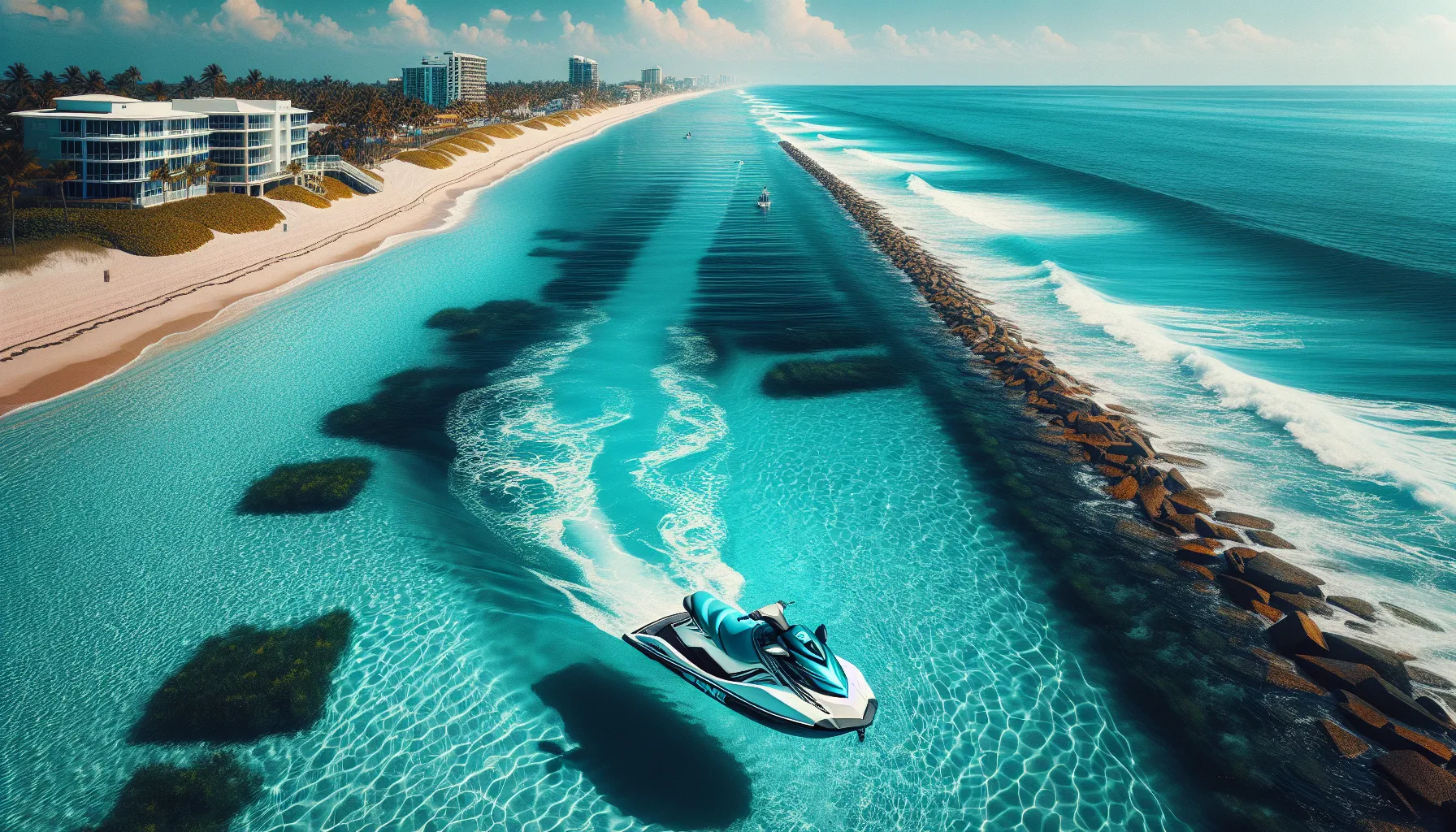
Riviera Beach sits at the mouth of one of Florida's busiest ocean access points, where Lake Worth Lagoon meets the Atlantic through Lake Worth Inlet. That combination of protected bay water, a fast-moving inlet, and open ocean makes it one of the most rewarding places in the state to ride a personal watercraft (PWC) — and one of the most demanding. This guide walks you through where to ride, what a rental actually involves, the Florida laws that apply the moment you throttle up, and the specific local hazards that catch visitors off guard. By the end you'll know exactly what to check, what to carry, and what certification you legally need before you launch.
Where to Ride: Riviera Beach's Best Jet Ski Waters
Riviera Beach gives riders three distinct environments in a single trip. Understanding the character of each one is the difference between a relaxed afternoon and an accidental brush with a mega-yacht wake.
Lake Worth Lagoon
The lagoon is the sheltered water between Singer Island and the mainland. It's the natural starting point for most riders: the water stays calm in typical conditions, navigation is straightforward, and you're rarely far from a marked channel. Beginners should log their first hour here before considering anything closer to the inlet.
Peanut Island
This 80-acre man-made island near the inlet is a weekend gathering spot with a snorkeling lagoon, a historic Coast Guard boathouse, and shallow beaching areas. Approach it slowly — the surrounding shallows fill with anchored boats, swimmers, and paddlers on busy days, and idle-speed discipline matters.
Lake Worth Inlet and Phil Foster Park
The inlet connects the lagoon to the Atlantic and runs past the Blue Heron Bridge, a world-famous shore-diving site. Currents rip through here on a moving tide, and it's an active commercial channel serving the Port of Palm Beach. This is advanced water. If you plan to cross it, read our dedicated Lake Worth Inlet crossing guide first — timing and tide awareness are everything.
Singer Island and the Atlantic
Outside the inlet you get true ocean riding: rolling swell, deeper water, and frequent dolphin and sea-turtle sightings. It's spectacular and should be reserved for experienced operators on a machine you trust. Conditions can shift quickly, and a two-foot chop at the inlet can become something larger a mile offshore.
What a Riviera Beach Jet Ski Rental Actually Involves
Rental operators along the Riviera Beach Marina district and nearby Singer Island generally follow the same pattern, and knowing it ahead of time speeds up your launch.
You'll sign a liability waiver, show a government-issued photo ID, and — if you were born on or after January 1, 1988 — present your Florida Boating Safety Education ID Card. Most shops require the primary renter to be at least 18, even though state law allows a 14-year-old to operate. You'll receive a safety briefing covering throttle control, the engine cut-off lanyard, re-boarding a capsized craft, and the boundaries of your permitted riding area. Many operators geofence their machines or brief you on a specific zone; straying past it, especially into the inlet or shipping lane, can end your rental early.
Rental structures usually break into two formats:
- Guided tours pair you with a lead rider who knows the local channels, keeps the group clear of hazards, and often works in wildlife viewing. These are the right call for first-timers and visitors.
- Freestyle rentals give you a machine and a boundary. They reward riders who already understand right-of-way, channel markers, and how to read weather — and they legally require your education card if you were born after 1988.
Because prices, inclusions, and deposit policies vary widely by operator and season, confirm the total cost, fuel policy, and damage deposit in writing before you pay.
Florida Jet Ski Laws Every Rider Must Know
The moment you leave the dock, Florida Fish and Wildlife Conservation Commission (FWC) rules apply to you exactly as they would to any boater. These are the ones that matter most on Riviera Beach water.
Education and Age Requirements
Anyone born on or after January 1, 1988 must carry a Boating Safety Education ID Card to operate a vessel powered by 10 HP or more — and every rental PWC clears that threshold easily. The card comes from completing an FWC-approved, NASBLA-recognized course; it does not expire and is honored for residents and visitors alike. Separately, no one under 14 may operate a PWC in Florida, and it is illegal to knowingly lease or rent one to anyone younger. For a full breakdown of the age tiers, read our Florida jet ski and PWC laws guide.
Operating Hours
A PWC may not be operated from a half-hour after sunset to a half-hour before sunrise — even where a conventional boat legally can. Plan your ride to be back at the dock well before dusk, and remember that the inlet gets darker faster than the open lagoon.
Required Equipment
- A Coast Guard-approved life jacket must be worn by every person on a PWC — not merely carried aboard.
- The engine cut-off lanyard must be attached to the operator (wrist or life jacket) so the engine stops if you're thrown off.
- A sound-producing device such as a whistle must be aboard.
Florida also requires children under 6 to wear a PFD while a vessel under 26 feet is underway — a rule worth remembering if you're renting a double PWC for the family.
Operating Behavior
Riding recklessly — weaving through traffic, jumping a boat's wake within roughly 100 feet, or spraying nearby vessels — is a specific violation. Within Riviera Beach's many idle-speed and no-wake areas, and inside the frequent manatee zones of Lake Worth Lagoon, you must slow to the posted speed. To understand how those distance rules work in practice, see our explainer on Florida's 100-foot PWC rule.
Boating Under the Influence: The Line You Don't Cross
Operating a PWC while impaired carries the same consequences as driving drunk. In Florida, you are Boating Under the Influence (BUI) at a blood-alcohol concentration of 0.08 — and at just 0.02 for operators under 21. FWC and marine patrol run enforcement in the Palm Beach area, particularly around Peanut Island on busy weekends. The safest policy is simple: keep alcohol off the water entirely when you're the one at the throttle. A full rundown of penalties and testing lives in our Florida BUI laws guide.
Reading the Water: Channel Markers, Traffic, and Currents
Riviera Beach is not a place to guess at navigation. The Lake Worth Inlet is a federal channel serving a working port, and you'll share it with cargo vessels, charter fleets, and outbound sportfishers.
Learn the marker system before you ride: red markers on your starboard side returning from open water ("red-right-returning"), green to port, and the difference between a channel edge and open water. Our Riviera Beach channel markers guide covers the local layout in detail, and the broader Florida channel markers and navigation aids reference explains the full system.
Three local hazards deserve special respect:
- Inlet current. On an outgoing tide meeting an onshore breeze, the inlet develops standing chop that can swamp an inexperienced rider. Cross only near slack tide when you're learning.
- Big-vessel wake. Mega-yachts and commercial traffic throw wakes that arrive long after the boat has passed. Take them at an angle, never broadside.
- The shipping lane. Stay well clear of marked commercial channels. A loaded ship cannot maneuver or stop for a PWC.
When to Ride: Seasons and Daily Conditions
Riviera Beach is rideable year-round, but conditions shift meaningfully through the year.
- Spring and summer (roughly March–August) bring the warmest water, the busiest rental demand, and daily afternoon thunderstorms. Book early and ride in the morning to beat the storms.
- Fall (September–November) offers thinner crowds and warm water, but it overlaps hurricane season — check the tropical outlook before committing to a trip.
- Winter (December–February) is the local favorite: fewer visitors, calmer schedules, and comfortable riding on most days, though a passing front can drop water temperatures and kick up wind.
Whatever the season, check the marine forecast the morning of your ride. South Florida's summer storms build fast; lightning within a few miles is a signal to be off the water immediately.
Safety Prep and What to Bring
A little preparation makes a Riviera Beach ride safer and far more enjoyable.
Before you launch:
- Confirm the weather and tide, and identify your return-by time relative to sunset.
- Attach the cut-off lanyard and check that every life jacket fits and is buckled.
- Note your riding boundary and the location of the nearest fuel dock.
- Tell someone ashore your plan and expected return.
Bring with you:
- Government photo ID and your Boating Safety Education ID Card.
- Reef-safe sunscreen, polarized sunglasses on a strap, and a rash guard.
- A waterproof phone case or pouch, and plenty of drinking water.
- Water shoes and a dry change of clothes for afterward.
If mechanical trouble strikes, don't panic — drift, stay with the craft, and signal for help. The step-by-step process in our jet ski breakdown guide applies anywhere in Florida, Riviera Beach included.
Getting Certified Before You Ride
If you were born on or after January 1, 1988, the Boating Safety Education ID Card is not optional — it's the legal prerequisite to operating any rental PWC in Riviera Beach. The good news is that the requirement is easy to satisfy from home.
An state-standards online, NASBLA-recognized Florida boating safety course can be completed entirely online at your own pace. The final exam is 25 questions, and you need 80% to pass, with unlimited retakes if you miss it the first time. On passing, you can print a temporary certificate right away — so you can book and get certified before your trip instead of scrambling at the dock.
The course covers exactly what Riviera Beach's waters demand: navigation rules and right-of-way, required safety equipment, manatee-zone and no-wake obligations, emergency procedures, and PWC-specific regulations. If you want the full picture of the credential itself, our Florida boating license requirements guide breaks down who needs it and how it works.
Start the state-standards online course - $12.99
Final Checklist Before You Launch
Riviera Beach rewards riders who show up prepared. Before your adventure:
- Complete your boating safety course and have your card ready if you were born after 1988.
- Book your rental ahead in peak season and confirm cost, fuel, and deposit terms.
- Check the marine forecast and tide the morning of your ride.
- Review the local channel markers and pick a riding zone that matches your experience.
- Pack sunscreen, water, ID, and a waterproof phone case — and attach that lanyard.
Do those five things and you'll spend your day enjoying some of the most scenic water in South Florida instead of untangling avoidable trouble. Ride within your limits, respect the inlet and the traffic, and put safety first every time.
Ready to get legal and get on the water? Get your Florida boating license online - $12.99 and print your certificate today.