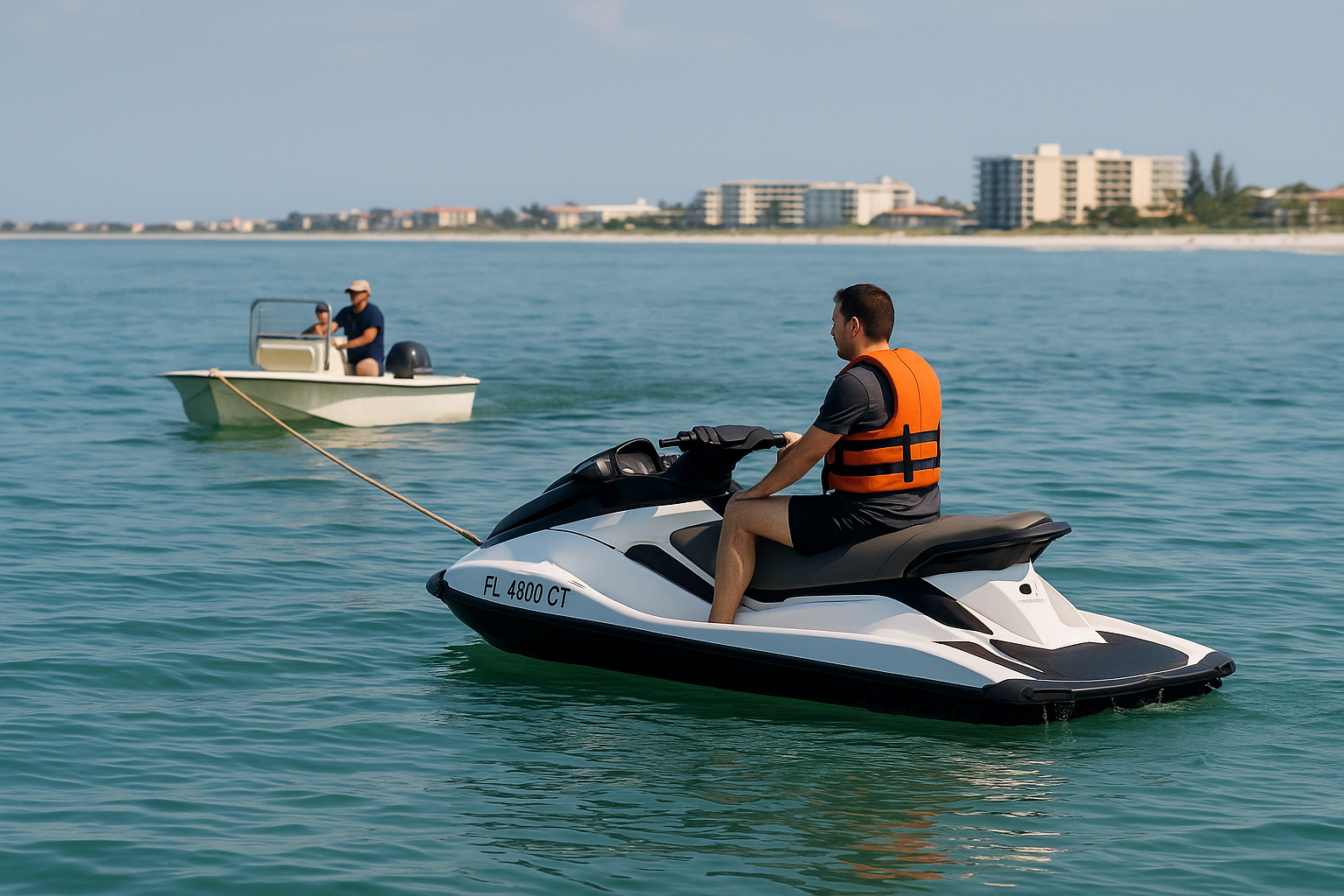

A Florida boating ticket is a uniform boating citation, and most of them are for noncriminal infractions. Section 327.73 lists those infractions, from careless operation and speed zones to missing safety equipment and not carrying your boater education card. The standard civil penalty is $100, and the statute sets higher amounts for some offenses.
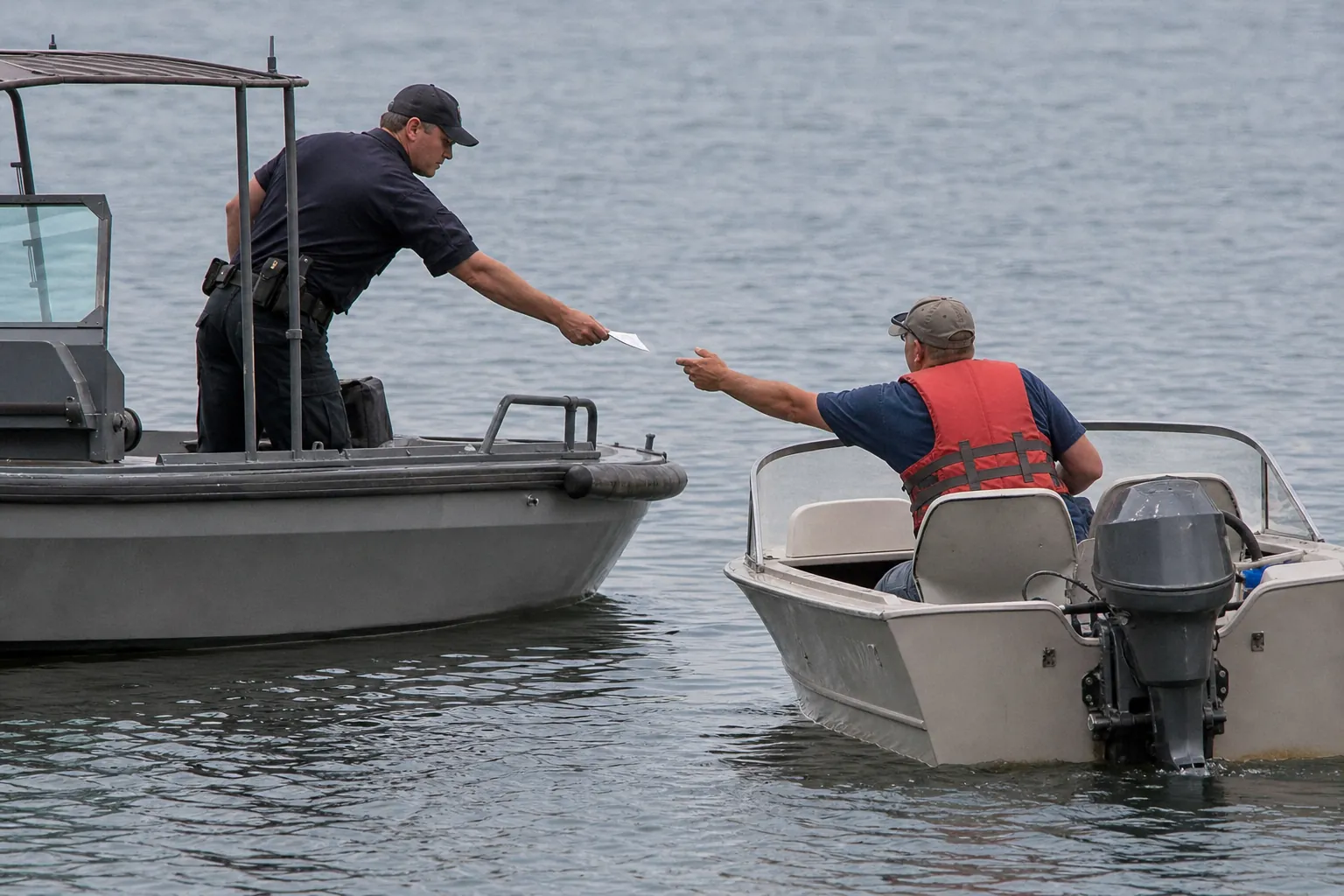
Three things decide what a ticket really costs you:
- What you were cited for. A few infractions carry their own penalty schedule, and a handful of offenses are crimes rather than infractions.
- How you respond. You can pay within 30 days, post a bond, or go to a county court hearing. Ignoring the citation is a separate misdemeanor.
- Whether it triggers the course rule. A conviction for many of the listed infractions means you must complete a boating safety course and file proof with the FWC before you operate a vessel again, under section 327.731.
This guide walks through each part with the statute or FWC page behind it. For the wider set of rules that lead to these stops, start with boating in Florida: the rules to know.
Infraction or Crime: Which One You Got
Florida splits boating offenses into two groups, and the difference matters more than the dollar amount.
Noncriminal infractions are handled like a traffic ticket. Section 327.73(1) names them, and the list includes:
- Careless operation under section 327.33(2)
- Water skiing, aquaplaning, parasailing and similar activities (section 327.37)
- Interference with navigation (section 327.44)
- Boating-restricted areas and speed limits set by the FWC or local governments, and manatee speed limits
- Required safety equipment, lights and shapes (section 327.50)
- Navigation rules violations that do not cause serious injury or death
- Personal watercraft rules in section 327.39
- Boater safety education under section 327.395
- Overloaded or overpowered vessels, divers-down warning devices, seagrass scarring and spring protection zones
- Registration problems, such as an unregistered vessel, a missing decal or an expired registration
Criminal boating violations go through the criminal courts. The FWC's mandatory boating education page lists examples, including boating under the influence, reckless operation, failing to report a boating accident or render aid, leaving the scene of an accident, allowing a person under 14 to operate a personal watercraft, violating a safety or security zone, and breaking the rules for rental vessels.
Section 327.33 shows how far apart the two groups sit. Careless operation, meaning failing to operate in a reasonable and prudent manner with regard for other traffic, posted speed and wake limits and the conditions around you, is a noncriminal violation. Reckless operation, meaning willful or wanton disregard for the safety of people or property, is a second-degree misdemeanor with no accident, a first-degree misdemeanor if it causes damage to another person or their property, and a third-degree felony if it causes serious bodily injury.
What Each Ticket Costs
The base civil penalty for a boating infraction is $100, "except as otherwise provided" in section 327.73. These infractions have their own amounts written into the statute:
| Infraction | First offense | Later offenses |
|---|---|---|
| Navigation rules violation (no accident, or an accident without serious injury or death) | Up to $500 | Up to $1,000 (second), up to $1,500 (third and later) |
| Carelessly causing seagrass scarring | $100 | $250, $500, then $1,000, within set look-back periods |
| Spring protection zones | $100 | $250, $500, then $1,000, within set look-back periods |
| Anchoring in an anchoring limitation area | Up to $100 | Up to $250 (second), up to $500 (third and later) |
| Anchoring or mooring in a prohibited area | Up to $100 | Up to $250 (second), up to $500 (third and later) |
| Marine sanitation and no-discharge zones (listed subsections) | $250 | $250 |
| Improper transfer of title | Up to $500 | Up to $500 |
| Failing to update vessel registration information | Up to $500 | Up to $500 |
Court costs come on top of the civil penalty. Section 327.73(11) sets minimum court costs of $18 for nonmoving boating infractions and $35 for the infractions listed in section 327.731, plus a $3 court cost on each infraction and a $2 court cost when a city or county assesses it. The statute caps these court costs at $45.
Criminal violations follow the general sentencing statutes. Under section 775.082 and section 775.083, a second-degree misdemeanor carries up to 60 days in jail and a fine of up to $500, and a first-degree misdemeanor carries up to one year and a fine of up to $1,000.
Your Options After an Officer Writes the Citation
At the stop, section 327.73(2) gives you two choices: post a bond equal to the civil penalty, or sign the citation as a promise to appear. The officer can write the hearing time and place on the citation and must list the civil penalty. Willfully refusing to post a bond or to sign is a second-degree misdemeanor under section 327.73(3).
After that, section 327.73(4) lets you settle most infractions without a hearing:
- Pay the civil penalty by mail or in person within 30 days of receiving the citation, or
- Forfeit the bond you posted by not appearing at the hearing.
Either route counts as admitting the infraction and giving up the hearing. The statute adds that this admission cannot be used as evidence in any other proceeding.
Some citations require a court appearance. Section 327.73(1)(g) removes the pay-by-mail option for some expired registration citations under section 328.72(13), so those require an appearance at the hearing. You must also appear in person if the infraction caused an accident that killed someone or caused serious bodily injury (section 327.73(10)). If an infraction caused a death, the court can also order 120 hours of community service on top of the other penalties.
Going to Court Instead of Paying
You can choose a county court hearing. Section 327.73(5) says that by doing so you waive the civil penalty limits in subsection (1): if the court finds you committed the infraction, it can impose a civil penalty of up to $500, or a higher amount where the statute sets one.
The state must prove the infraction beyond a reasonable doubt (section 327.73(6)), and a finding against you can be appealed to the circuit court (section 327.73(7)).
Missing the deadline costs more. Under section 327.72, not paying the civil penalty within 30 days is a second-degree misdemeanor. Section 327.73(9) adds a court cost of up to $20 for failing to pay or comply on time. And anyone who fails to appear or otherwise respond to a uniform boating citation is charged with failing to respond, a second-degree misdemeanor, on top of the original charge. The officer must give you a written warning about this when the citation is issued.
If you cannot pay, section 327.73(9)(b) lets the court accept public works or community service for a person who shows financial hardship, credited at the minimum wage for each hour.
Cited Without Your Card? Bring It to the Clerk
If you were born on or after January 1, 1988, section 327.395 requires you to carry photo identification and your boating safety education ID card, or another accepted proof such as a temporary certificate, whenever you operate a vessel with a motor of 10 horsepower or more. Operating without it is a noncriminal infraction.
When the problem was that you left a valid card at home, the statute gives you a way out:
- Section 327.73(1)(s) says you may not be convicted if, before or at the county court hearing, you show the clerk or the hearing officer a boating safety education ID card or temporary certificate that was valid on the day you were cited.
- Section 327.73(4) lets the clerk dismiss the case and charge a dismissal fee of up to $10.
The same dismissal option exists for an expired registration citation if you can show a registration that was valid at the time of the citation.
None of this helps if you never earned a card. In that case, paying the ticket admits the infraction, and a conviction for a listed infraction brings the course rule below. The Florida boater ID card guide explains how to get the card, and the FWC's ID card page notes the card does not expire.
The Course Rule for Violators
This is the part of a Florida boating ticket that surprises people. Under section 327.731(1), a person convicted of the noncriminal infractions in section 327.73(1)(h) to (k), (m), (o), (p) and (s) to (y) must:
- Enroll in and complete, at their own expense, a classroom or online boating safety course that meets the FWC's standards.
- File proof of completion with the FWC within 90 days.
- Stay off the helm until that proof is filed.
Those paragraphs cover careless operation, water sports rules, interference with navigation, speed and restricted zones, safety equipment and lights, navigation rules, personal watercraft rules, the boater education card, overloading, divers-down warning devices, airboat rules, seagrass scarring and spring protection zones.
"Conviction" is broad here. Section 327.731(3) counts a finding of guilt or a guilty or no contest plea, even when adjudication or sentencing is withheld. Paying the ticket also counts as admitting the infraction under section 327.73(4). If you are unsure whether the course rule applies to you, the clerk of court in the county where you were cited can tell you how your case was recorded.
Operating before you file proof is a second-degree misdemeanor under section 327.731(3). The FWC's mandatory boating education page puts it plainly: the privilege to operate a boat in Florida is suspended until proof of completion is filed.
The $500 fine. Section 327.731(2) adds a $500 fine for anyone convicted of a criminal boating violation, of a noncriminal infraction that resulted in a reportable boating accident, or of two or more of the listed infractions within 12 months.
Type 1 and Type 2 Courses
The FWC's mandatory boating education page describes two courses:
| Type 1: Boating Safety Education | Type 2: Safe Boating for Violators | |
|---|---|---|
| What it is | A boating safety education course that meets the national standard and is recognized by the State of Florida, classroom or online | A four-hour, online-only course for violators; the FWC recognizes one |
| When it is required | Every mandatory education case | Criminal convictions and infractions that caused a reportable accident |
| Timing | Must be completed after the date of the violation | Completed online |
| How proof reaches the FWC | You mail the completion certificate within 90 days to the Boating and Waterways Section in Tallahassee | The provider reports completion to the FWC electronically |
To check whether a Type 1 course meets the national standard Florida uses, see our NASBLA Florida course guide. Where to find a Type 1 course, in a classroom or online, and the final exam it ends with, is covered in our guide to boating school in Florida. A single listed noncriminal infraction calls for the Type 1 course. A criminal boating violation, or an infraction that caused a reportable boating accident, calls for both. The FWC defines a reportable accident as one involving injury that needs treatment beyond first aid, a death, a disappearance that suggests death or injury, or $2,000 or more in damage to vessels or property. Our guide to Florida boating accident reporting covers those duties step by step.
The FWC's ID card page adds a practical note: if you take a course to meet the violator requirement, include a note or letter with your proof of completion when you request your ID card. Responsibility for getting the Type 1 proof to the FWC rests with you.
If the Notice Looks Wrong
The FWC's information about citations and their outcomes comes from the county clerks of court. According to the mandatory boating education page, notices about the course requirement are based on the clerk's records even when an FWC officer wrote the citation. If you think a notice is wrong, contact the clerk's office in the county where the violation happened to discuss or correct the record.
How to Avoid the Ticket in the First Place
Most of the infractions above come down to a short list of habits:
- Carry your card and photo ID if you were born on or after January 1, 1988 and the motor is 10 horsepower or more. The FWC's education FAQs list the exemptions, such as boating with a qualified adult aboard.
- Run the equipment check before you leave the dock. Our Florida boat safety equipment checklist lists what an officer looks for.
- Watch the posted zones. Speed and idle zones, including manatee zones, are on the infraction list. See the Florida manatee zones guide.
- Know who gives way. Navigation rules violations carry the highest civil penalties in section 327.73. The navigation rules guide covers right of way.
- Keep the registration current. The Florida boat registration guide explains renewal.
- Never operate impaired. The Florida BUI laws guide covers the criminal penalties.
A boating safety course teaches these subjects before a citation makes it mandatory. Boat Skill is preparing an online exam for the Florida temporary boating certificate, the one renters call the jet ski test. Get notified when Boat Skill enrollment opens.
Sources
- Florida Statutes 327.73: Noncriminal infractions
- Florida Statutes 327.731: Mandatory education for violators
- Florida Statutes 327.33: Reckless or careless operation of vessel
- Florida Statutes 327.395: Boating safety education
- Florida Statutes 327.72: Penalties
- Florida Statutes 775.082: Penalties
- Florida Statutes 775.083: Fines
- FWC: Mandatory Boating Education
- FWC: FAQs About Boating Safety Education Requirements
- FWC: Boating Safety Education ID Card
Common questions
How much is a boating ticket in Florida?
Section 327.73 sets a standard civil penalty of $100 for a noncriminal boating infraction, with higher amounts for some offenses. A navigation rules violation, for example, can be up to $500 for a first offense. Court costs are added and are capped at $45 under section 327.73(11).
How long do I have to pay a Florida boating citation?
You can pay the civil penalty by mail or in person within 30 days of receiving the citation, under section 327.73(4). Not paying within 30 days is a second-degree misdemeanor under section 327.72, and a court cost of up to $20 can be added.
Does paying a Florida boating ticket count as a conviction?
Paying the civil penalty counts as admitting the infraction and waiving the hearing under section 327.73(4). For the mandatory course, section 327.731 counts a finding of guilt or a guilty or no contest plea as a conviction even when adjudication is withheld. The clerk of court in the county where you were cited can tell you how your case was recorded.
Do I have to take a boating course after a ticket in Florida?
Yes, for the infractions listed in section 327.731(1), which include careless operation, speed and restricted zones, safety equipment, navigation rules, personal watercraft rules and the boater education card. You must complete a course and file proof with the FWC within 90 days, and you may not operate a vessel until you do.
What is the difference between the Type 1 and Type 2 courses?
The FWC describes Type 1 as a boating safety education course that meets the national standard, taken in a classroom or online. Type 2 is a four-hour online course for violators. One listed infraction calls for Type 1; a criminal violation or an infraction that caused a reportable accident calls for both.
I got a ticket for not having my boater card, but I have one. What now?
Show the card to the clerk or hearing officer before or at the hearing. Section 327.73 says you may not be convicted if the card or temporary certificate was valid when you were cited, and the clerk may dismiss the case with a dismissal fee of up to $10.
Is careless operation a crime in Florida?
No. Section 327.33(2) makes careless operation a noncriminal violation. Reckless operation under section 327.33(1) is a crime: a second-degree misdemeanor without an accident, a first-degree misdemeanor if it damages another person or their property, and a third-degree felony if it causes serious bodily injury.
What happens if I ignore a Florida boating citation?
Failing to appear or respond to a uniform boating citation is charged as a separate second-degree misdemeanor under section 327.73, on top of the original charge. A second-degree misdemeanor can bring up to 60 days in jail and a fine of up to $500 under sections 775.082 and 775.083.