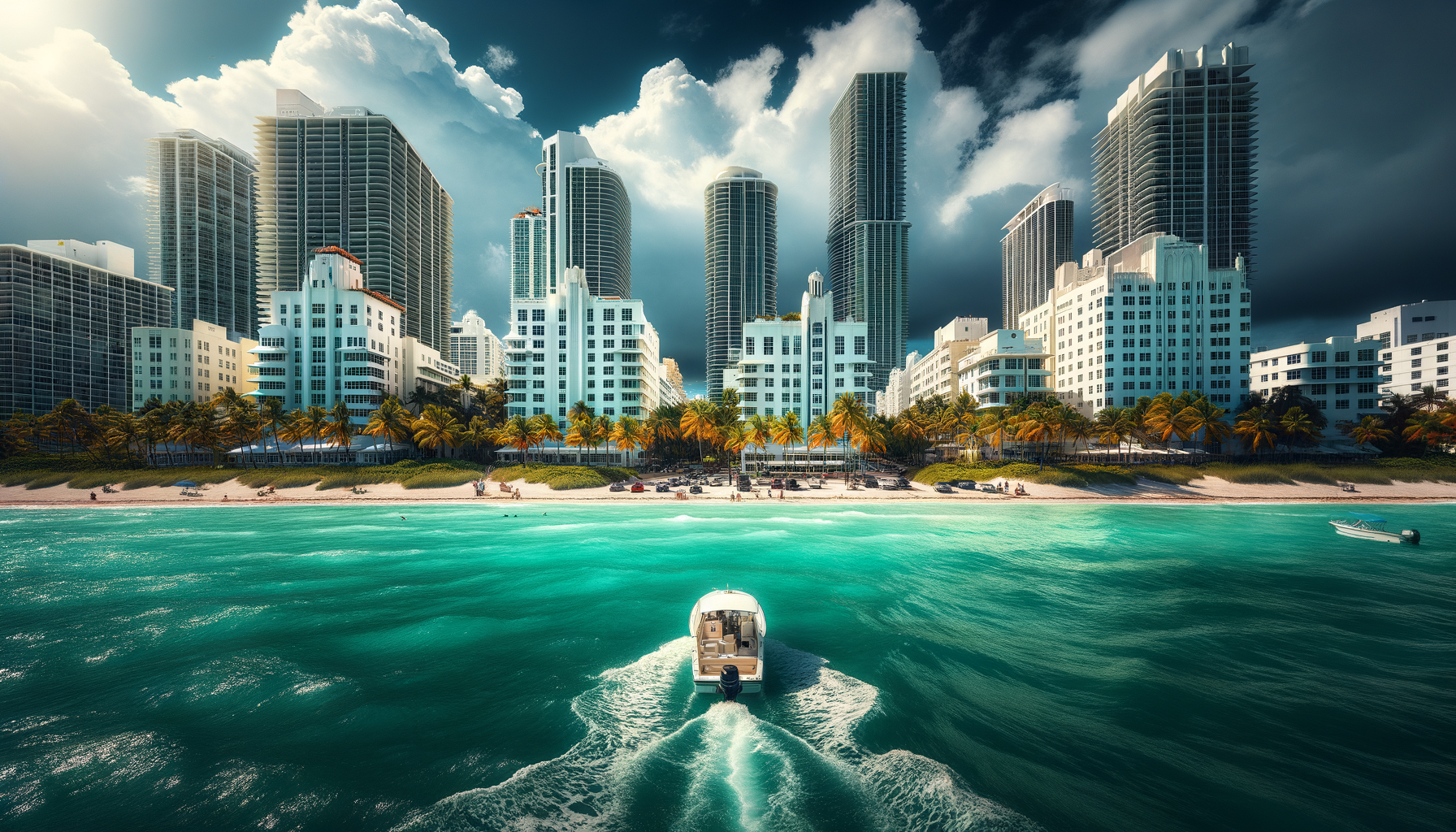
Renting a jet ski in Miami is one of the best ways to see Biscayne Bay, the downtown skyline, and the Atlantic coastline up close. But Miami's waters are also some of the busiest and most heavily regulated in Florida, and a quick rental counter briefing is not enough to keep you legal or safe. This guide walks you through exactly what you need before you throttle up: whether Florida law requires you to carry a boating education card, the PWC rules the Florida Fish and Wildlife Conservation Commission (FWC) enforces on the water, the safety gear that is mandatory (not optional), where to ride, and how to protect the manatees and dolphins that share these waters. Read this before you book, and your day on the water will be smoother, safer, and free of avoidable citations.
Where to Ride Jet Skis in Miami
Miami's geography gives renters a rare mix of protected flats and open ocean, so you can match the water to your experience level.
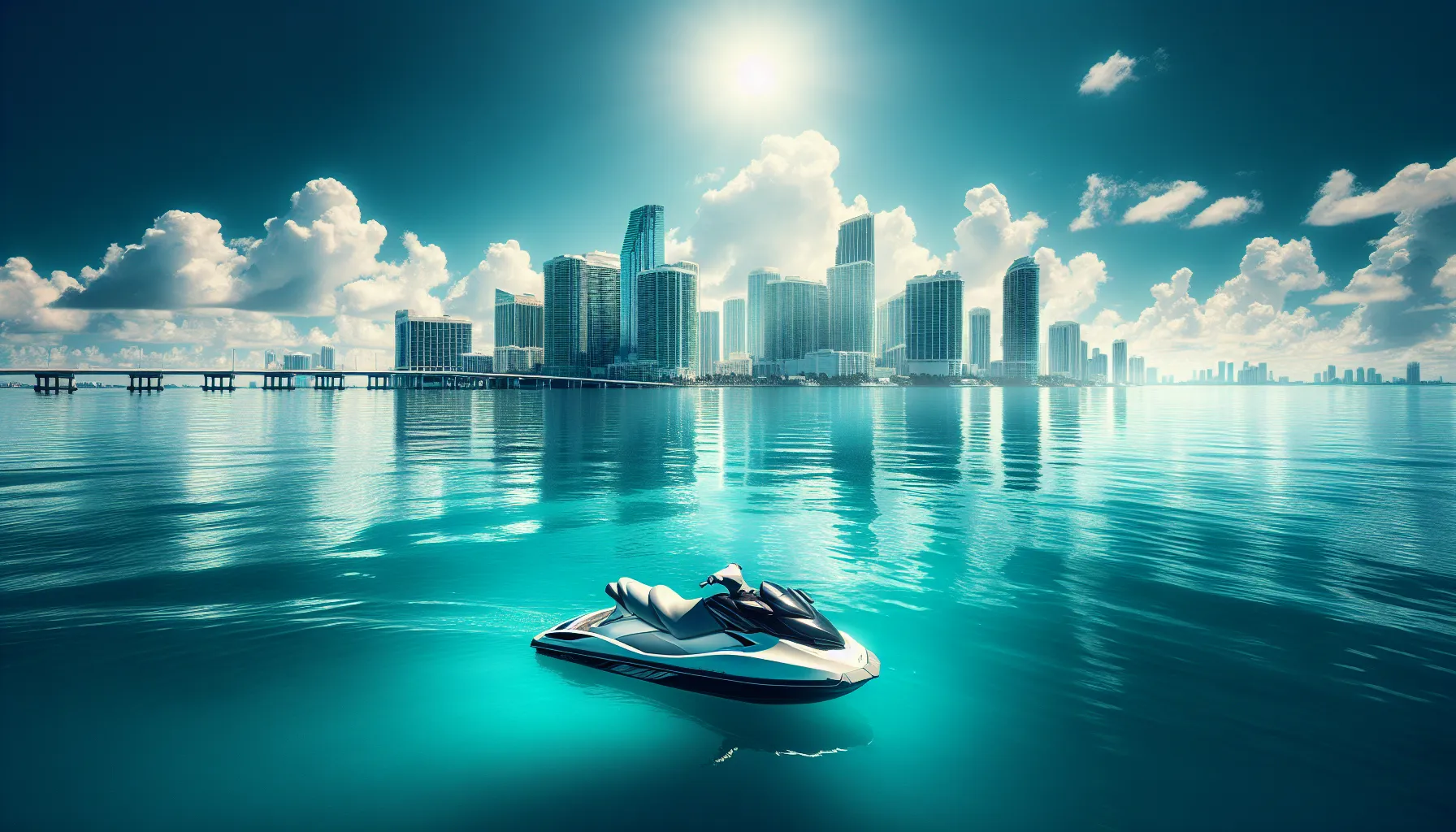
Biscayne Bay and the Downtown Skyline
The bay is the classic Miami ride. Its protected, relatively shallow water stays calmer than the open Atlantic, which makes it ideal for first-timers and for photos with the Brickell and downtown skyline behind you. Dolphin sightings are common. Expect heavy recreational traffic, especially on weekends, and stay well clear of the deep-draft shipping channels that serve the Port of Miami.
Key Biscayne and Virginia Key
South of downtown, the water around Key Biscayne and Virginia Key is clearer and less crowded. You will see Bill Baggs Cape Florida State Park, the historic Stiltsville houses, and healthy seagrass flats. Those flats are exactly where manatees and sea turtles feed, so this area carries slow-speed and idle zones that are strictly enforced. It is a beautiful ride, but a low-and-slow one in the marked zones.
Haulover Sandbar
On weekends, hundreds of boats raft up at the Haulover sandbar for Miami's floating social scene. It is fun to visit, but it is congested, alcohol is everywhere, and you must approach at idle speed. Keep your head on a swivel and never ride fast through anchored vessels.
Oleta River and Mangrove Channels
North Miami's Oleta River area offers calm, mangrove-lined channels with herons, ospreys, and wintering manatees. These narrow channels are idle-speed environments. If you want tight, protected water and wildlife over open-water speed, this is your spot.
The Open Atlantic
Experienced riders can access the Atlantic for open-water riding with views of the South Beach coastline and cruise ships entering the port. Ocean swells, stronger currents, and rapidly changing weather make this unforgiving for beginners. If you have never operated a personal watercraft (PWC) before, stay in the bay.
Do You Need a License to Rent a Jet Ski in Miami?
This is the single most misunderstood point at the rental counter, so let's be precise. Florida does not issue a separate "jet ski license." What the law requires is a Boating Safety Education ID Card, and whether you need one depends on your birth date.
Under Florida law, anyone born on or after January 1, 1988 must complete an approved boater education course and carry the resulting card to operate any vessel powered by 10 horsepower or more, and that absolutely includes a rented jet ski. There is no visitor exemption: out-of-state renters and tourists are held to the same standard as Florida residents. Rental liveries are also required to give a pre-rental checkout to customers who are not exempt, but that on-site checklist does not replace the education card.
The card comes from completing a state-standards online course, and you can finish the entire thing online before your trip. For a full breakdown of who is and isn't exempt, read our dedicated guide on whether you need a boating license to rent a jet ski in Miami. If you would rather just get it done, you can get your Florida boating license online at your own pace and print a temporary card the moment you pass.
Florida PWC Laws Every Miami Rider Must Follow
Beyond the education card, the FWC enforces a specific set of PWC rules statewide. Violations carry real penalties and, on Miami's crowded water, real danger.
Minimum Operating Age
You must be at least 14 years old to operate a PWC anywhere in Florida, including Miami. There is no exception for adult supervision on board. Many rental operators set their own minimum at 18 or require a 25-percent security deposit, so confirm the livery's policy when you book. Traveling with a teen driver? Our guide to Florida PWC laws and age requirements covers the details that trip up families.
Nighttime Operation Is Prohibited
It is illegal to operate a PWC from a half-hour after sunset to a half-hour before sunrise, even if the machine has navigation lights. Plan your ride to be off the water well before dusk. Sunset tours on a jet ski are not a legal option in Florida.
The Engine Cut-Off Lanyard
If your PWC is equipped with a self-circling or engine cut-off feature, the lanyard must be attached to the operator — clipped to your wrist or PFD — whenever the engine is running. This kills the engine if you fall off so the machine circles back instead of speeding away. Riding with the lanyard dangling loose is both illegal and one of the most common causes of solo-rider injuries.
Reckless Operation and the Distance Rule
Weaving through congested traffic, jumping the wake of another vessel within 100 feet, and spraying other boaters are all classified as reckless operation. Florida also enforces a slow-speed rule requiring you to operate at idle or slow speed when within a set distance of other vessels, docks, and swimmers. In practice: give everyone a wide berth, and save the throttle for open, empty water.
Required Safety Gear and How to Use It
Miami's warm, calm bay lulls riders into treating gear as optional. The law and the physics of a 400-pound machine say otherwise.
- Life jacket (PFD): Every person on a PWC must wear a U.S. Coast Guard-approved life jacket at all times — not merely have one aboard. Inflatable PFDs are not approved for PWC use, so wear a standard Type III. Children under 6 must wear a PFD on any vessel under 26 feet that is underway.
- Engine cut-off lanyard: Attached to the operator, as described above.
- Sound-producing device: A whistle or horn to signal your position, which matters in Miami's low-visibility traffic.
For a deeper look at which PFDs are approved and when children are legally required to wear one, see our Florida life jacket requirements guide. Take two minutes at the dock to cinch every strap — a loose PFD rides up over your face the instant you hit the water.
Reading Biscayne Bay: Traffic, Channels, and Weather
Miami's biggest hazards are not waves — they are other vessels and fast-moving weather.
Share the Water With Big Ships
Biscayne Bay is one of the busiest recreational boating areas in the country, and it also serves cruise ships and commercial traffic bound for the Port of Miami. A large vessel cannot stop or turn quickly and may not see a low-profile jet ski at all. Stay out of the deep shipping channels, give commercial ships hundreds of feet of clearance, and never assume you have been seen. Maintain a constant 360-degree lookout — you are responsible for avoiding collisions, and understanding boat navigation rules and right-of-way is what keeps you legal and alive in this traffic.
Follow the Channel Markers
Miami's marked channels use the standard federal aids-to-navigation system. Learn the basics before you launch: red markers kept to your right when returning from open water ("red, right, returning"), green to the left, and slow-speed manatee zones posted on white regulatory signs. Cross channels perpendicularly and quickly rather than riding down the middle of one.
Respect Afternoon Thunderstorms
South Florida is the lightning capital of the United States. From roughly June through September, storms build almost daily in the early to mid-afternoon and can produce lightning, 40-mph gusts, and even waterspouts with little warning. The fix is simple: ride in the morning. Launch early, check the radar on your phone before you leave the dock, and head for shore the moment you hear thunder or see towering clouds. On flat water you are the tallest object around — do not gamble with lightning.
Protecting Miami's Marine Life
Miami's waters are a federally and state-protected habitat, and hitting protected wildlife carries stiff penalties on top of the tragedy.
Manatees
Manatees are present year-round and concentrate in Miami's warmer, shallow waters in the cooler months, roughly November through March. Watch for a "manatee footprint" — a swirl of smooth water on the surface — and obey every posted slow-speed and idle zone. These zones exist because propeller and hull strikes are a leading cause of manatee deaths. If you want to ride the flats around Key Biscayne responsibly, read up on Florida manatee zones and speed regulations first. Report an injured or dead manatee to the FWC Wildlife Alert Hotline at 1-888-404-FWCC.
Dolphins and Sea Turtles
Bottlenose dolphins are a common and welcome sight in the bay. Never chase them, cut into a pod, or try to touch them; slow down and enjoy the encounter from a distance. Sea turtles surface to breathe and are easy to strike at speed, especially in the clear water around Key Biscayne. Both are protected species — a slow throttle protects them and you.
Best Time to Ride and How to Book Smart
Miami is rideable year-round, but season shapes both conditions and cost.
By Season
- Spring and summer (March–August): Warmest water and air, but the busiest and priciest window, plus daily afternoon storms. Book several days ahead and ride in the morning.
- Fall (September–November): Thinner crowds and better rates, with hurricane season as the caveat — watch the tropical forecast.
- Winter (December–February): The locals' favorite. Cooler air, water around the upper 60s to low 70s, minimal tourists, and the best pricing. This is also peak manatee season, so expect more slow zones.
For a month-by-month look at conditions right across the causeway, our seasonal jet ski guide for Miami Beach breaks it down further.
Booking Tips
- Book ahead in peak season. Reserve several days out in spring and summer, and two to three weeks ahead of major holidays like Memorial Day and July 4th.
- Ride on weekdays for calmer water and lower rates.
- Bring the right paperwork. You will need a government photo ID, a credit card for the security deposit, and — if you were born on or after January 1, 1988 — your Boating Safety Education ID Card. Show up without the card and a livery can legally refuse to rent to you.
- Complete the waiver online ahead of time to skip the counter line.
If you are hunting for quieter water, compare Miami with nearby options like Miami Beach or the calmer flats of North Miami.
What to Bring: Pre-Ride Checklist
Pack for Miami's sun and salt as much as for the ride itself.
- Valid government-issued photo ID
- Boating Safety Education ID Card (if born on or after January 1, 1988)
- Reef-safe sunscreen, SPF 50+, reapplied every hour
- Polarized sunglasses on a retainer strap
- A rash guard or sun-protective shirt
- A waterproof phone case (for weather radar and photos)
- At least 32 ounces of water per person — dehydration hits fast in the heat
- Towel and a dry change of clothes
Skip the alcohol entirely. Florida enforces boating under the influence (BUI) at the same 0.08 percent BAC threshold as driving (0.02 for operators under 21), and the FWC patrols Miami's sandbars aggressively. A BUI is a criminal offense — learn exactly how Florida's BUI laws work before you touch a drink near the water.
Get Certified Before You Ride
If you were born on or after January 1, 1988, the smartest thing you can do before your Miami trip is knock out your boater education online. The course is state-standards online and NASBLA-recognized, you take it entirely at your own pace, and it covers everything in this guide plus the navigation and emergency skills the on-water checkout assumes you already know. The final exam is 25 questions, you need 80 percent to pass, and you get unlimited retakes at no extra cost. Pass it and you can print a temporary card immediately — no waiting, no classroom.
Start the state-standards online course - $12.99
Conclusion
Miami rewards riders who come prepared. Confirm whether the January 1, 1988 rule means you need a Boating Safety Education ID Card, wear your PFD and clip the lanyard every single time, keep clear of ships and channels, ride in the morning to dodge the storms, and slow down for the manatees and dolphins that make these waters special. Do those things and Biscayne Bay delivers one of the best rides in Florida. Get the paperwork out of the way first, and the only thing left to think about is the throttle.