Renting a jet ski in Tampa is one of the best ways to experience Florida's largest open-water estuary, but Tampa Bay is not a beginner's kiddie pool. It is 400-plus square miles of shipping channels, sudden afternoon thunderstorms, manatee protection zones, and shifting sea breezes. This guide walks you through exactly what you need before you throttle up: whether you need a boating education card, the Florida PWC laws that apply the moment you leave the dock, the best places to ride, realistic pricing, and the local safety knowledge that keeps your day fun instead of ending in a citation or a tow. Read this first and you will rent smarter, ride safer, and get more out of the water.
Why Tampa Bay Is a Standout Jet Ski Destination
Tampa Bay is the largest open-water estuary in Florida, fed by the Hillsborough, Alafia, Manatee, and Little Manatee rivers before it opens to the Gulf of Mexico. For a personal watercraft (PWC) rider that means variety: protected residential coves for beginners, wide-open bay for confident riders, and scenic landmarks like the Sunshine Skyway Bridge and the downtown Tampa skyline.
It also means responsibility. Big water builds real waves when the wind picks up, and Tampa is home to Port Tampa Bay, Florida's largest cargo port, so you will share the water with cruise ships, tankers, and tug-and-barge traffic. The riders who have the best days are the ones who understand the bay before they get on it. That is the theme of this whole guide: Tampa Bay rewards preparation.
Do You Need a License to Rent a Jet Ski in Tampa?
Florida does not issue a separate "jet ski license." What the law requires is a Boating Safety Education Identification Card, and it applies to jet skis exactly the way it applies to any powerboat.
Under Florida law, anyone born on or after January 1, 1988 must complete a state-approved boating safety course to operate a vessel powered by 10 horsepower or more. Rental jet skis are well above that threshold, so if you fall in that age group you need the card whether you are a resident or a visitor. The card does not expire and it is honored throughout the state and by most other states through NASBLA reciprocity.
If you were born before 1988, the state does not require the card, but the smart move is to take the course anyway. Many Tampa rental operators require a safety briefing or proof of education regardless of your age, and the material on right-of-way, channel markers, and local hazards is exactly what keeps you safe on a busy bay.
The good news is that you do not have to sit in a classroom. You can complete an state-standards online Florida boating safety course entirely online, at your own pace, and print a temporary certificate the moment you pass. For the full breakdown of who needs the card and how the requirement works, see our complete guide to Florida boating license requirements.
Florida PWC Laws Every Tampa Rider Must Know
Personal watercraft carry a set of rules that go beyond standard boating law. The Florida Fish and Wildlife Conservation Commission (FWC) enforces these across Tampa Bay, and rental operators expect you to know them.
Age and operation
- The minimum age to operate a PWC in Florida is 14. There is no adult-supervision exception, so a 13-year-old cannot legally drive a jet ski even with a parent aboard.
- It is illegal to knowingly lease or rent a PWC to anyone under 18.
- Everyone born on or after January 1, 1988 also needs the boating safety education card described above.
Daylight-only operation
PWCs may only be operated between a half-hour before sunrise and a half-hour after sunset. This is stricter than the rules for other boats, which may run at night with proper lighting. On the water there is no "we'll just be a few minutes late" grace period, so plan your ride to be back at the dock well before that cutoff.
Required safety gear
- Every person aboard or being towed must wear a Coast Guard-approved life jacket (PFD). On a PWC it must be worn at all times, not merely stowed on board.
- The engine cut-off switch lanyard must be attached to the operator (wrist or PFD) whenever the engine is running, so the machine stops if you fall off.
- You must carry a sound-producing device such as a whistle.
Our full breakdown of Florida life jacket and PFD requirements covers the details, including why children under six must wear a PFD on any vessel under 26 feet that is underway.
Operating conduct
Weaving through congested traffic, jumping another vessel's wake too close, and swerving at the last moment to spray or "buzz" other boats are all specifically illegal as reckless operation. The 100-foot rule is the one riders forget most: you must slow to idle-no-wake speed within roughly 100 feet of another vessel, a stationary platform, or people in the water in some contexts. For the complete picture of age limits, hours, and conduct rules statewide, read our Florida jet ski and PWC laws guide.
Best Places to Ride a Jet Ski Around Tampa Bay
Tampa Bay gives you genuinely different experiences depending on where you launch. Here are the areas riders return to, matched to skill level.
Davis Islands (beginner-friendly)
Just south of downtown, these two connected man-made islands make an easy five-mile loop past waterfront homes and Peter O. Knight Airport, where you may see seaplanes. The north side faces the skyline; the south side opens to Hillsborough Bay. Residential canals here are no-wake zones, so keep it slow near the shoreline. This is the best place in Tampa for a first-timer or a family to get comfortable.
Ballast Point and Bayshore (intermediate)
Launching near Ballast Point on the Interbay Peninsula gives you calmer morning water and views of the Bayshore Boulevard mansions, with fewer crowds than downtown. Expect it to get choppier in the afternoon once the sea breeze fills in.
Courtney Campbell Causeway and Rocky Point (intermediate to advanced)
This ten-mile causeway between Tampa and Clearwater is a favorite for longer rides and some of the best sunset cruising in the area, with multiple launch points around Rocky Point and Ben T. Davis Beach. Because it feels the influence of the open bay, wind and waves build here faster than in the protected coves.
Sunshine Skyway and open bay (advanced)
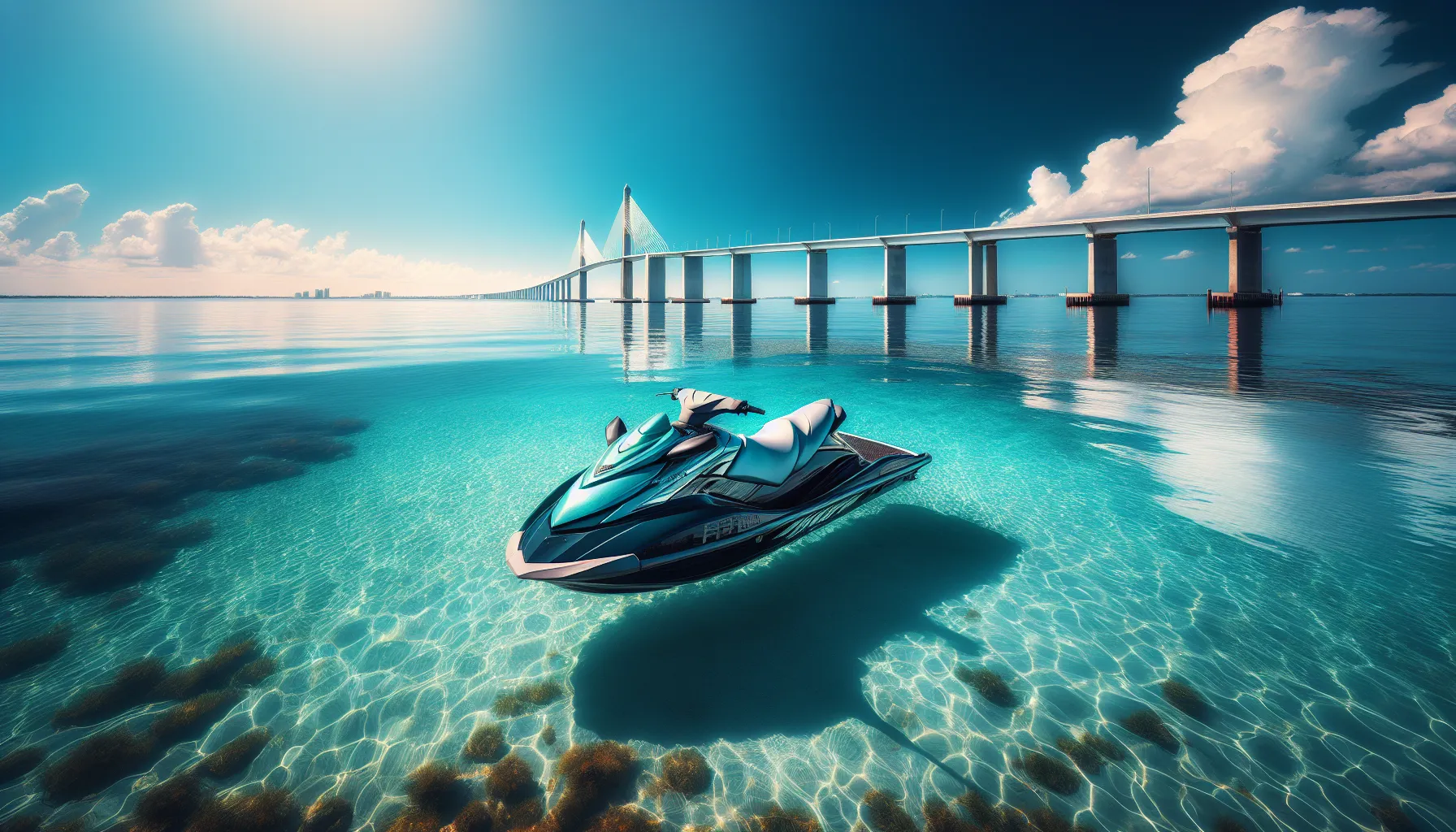
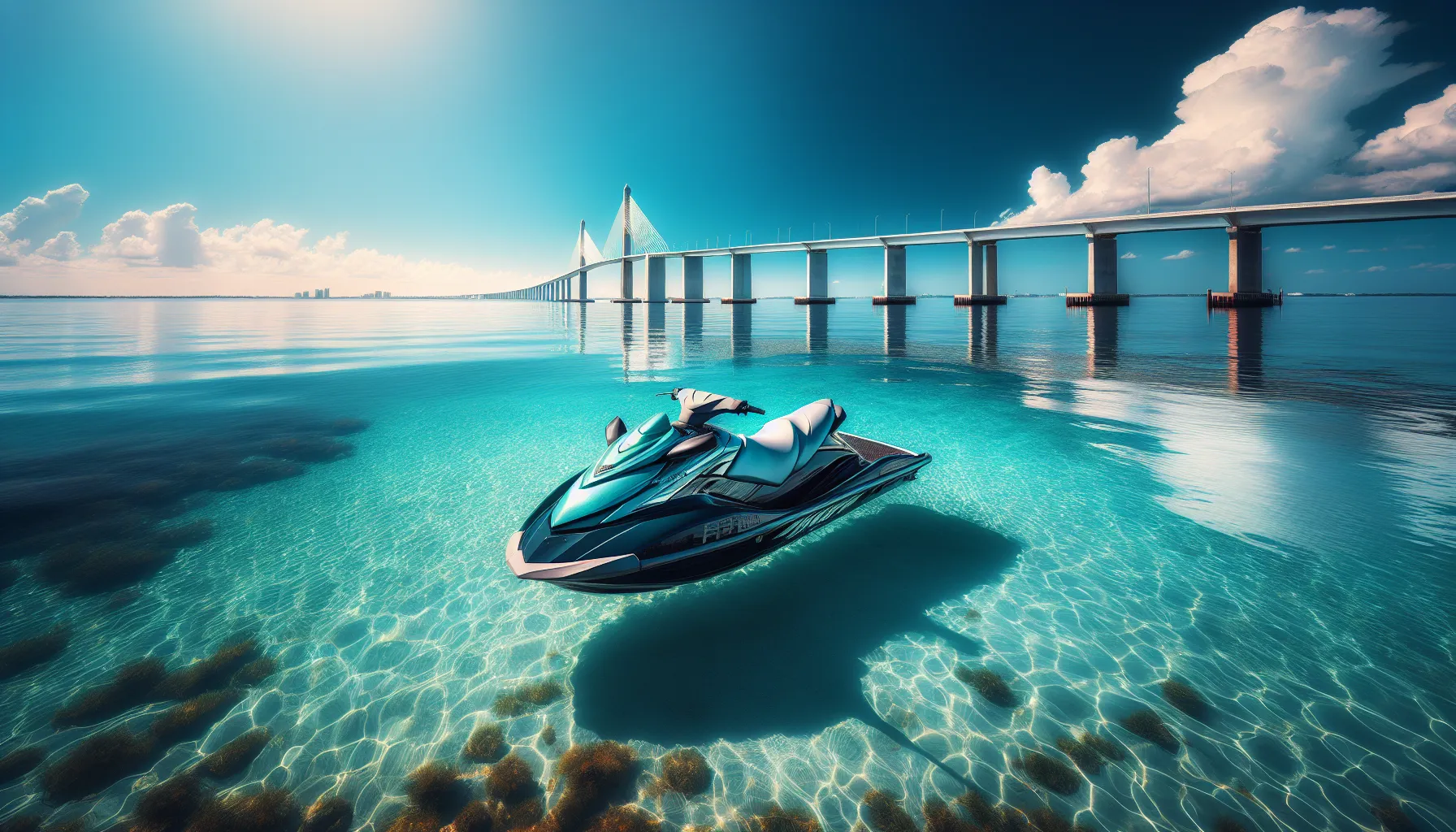
The Sunshine Skyway Bridge is Tampa Bay's signature landmark and a bucket-list destination, but it sits in deep, open water crossed by the main shipping channel. Dolphin sightings are common, and so are large commercial vessels. Only experienced riders comfortable with wind, waves, and heavy traffic should point that far south.
Apollo Beach (wildlife, winter)
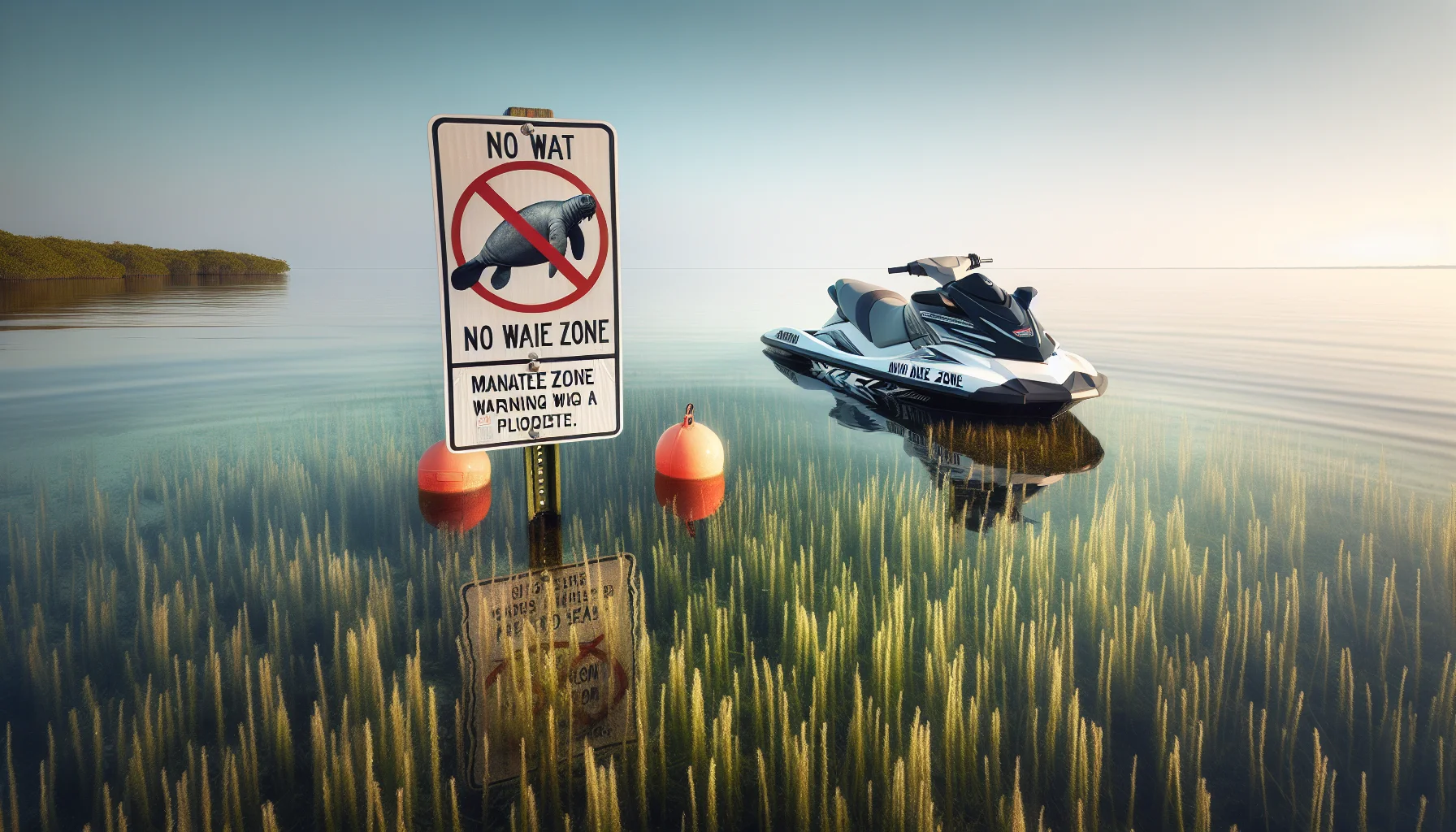
On the bay's southeast shore, Apollo Beach is famous for the warm-water discharge near the power plant where manatees gather from roughly November through March. This is strictly an observation area with idle-speed manatee zones. Never approach, chase, or feed a manatee.
Whatever route you pick, know your speed zones before you launch. Tampa Bay has extensive no-wake and manatee zones, and FWC patrols them actively. Our detailed Tampa Bay no-wake zones and speed limit guide maps out the areas where you must slow down.
What Jet Ski Rentals Cost in Tampa
Pricing in the Tampa area varies with season, watercraft model, and whether you book a guided tour or a freestyle rental. Peak summer weekends and holidays run highest; weekday mornings and the winter off-season run lowest. Use these as planning ranges rather than firm quotes, and always confirm current pricing, fuel policy, and the security deposit with the operator when you book.
| Duration | Typical Range |
|---|---|
| 30 minutes | $75 - $100 |
| 1 hour | $125 - $175 |
| 2 hours | $200 - $300 |
| Half day (4 hrs) | $350 - $500 |
| Full day (8 hrs) | $500 - $800 |
A few cost tips that actually save money in Tampa: book weekday mornings for the best rates and the calmest water, ride in the shoulder season (September to November) or winter to dodge peak pricing, and ask whether the quoted price includes fuel and taxes. Many operators also hold a refundable damage deposit on your card, so budget for that even though you get it back.
Reading Tampa Bay's Weather and Water
More Tampa jet ski days are cut short by weather than by anything else. The bay's geography makes the conditions predictable if you know the pattern.
Beat the afternoon storms
The Tampa Bay region sits in one of the most lightning-prone areas in the entire country. During the summer wet season, sea breezes off the Gulf and the bay collide inland and build towering thunderstorms almost daily, usually firing up between early and late afternoon. These storms produce dangerous lightning, sudden wind, and heavy rain, and on the water you are the tallest object around.
The fix is simple: ride early. Get on the water in the morning and plan to be back at the dock by early afternoon. Watch for tall, cauliflower-shaped clouds building over land, and head in at the first distant rumble or flash. Never try to outrun or wait out an approaching storm. Because this is such a defining Tampa hazard, we wrote a dedicated guide on Tampa Bay thunderstorm safety worth reading before your trip.
Respect the size of the bay
Four hundred square miles plays tricks on your judgment. A shoreline that looks close can be several miles away, the far side of the bay can have completely different weather, and a headwind on the way home turns a quick cruise into a long, wet slog. Do not venture far from your launch point until you are confident, keep track of your fuel, and tell someone your planned area and return time.
Give commercial ships a wide berth
Port Tampa Bay moves cruise ships, tankers, container ships, and tug-and-barge traffic through defined channels. Large vessels cannot stop or turn quickly and have the right of way in a channel. Never cross close in front of one, stay well clear of their path, and take their wake head-on rather than beam-on so it does not roll you.
Protecting Manatees and Marine Life
Tampa Bay is prime manatee habitat, especially in the cooler months when the animals crowd into warm-water refuges like the Apollo Beach discharge. Manatees are slow, they surface to breathe, and they are extremely vulnerable to propeller strikes, which is why FWC establishes seasonal and year-round idle-speed and slow-speed zones throughout the bay.
Obey every posted speed sign, wear polarized sunglasses so you can spot the telltale swirl or "footprint" a manatee leaves at the surface, and never approach, chase, feed, or touch one. Harassing a manatee carries serious federal and state penalties. For a complete look at where the zones are and how they work, see our guide to Florida manatee zones and speed regulations, and if you want to actually find them, how to spot manatees while jet skiing in the neighboring St. Petersburg waters translates directly to Tampa Bay.
Dolphins are year-round residents and often surf a jet ski's wake out of curiosity. Enjoy it, but do not chase them, and slow down when they are close. In the shallow grass flats, shuffle your feet when you wade to avoid stepping on a stingray.
Guided Tours vs. Freestyle Rentals
Guided tours
A guided jet ski tour is the right call for first-timers, visitors who want to see the highlights, and anyone without local knowledge of the bay. A guide handles navigation, points out the best scenery and wildlife, keeps you out of restricted zones, and delivers a safety briefing before you launch. Tours typically run one to two hours.
Freestyle rentals
A freestyle rental gives you freedom to explore at your own pace and usually costs less per hour on longer bookings. It is best for experienced riders who understand right-of-way, can read channel markers, and know where the speed zones are. If you are renting freestyle and you were born after 1988, you must have your boating education card with you.
Either way, the single biggest predictor of a good day is knowing the rules of the road before you launch. Understanding Florida channel markers and navigation aids and basic boat navigation and right-of-way rules turns a crowded bay from intimidating into manageable.
Get Certified Before You Ride
If you were born on or after January 1, 1988, you need a Florida Boating Safety Education Identification Card before you legally operate a jet ski in Tampa, and many operators will ask to see it. The requirement is easy to satisfy: the course is fully online, self-paced, and FWC-approved, and it covers exactly the material this guide touches on: Florida boating law, navigation and right-of-way, required safety equipment, emergency procedures, and PWC-specific rules.
The final exam is 25 questions, you need 80% to pass, and you get unlimited retakes at no extra charge. Most people finish in a few hours and print a temporary certificate immediately, so you can get certified the night before your trip if you have to.
Start the state-standards online course - $12.99
Your Tampa Jet Ski Pre-Ride Checklist
Before you leave the dock, run through this list:
- Confirm your boating education card is complete if you were born on or after January 1, 1988.
- Book weekday mornings when possible for calmer water and better prices.
- Check both the general weather forecast and the marine forecast for Tampa Bay.
- Plan to be off the water by early afternoon during summer storm season.
- Note the no-wake and manatee zones on your route.
- Wear your PFD and attach the engine cut-off lanyard every time the engine runs.
- Pack reef-safe SPF 50-plus sunscreen, water, polarized sunglasses on a strap, and a waterproof phone case.
- Tell someone your riding area and expected return time.
Ride Tampa Bay Smart
Tampa Bay offers some of the most rewarding jet skiing in Florida, from the easy loops of Davis Islands to the wide-open run toward the Sunshine Skyway. The riders who love their day are the ones who respect the bay's size, beat the afternoon storms, give ships and manatees room, and show up already knowing the rules. Get your education card sorted before you go, ride early, and Tampa Bay will give you a day you remember for the right reasons.