

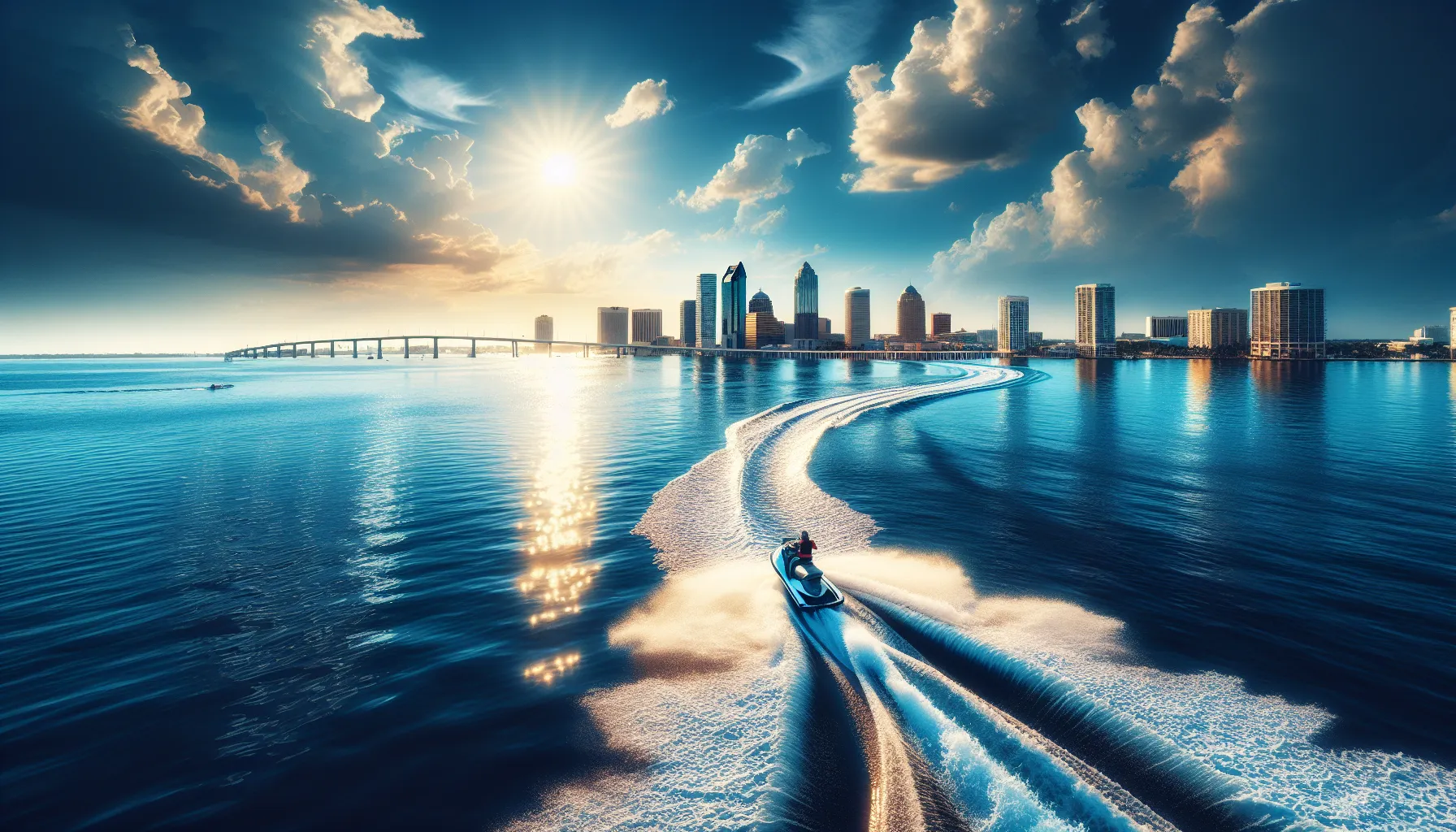
St. Petersburg sits on a peninsula wrapped by water on three sides, which makes it one of Florida's finest places to greet the sunrise from the water. Glass-calm bays, feeding dolphins, and a sky that glows over the Sunshine Skyway are all part of the "dawn patrol" experience that seasoned riders chase. But there is a catch that most sunrise blog posts get wrong: Florida law tightly controls when a personal watercraft can legally be on the water at first light.
This guide walks you through the four best sunrise routes around St. Pete, the exact legal window you can ride in, how to read tides and weather before you go, the wildlife you will meet, and the low-light navigation habits that keep dawn rides safe. Get these right and the early morning is the single best time to ride Tampa Bay.
Before you ride: Anyone born on or after January 1, 1988 must carry a Florida Boating Safety Education Card to operate a vessel with 10 HP or more. You can earn yours through our Florida boating safety course entirely online.
Why Sunrise Is the Best Time to Ride Tampa Bay
The hours around sunrise deliver conditions you simply cannot buy later in the day. Understanding why helps you plan a ride worth the early alarm.
Calm water and stable air
Overnight, the sea breeze that builds every Florida afternoon dies down completely. Before the sun heats the land and restarts that cycle, the bay often lies mirror-flat. Flat water means a smoother, more fuel-efficient ride, sharper reflections for photos, and fewer surprises from wind chop while you are still waking up. It is also the calmest window for newer riders to build confidence.
Thinner traffic and better sightlines
Boca Ciega Bay and Tampa Bay get crowded by mid-morning with anglers, sailboats, paddlers, and rental fleets. At first light you will often have entire stretches to yourself, which reduces the collision risk that comes with heavy weekend traffic. Fewer wakes also mean the water stays predictable.
Peak wildlife activity
Dawn is feeding time. Dolphins hunt bait schools along channel edges, wading birds work the flats, and manatees drift through warm marina basins and spring-fed pockets. If you want to see Tampa Bay's marine life at its most active, sunrise beats every other hour. Learning to read that activity respectfully is a skill in itself, and our guide on how to spot manatees while jet skiing in St. Petersburg pairs perfectly with a dawn ride.
Know the Law Before You Launch
This is the most important section in the article, and it is where most "sunrise jet ski" advice fails riders.
The half-hour rule for PWC
Under Florida law, a personal watercraft may not be operated from a half-hour after sunset until a half-hour before sunrise. In plain terms: your earliest legal launch is 30 minutes before official sunrise, and you must be off the water within 30 minutes after sunset. Advice telling you to launch "45 minutes before sunrise" would put you on the water illegally. Plan your dawn ride so the engine starts no earlier than a half-hour before sunrise, and use that window to reach your viewing spot as the sun breaks the horizon.
Engine cut-off lanyard and safety basics
Every PWC ride, sunrise or not, requires the engine cut-off switch lanyard to be attached to you, your wrist, or your life jacket the entire time you are operating. If you fall off, the engine stops and the craft will not circle back into you. Wear a properly fitted, U.S. Coast Guard-approved life jacket at all times, because PWC operators and passengers are required to wear one whenever the machine is underway.
Age, education, and BUI
The minimum age to operate a PWC in Florida is 14. Anyone born on or after January 1, 1988 must also carry a boating safety education card. And the early hour does not exempt anyone from Boating Under the Influence rules: the legal limit is 0.08 BAC (0.02 for operators under 21). Save the mimosas for the post-ride breakfast. For the full rundown on age, hours, and equipment, see our complete Florida jet ski and PWC laws guide.
The Best Sunrise Routes Around St. Petersburg
These four routes cover a range of skill levels and scenery. Times assume a legal launch beginning a half-hour before sunrise. Always confirm the exact sunrise time for your date and adjust.
Route 1: Sunshine Skyway Silhouette
- Launch area: Maximo Park / lower Boca Ciega Bay
- Distance: roughly 10 to 12 miles round trip
- Skill level: intermediate
Head south through Boca Ciega Bay and position yourself east of the Sunshine Skyway so the bridge frames the rising sun. The scale of the structure against a pink sky is the iconic St. Pete sunrise shot. This is open, exposed water, so it is best reserved for calm mornings and confident riders. Watch for commercial ship traffic in the shipping channel and give large vessels an enormous margin.
Route 2: Fort De Soto Dawn Loop
- Launch area: Gulfport / western Boca Ciega Bay
- Distance: roughly 8 miles round trip
- Skill level: beginner to intermediate
Run west across Boca Ciega Bay toward the Fort De Soto area and Shell Key. This protected route is the wildlife-richest of the four, with dolphins, wading birds, and seagrass flats that draw manatees. Much of it sits inside slow-speed and manatee protection areas, so plan for idle or slow speeds and treat the low light as a reason to go even slower. It is the gentlest option for a first sunrise ride.
Route 3: Downtown Skyline Cruise
- Launch area: North Shore / Vinoy Basin
- Distance: roughly 5 to 6 miles round trip
- Skill level: beginner
Cruise the downtown St. Pete waterfront and watch the sun climb behind the skyline and the pier. The shortest and most protected route, it is ideal if you want a taste of dawn patrol without a long open-water commitment. Respect the no-wake zones around the marina and waterfront basins, where slow-speed rules are strictly enforced.
Route 4: Weedon Island Nature Run
- Launch area: Gandy / Old Tampa Bay side
- Distance: roughly 9 to 10 miles round trip
- Skill level: intermediate
Track south into Old Tampa Bay toward the Weedon Island Preserve and its mangrove-lined shoreline. This is the most immersive natural route, quiet and rich with birdlife. Stay in marked channels, keep clear of the shallow grass beds where manatees graze, and never enter posted preserve buffer zones at speed.
Planning Your Dawn Ride: Timing and Tides
A great sunrise ride is 90 percent preparation done the night before.
Nail the sunrise time and your launch window
Look up the official sunrise time for your specific date; it shifts by more than an hour across the year. Summer sunrises fall around 6:30 to 7:00 a.m., winter closer to 7:00 to 7:30 a.m. Then count back exactly 30 minutes to find your earliest legal launch. Arrive at the ramp with enough time to inspect the craft, fuel up, and brief anyone riding with you, so you are ready to start the engine right at the legal window and reach your viewing spot as the sun crests.
Read the tide before you commit to a route
Tampa Bay's flats and channels are shallow and tide-dependent. A route that is easy at high tide can bottom out a jet ski intake in seagrass at low tide, damaging both the machine and the habitat. Check a local tide chart the night before and favor protected, deeper channels on low tides. Riders who learn the local rhythm avoid the most common cause of a ruined morning: running aground in the half-light.
Night-before checklist
- Fuel topped off
- Life jacket and whistle staged
- Engine cut-off lanyard checked
- Phone in a waterproof case, fully charged
- Sunrise time confirmed and launch window calculated
- Tide and weather checked
- A float plan shared with someone on shore
Wildlife You'll Meet at First Light
Dawn is the best wildlife viewing of the day, which brings both wonder and responsibility.
Dolphins
Bottlenose dolphins hunt actively at sunrise along channel edges and drop-offs near the Skyway and Fort De Soto. Enjoy them from a distance, keep a steady slow speed, and never chase or try to make them bow-ride your PWC. Harassing marine mammals is illegal under federal law.
Manatees
Manatees are most vulnerable in the shallow, warm-water areas you will cross at dawn, and they are hard to see in low light. Slow-speed and manatee protection zones exist across Boca Ciega and Tampa Bay for exactly this reason. Watch for the tell-tale swirl or "footprint" on the surface, stay in marked channels, and idle through grass flats. Our detailed guide to Florida manatee zones and speed regulations is essential reading before any St. Pete ride.
Birds
Pelicans, herons, ospreys, and roseate spoonbills work the flats and mangroves at first light. Give rookeries and roosting shorelines a wide, quiet berth so you do not flush nesting birds off their nests.
Low-Light Navigation and Visibility Safety
Even inside the legal window, the light around sunrise is dim and flat, and that changes how you ride.
Slow down and shorten your sightlines
In low light, crab-trap floats, floating debris, unlit paddlers, and channel markers all blend into the gray water. The single best mitigation is speed: go slow enough that you can react to anything that appears inside your shortened field of view. Stick to routes you already know in daylight before you ever ride them at dawn.
Understand light rules
Because a PWC cannot legally operate at night, sunrise riders are meant to be on the water in daylight or the brightening twilight of the half-hour before sunrise, not in the dark. Vessels operating between sunset and sunrise are required to display proper navigation lights, and reduced-visibility conditions like fog demand extra caution regardless of the clock. If you ever find yourself squinting into true darkness, you launched too early. For a deeper look at after-dark lighting rules, see our guide to night navigation light requirements.
Know the collision-avoidance rules
Thin dawn traffic is not zero traffic. Early anglers and commercial boats share the water, and right-of-way rules still govern every encounter. A confident grasp of who yields and how to signal intentions prevents the close calls that dim light makes more likely. Brush up with our complete guide to boat navigation rules and right-of-way.
Weather Windows and When to Stay Home
The calm that makes sunrise special can flip fast in Florida.
Ideal conditions
Aim for wind under about 5 knots, clear skies, and a stable high-pressure pattern. These are the mornings when the bay lies flat and the sightlines are longest.
When to cancel
Do not launch if there is fog, an overnight or forecast thunderstorm, sustained wind above roughly 15 knots, or a small-craft advisory. Florida's summer mornings can hide fog on the flats and build storms quickly once the sun climbs. Lightning anywhere on the horizon means stay ashore. Tampa Bay's thunderstorms deserve real respect, and our guide to Tampa Bay thunderstorm safety explains the warning signs and what to do if one catches you out.
Report the serious stuff
If an accident happens, Florida law requires you to report any incident involving a death, a disappearance, an injury beyond simple first aid, or property damage of roughly $2,000 or more. Carry a charged phone in a waterproof case so you can call for help from anywhere on your route.
Photography and Environmental Etiquette
Dawn light is why many riders set the alarm, and getting the shot without harming the place is part of doing it right.
Capturing the golden hour
Keep the camera or phone on a floating strap and inside a waterproof case. Shoot toward the light for silhouettes of the bridge, birds, and mangroves, and turn around for warm, front-lit reflections on the glassy surface. Slow, stable positioning at idle speed produces far better images than trying to shoot at speed, and it keeps you legal in slow-speed zones.
Leave the water better than you found it
Dawn riders set the tone for everyone who follows. Pack out everything, keep noise low near shorelines and rookeries, hold to no-wake and idle zones, and never cut across grass flats. The reward for treating St. Pete's waters gently is continued access to some of the most beautiful sunrise riding in Florida. If you are new to sharing these waters, our overview of jet ski rentals in Saint Petersburg covers the local etiquette and launch points in more depth.
Get Certified Before Your First Sunrise Ride
Sunrise riding rewards preparation, and it starts with knowing the rules cold: the half-hour PWC operating window, right-of-way in low light, manatee and slow-speed zones, and required safety gear. Our state-standards online course covers all of it and is fully online, so you can finish before your next early alarm.
The exam is 25 questions, you need 80 percent to pass, and you get unlimited retakes. Pass and you can print your temporary certificate right away, ready for your first dawn patrol.
Start the state-standards online course - $12.99
St. Petersburg's sunrise waters deliver an experience the middle of the day simply cannot: mirror-flat bays, feeding dolphins, and a sky on fire behind the Skyway. Ride them within the legal window, respect the low light and the wildlife, and prepare the night before. Do that, and you will understand exactly why dawn patrol devotees would not trade these mornings for anything else on the water.